



This post may contain affiliate links. We may receive a small commission, if you make a purchase. Read Disclosure.
By the time our camel train reached camp, the sun was long gone, an almost full moon was lighting the sand, and I’d quietly made peace with the fact that I’d be walking like a cowboy for the rest of the evening. Behind me, the rest of our group stretched out in a long line across the dunes, women I’d met only five days earlier.
We spent two nights at a Sahara desert camp in Morocco in late October 2026, at Sahara Majestic Luxury Camp on the edge of the Erg Chebbi dunes outside Merzouga, as part of the 10-day Morocco itinerary I led for Your Limitless Adventures. That itinerary covers how the desert fits into the route. The camp, the food and a full day in the dunes all deserved more room than I could give them there.
What is a Sahara desert camp in Morocco like?
As of November 2026, most Sahara desert camps in Morocco sit on the edge of the Erg Chebbi dunes near Merzouga, about 560 km (8 to 9 hours of driving) from Marrakech. You usually ride in by camel around sunset while your bags go ahead by 4×4, sleep in a canvas tent, and eat a set dinner in a main dining tent, with music around a campfire afterwards. At a luxury desert camp like Sahara Majestic Luxury Camp, the tents have proper double or twin beds and their own shower and bathroom.
Our Sahara desert camp at a glance
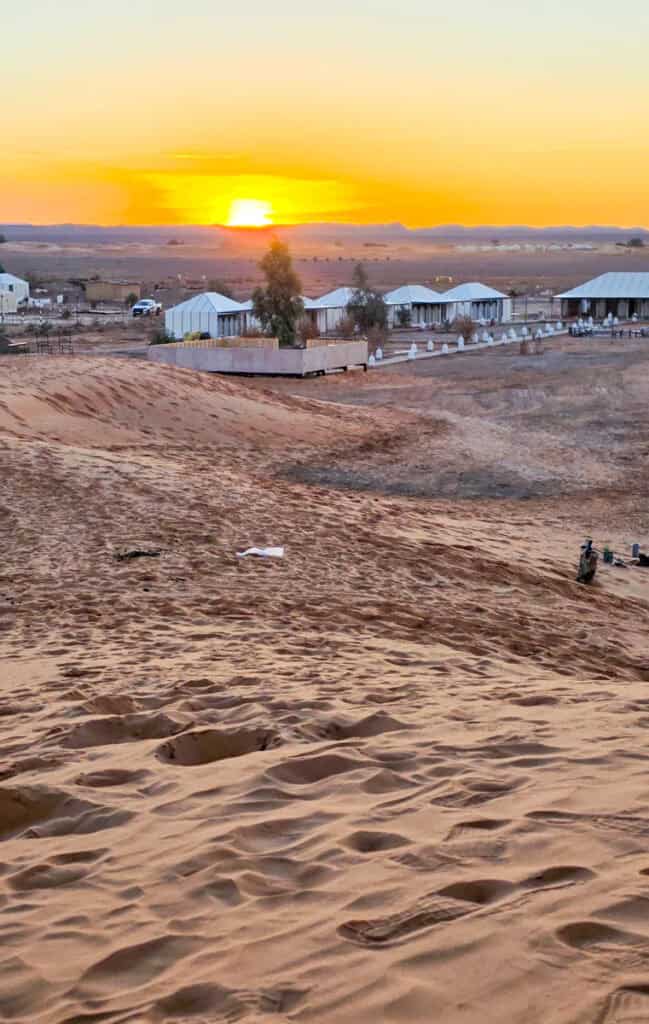
- Camp: Sahara Majestic Luxury Camp, on the edge of the Erg Chebbi dunes outside Merzouga, southeast Morocco
- Getting there: about 560 km from Marrakech, usually broken with a night in the Dades Valley, and about 587 km on to Fes
- The way in: a camel ride of about 90 minutes from the edge of the dunes, timed for sunset
- The tents: canvas, with double or twin beds, a shower and a bathroom in each
- Meals: breakfast and a three-course dinner at camp, and the camp let us bring our own Moroccan wine for a corkage fee
- How long we stayed: two nights
- When we went: late October 2026, with warm, dry days the whole time
Ride a camel from Merzouga into camp at sunset
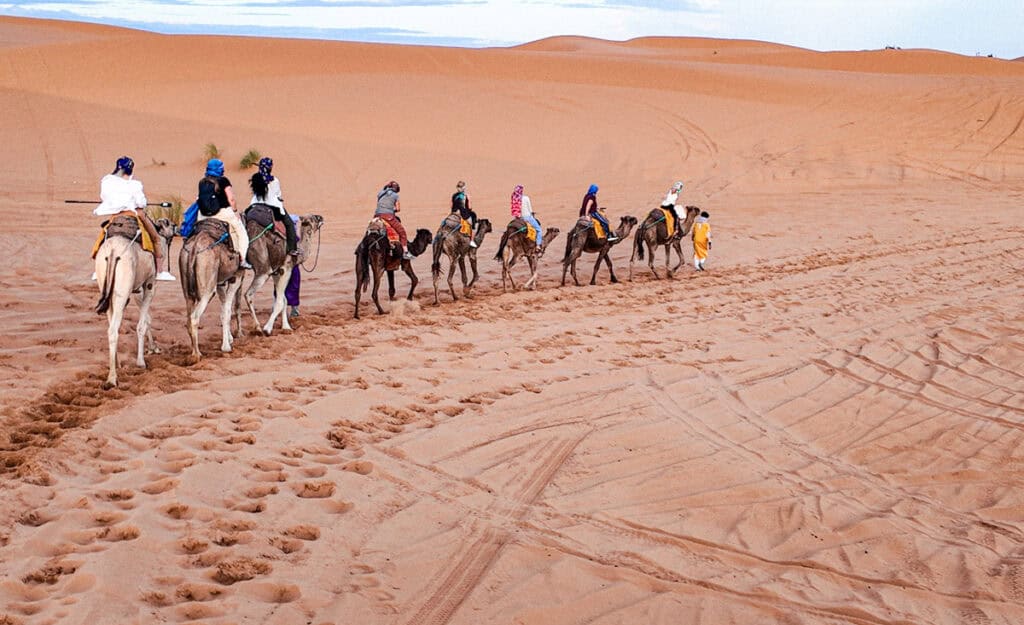
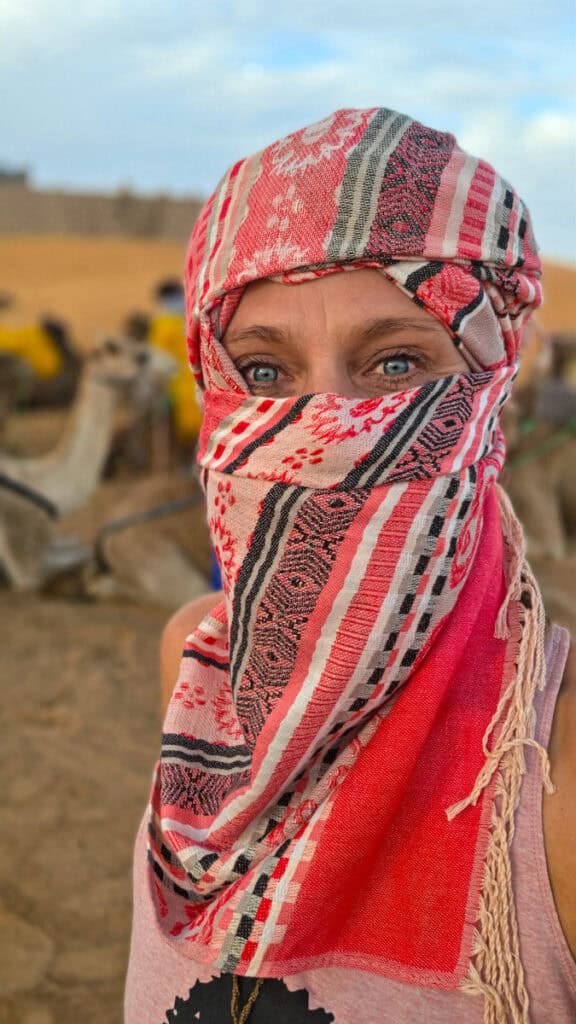
Before arriving for our camel ride, we stopped into a store to buy a headscarf for the desert. Not only do they look great, but they’re also practical for keeping any blasts of sand out of your face, and of course protection against the sun.
Our bus couldn’t drive across the sand, so it stopped where the dunes begin, the camp’s 4×4 took our bags, and a line of camels was waiting for the rest of us. (Dromedaries, to be precise, the one-humped kind, which is what you’ll ride everywhere in Morocco.)
We set off a little before sunset, and moving through the world’s largest hot desert on the back of a camel, with orange dunes rolling on for miles, felt surreal. Other camel trains were crossing the dunes at the same time, and up on some of the higher ridges we could see people sandboarding and racing quad bikes, which we knew was our job the next afternoon.
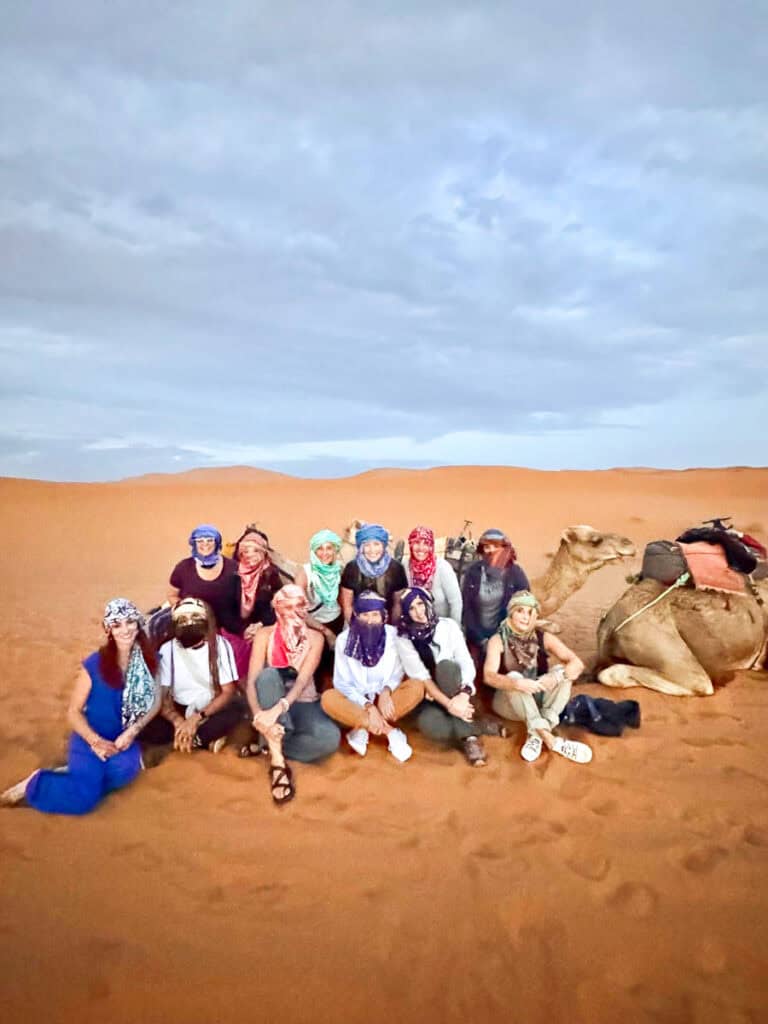
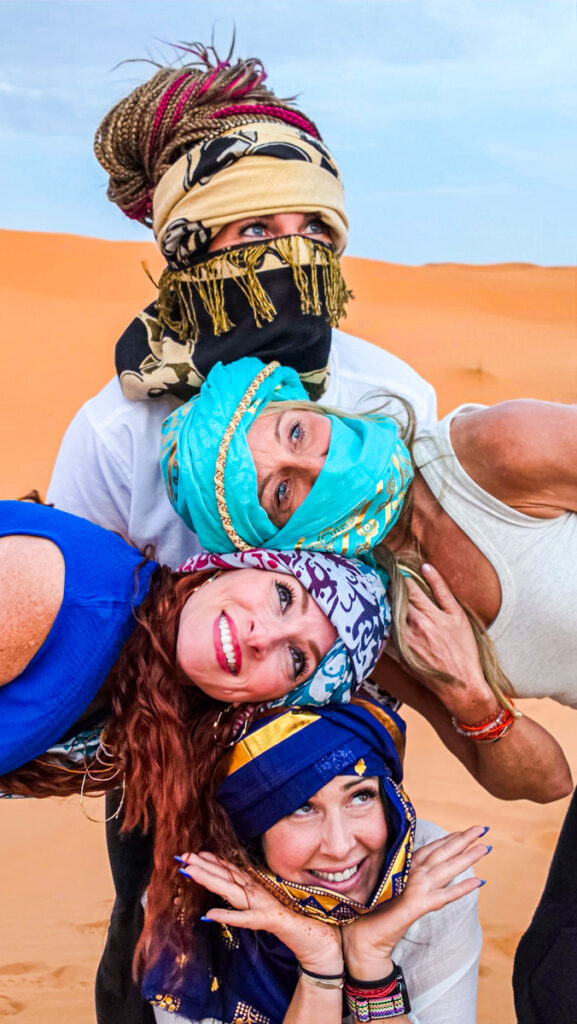
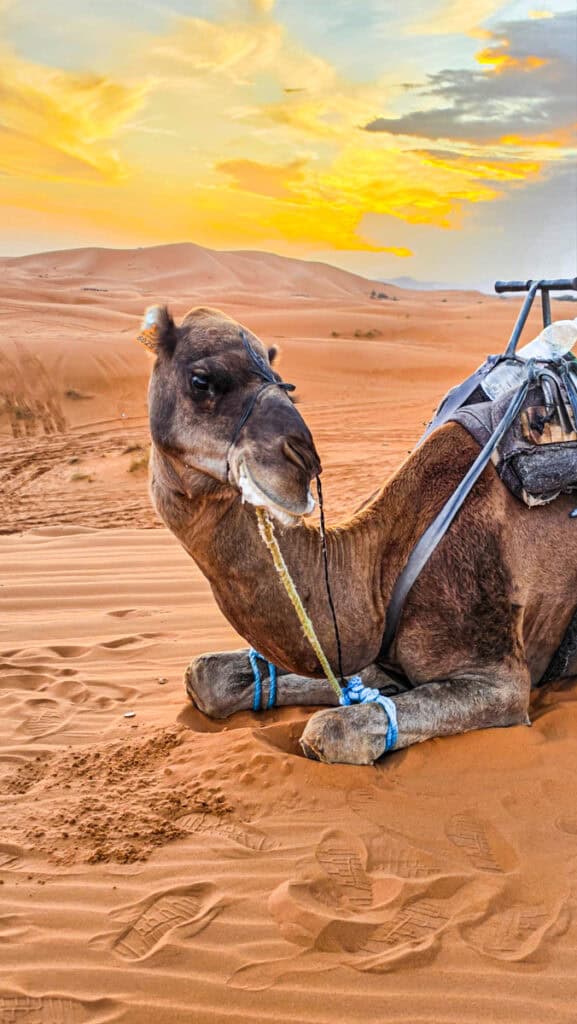
Partway in, we stopped on a ridge to watch the sun go down. Clouds got in the way and the sunset was more of a soft yellow glow than a fireball, but it was still beautiful, and we were having too much fun taking silly photos and videos of each other on camels in the Sahara to mind.
The last part of the ride was in the dark, with the moon lighting the sand. It was beautiful, and it was also the part where 90 minutes on a camel made itself known in my lower half. If you’ve got sore hips or knees, ask your camp or tour operator before you go whether they can take you in by 4×4 instead.
Keep the things you’ll want on the ride with you, because your main bag will be at camp before you are. I’d say your scarf, your phone or camera, and some water.
If you’re not on a tour, you can book a sunset camel ride in Merzouga on its own, or a camel ride that includes a night at a desert camp.
Inside our luxury desert camp in Morocco: Sahara Majestic Luxury Camp
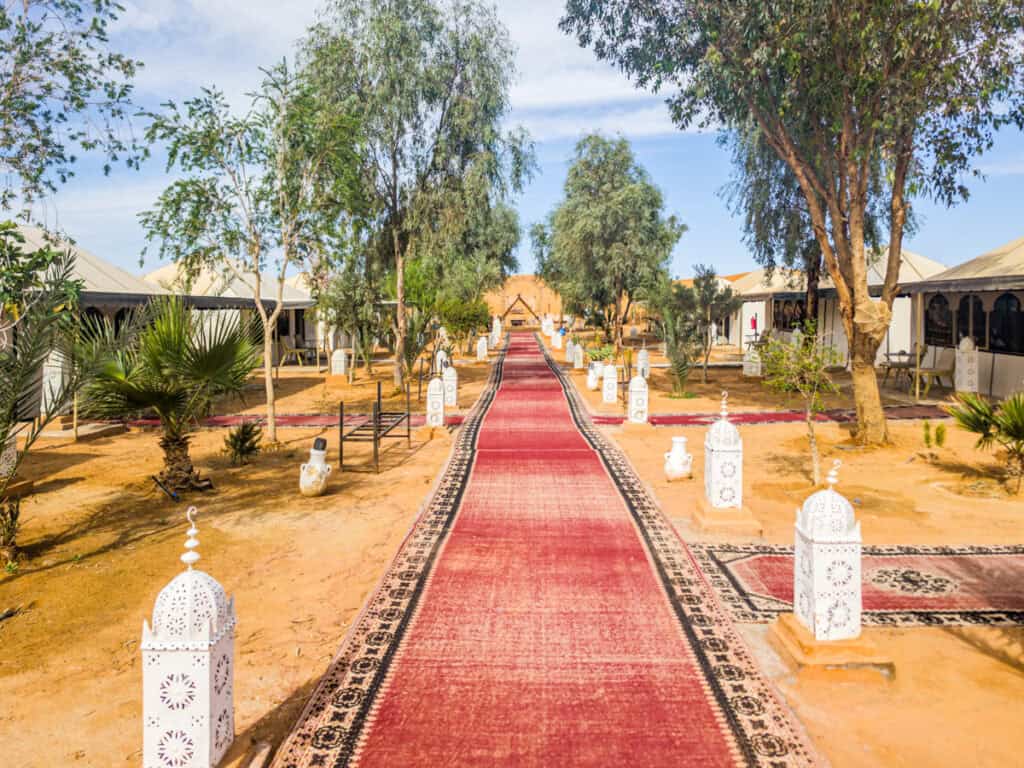
We climbed down off the camels in the dark and were handed a welcome mint drink, which I’d love to tell you I enjoyed (I didn’t). Then we gathered for room assignments and the plan for the next day, and headed to our tents.
Sahara Majestic Luxury Camp is a Merzouga desert camp right on the edge of the dunes, so you step out of your tent and onto the sand. The tents are canvas on the outside and properly decorated on the inside, with double or twin beds, a shower and a bathroom. If you’re comparing camps, check whether the bathroom is inside your tent, because that’s what made ours feel like a hotel room that happened to be in the Sahara.
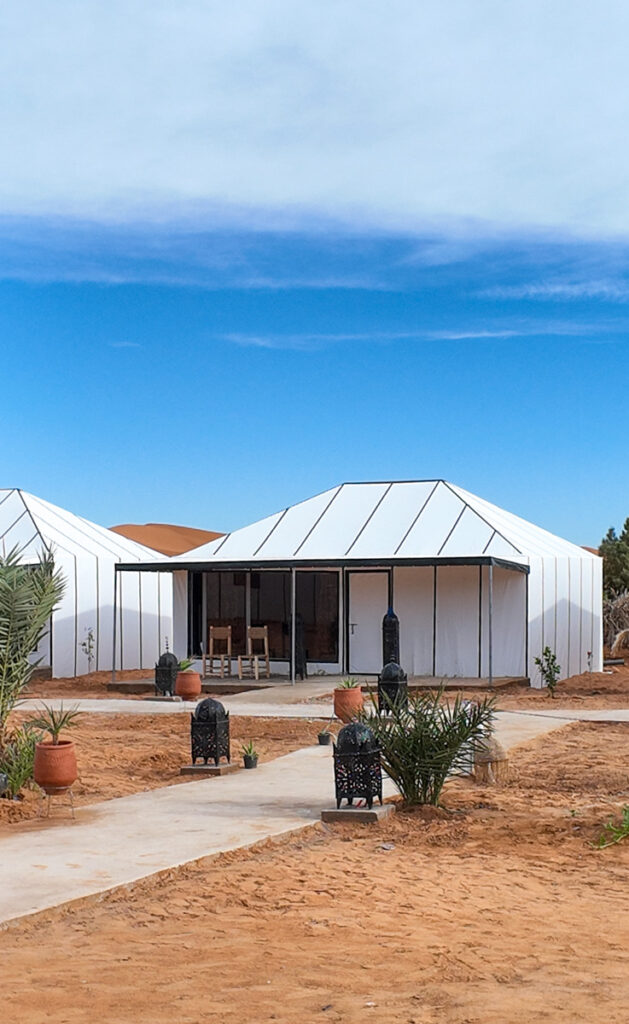
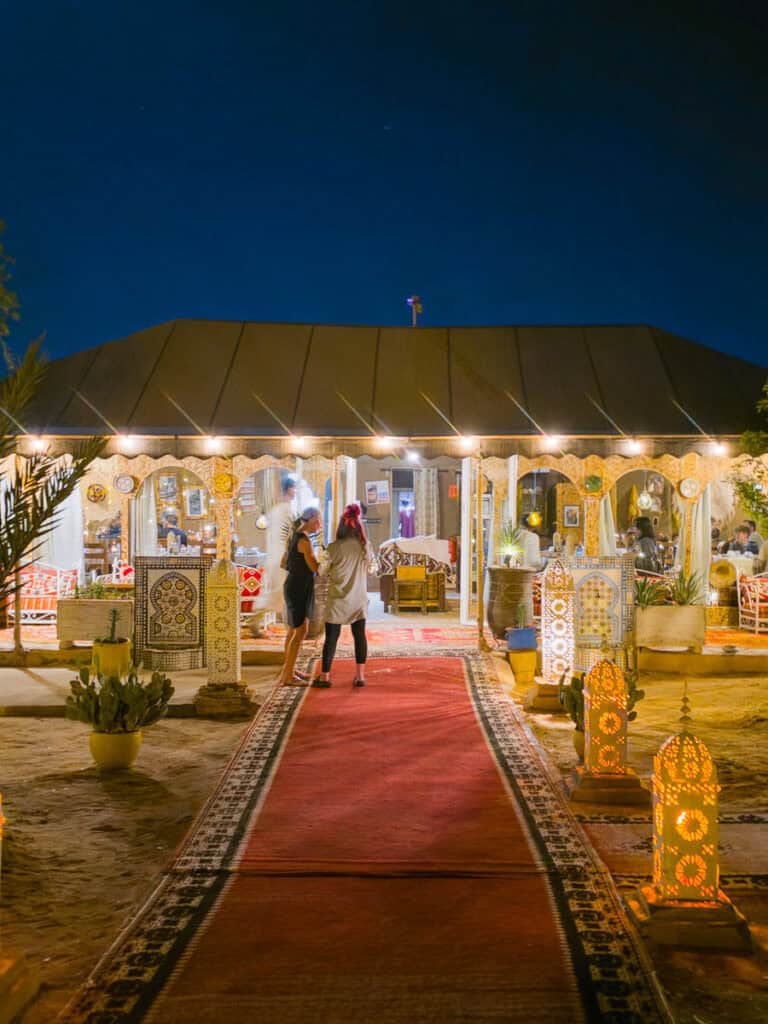
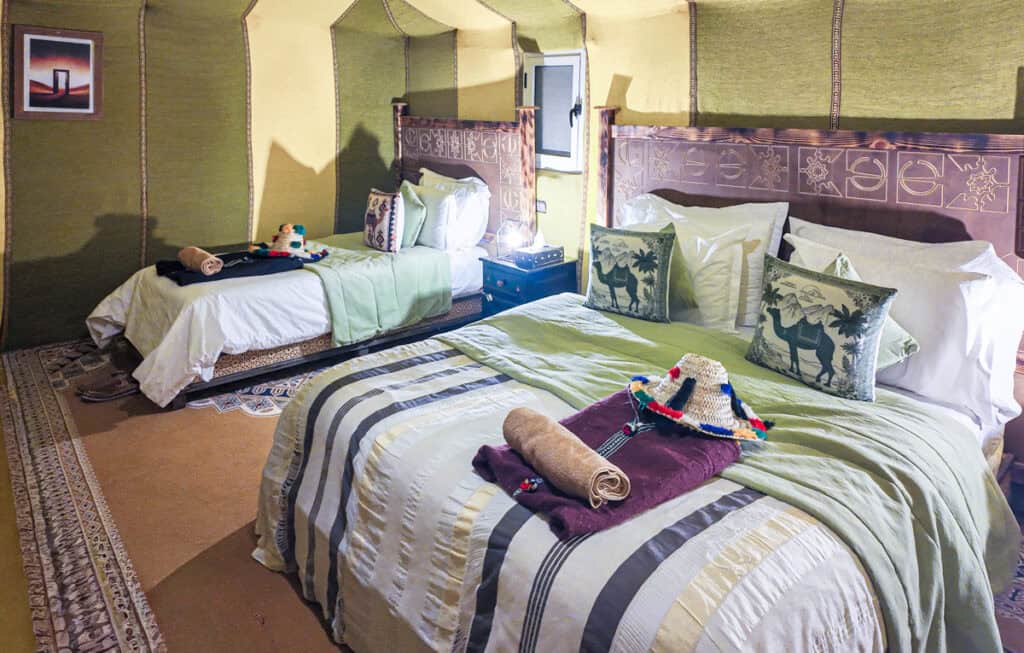
Each bed had a Berber outfit laid out on it, with a hat to match. We tried wearing them to dinner the first night, and mine didn’t stay on for long (they’re warm and scratchy). The women who put them on for photos in the dunes on our last morning looked fantastic against the orange sand, and also a little like they’d joined a very colorful cult.
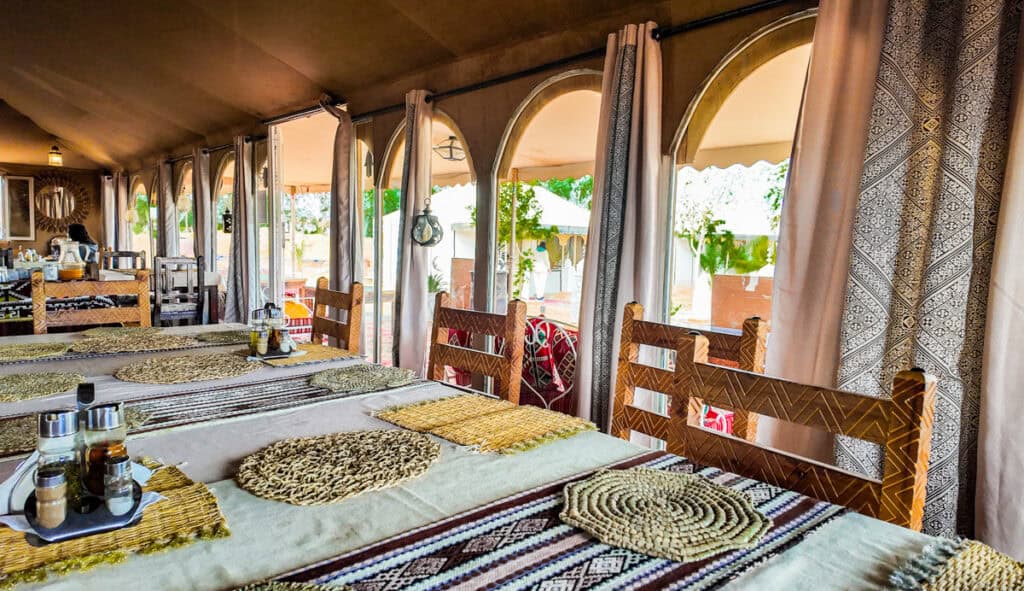
Dinner is served in the main dining tent, and both nights it was a three-course set meal. Bring your own wine if you’d like a glass, because the camp let us bring bottles in for a corkage fee. Our guide, Mo, had stopped at a liquor store on the drive to the Dades Valley, so we had Moroccan wine with dinner both nights.
Booking sites list check-in at Sahara Majestic Luxury Camp from 2pm and check-out by noon, which matters if you’re arriving independently rather than on a tour. You can check rates and availability for Sahara Majestic Luxury Camp here.
What a day at a Sahara desert camp in Morocco looks like
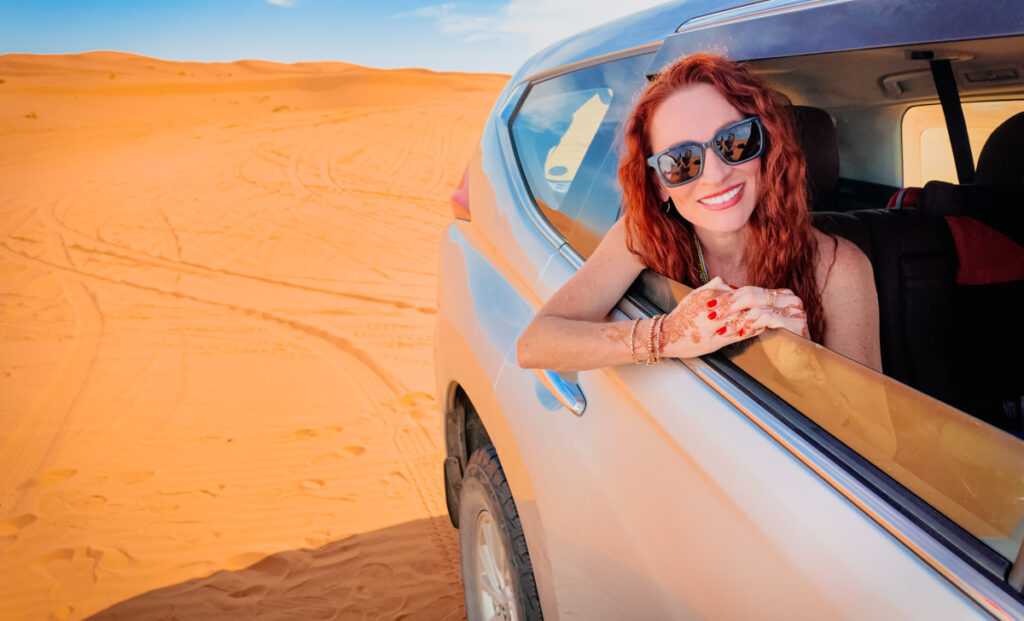
This was our schedule over two nights. On a one-night stay, you’d get day one and the sunrise from day three, and miss the middle.
| When | What we did |
|---|---|
| Day 1, afternoon | Arrived at the edge of the dunes after a full driving day from the Dades Valley, bags to camp by 4×4 |
| Day 1, sunset | Camel ride into camp, about 90 minutes, with a stop on a ridge for sunset |
| Day 1, evening | Welcome drink, check-in, three-course dinner, early night |
| Day 2, sunrise | Sunrise photo shoot on the dunes |
| Day 2, morning | Breakfast, then a half-day 4×4 tour: camels, a communal garden, an oasis coffee stop, Gnawa drumming in Khamlia |
| Day 2, midday | Lunch with a nomad family |
| Day 2, afternoon | Rest at camp, then quad bikes and sandboarding |
| Day 2, sunset | Sunset from the top of a high dune, back to camp at dusk |
| Day 2, evening | Dinner, birthday cake, music and dancing around the campfire, in bed by 9:30 |
| Day 3, sunrise | Sunrise and a short meditation on the dunes, then breakfast and the long drive to Fes |
Watch sunrise and sunset over the Erg Chebbi dunes
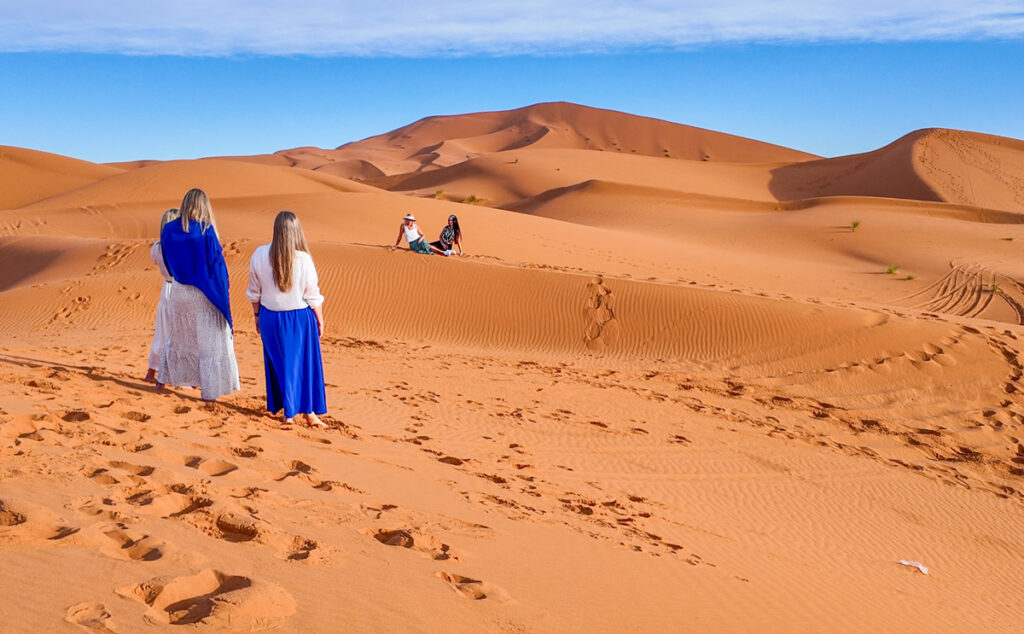
Close to the Algerian border, the sand of Erg Chebbi piles up into dunes as tall as 150 meters (490 feet) along a stretch about 28 km (17 miles) long, so there’s always a ridge near camp to climb for the light.
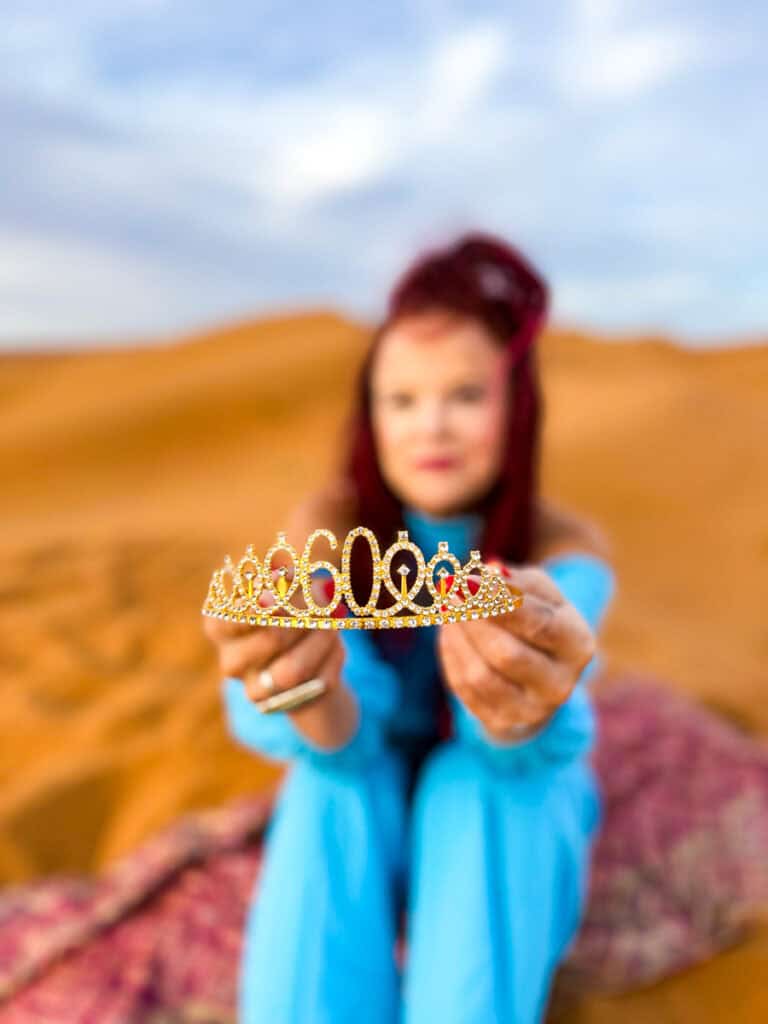
Our first sunrise was cloudy, and it turned out to be a gift. The soft light held for much longer than a clear sky would have allowed, so Allie, our trip photographer, could shoot portraits of the women as the sand shifted from pale gold to deep orange and red. A few of the women had packed a special outfit just for this morning, and I loved watching them run across the sand and pose with each other. It was Charlotte’s 60th birthday and her portrait photos in celebration were stunning, especially with the birthday tiara we got her! Down below us, the camels were starting their day.
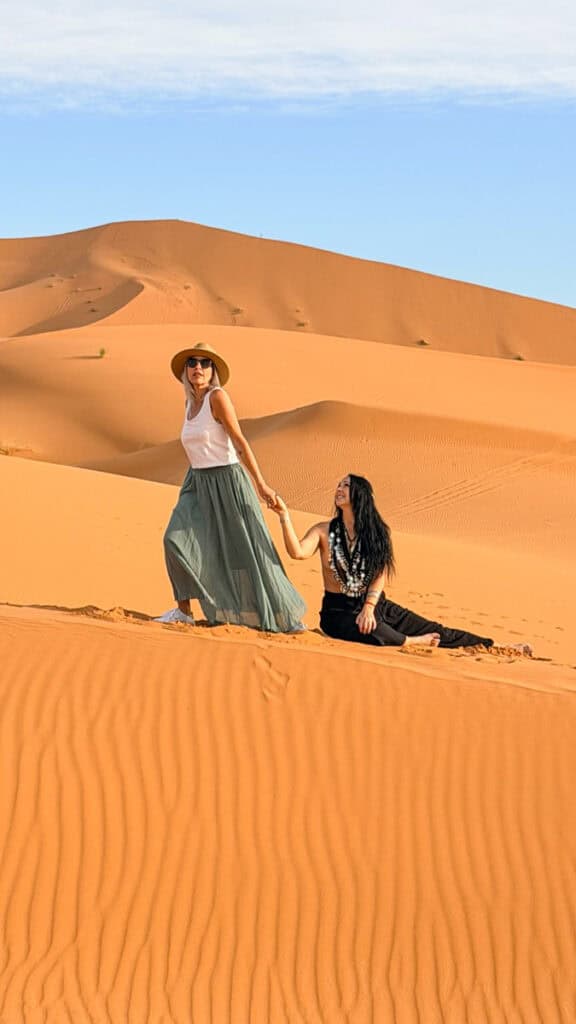
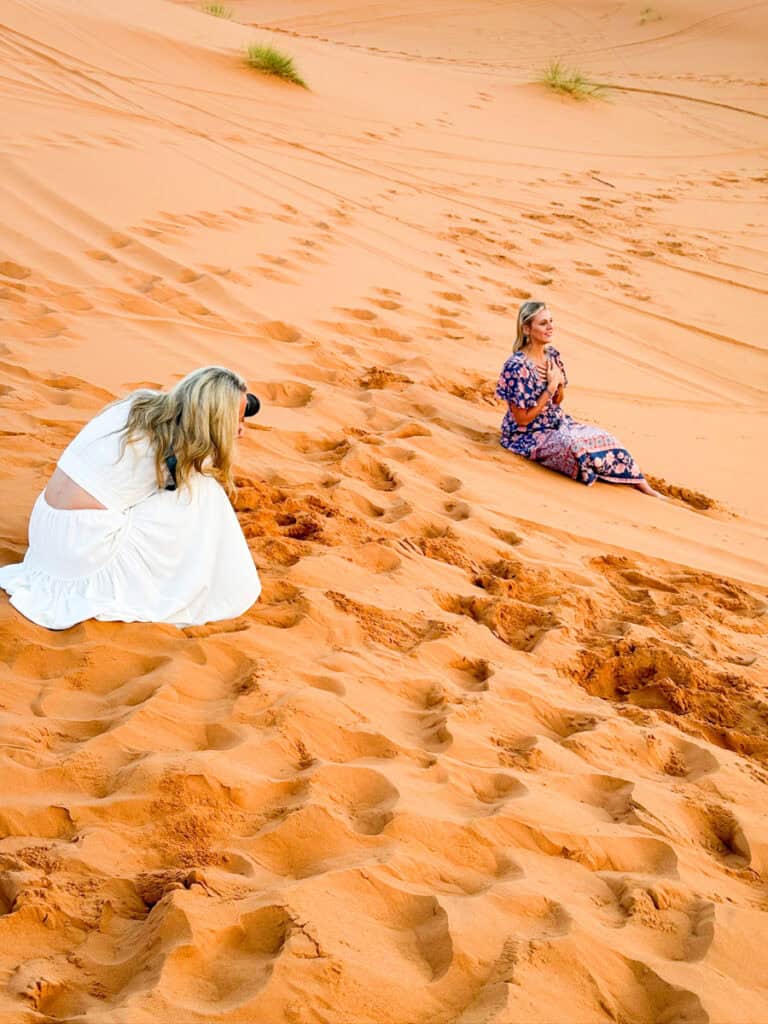
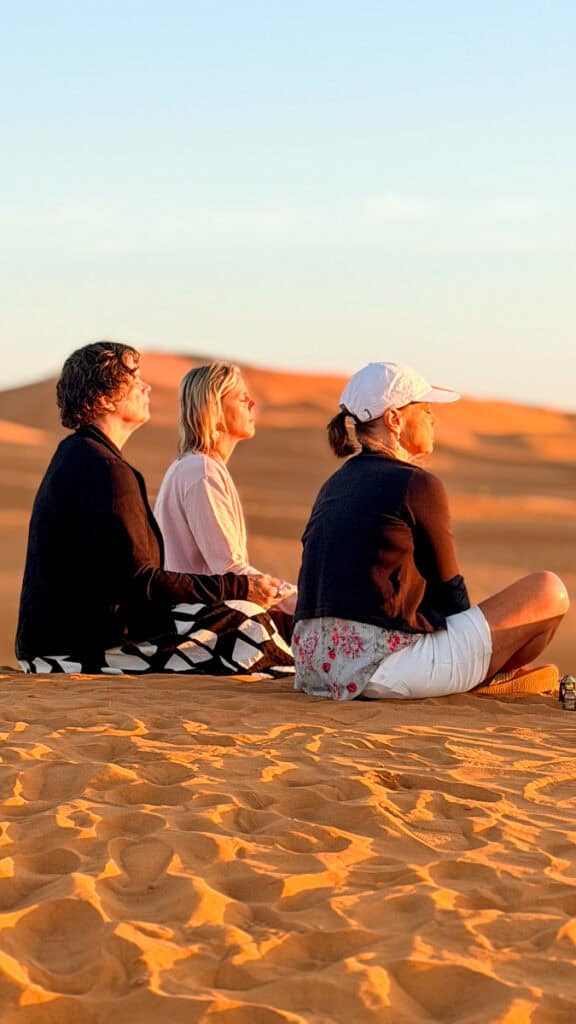
On our last morning the sky was clear, and four of us (me and three of the women) sat on a dune after the sun came up and did a short, quiet meditation together. I meditate every day, and doing it there, with nothing but sand and sky in every direction, was grounding, and I loved sharing it with them. While we sat, the others were off in their Berber outfits laughing their way through another photo shoot.
Our best sunset came on the second evening, from the top of a high dune after the quad bikes, when the sky turned pink. I only caught the end of it because I was busy filming the women, so if you’re the one holding the camera on your trip, hand it to someone else for ten minutes.
Take a 4×4 tour of the communities around Merzouga
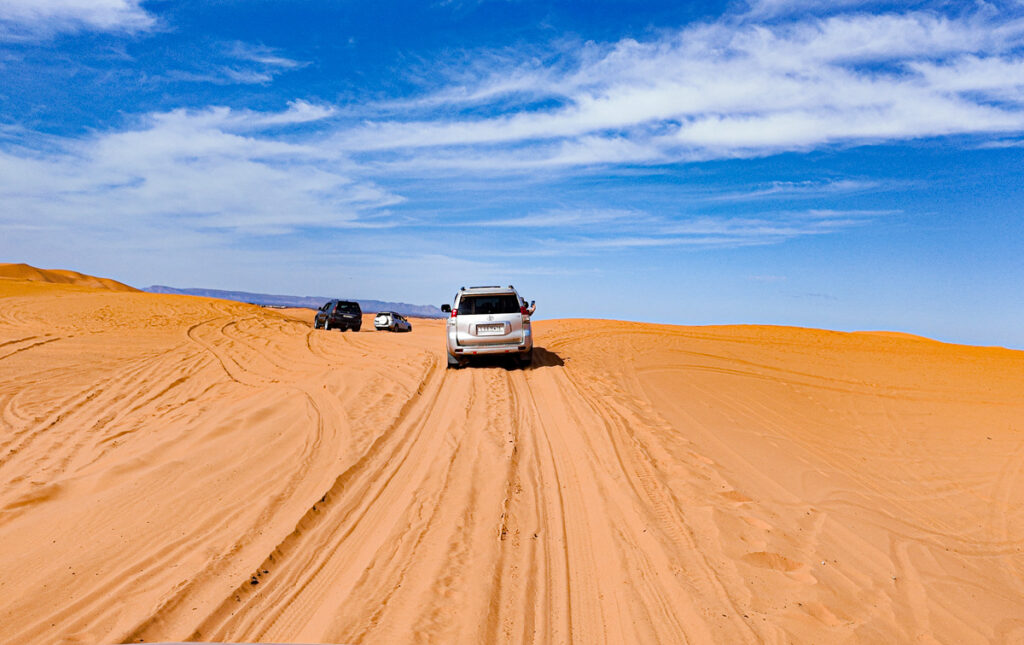
After a breakfast of Berber omelets, bread, jams and yogurt on our first full day, we split into SUVs, four to a car, for a half-day tour of the communities that live around the dunes and depend on the desert.
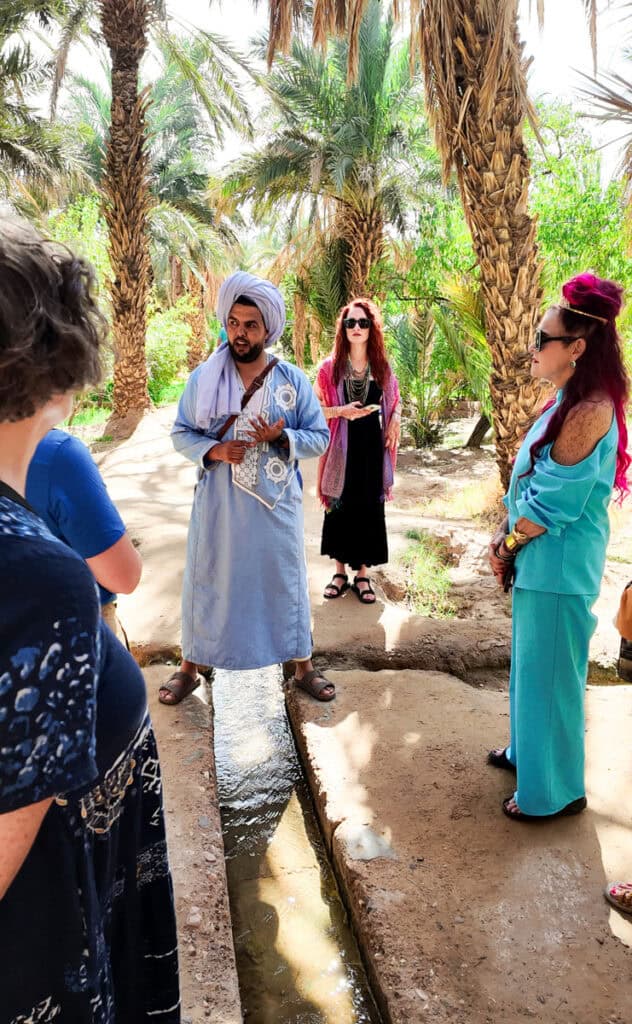
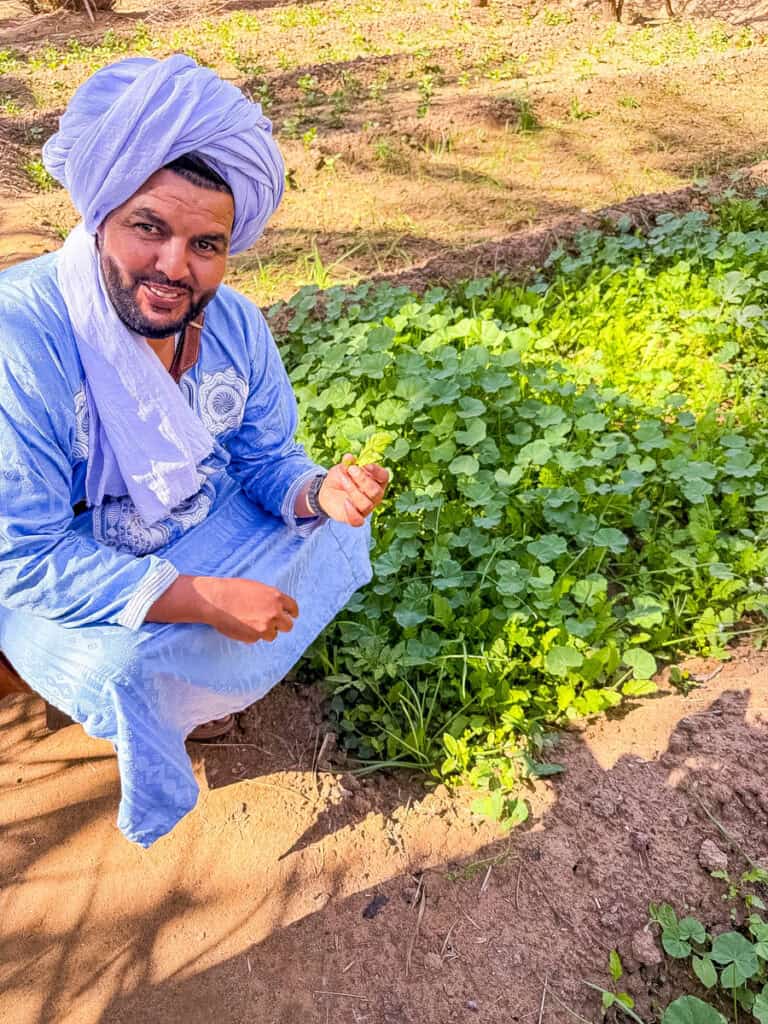
Our first stop was a small field where a group of camels was eating breakfast, so we said good morning to them. Then we walked into a communal garden, a green patch in the middle of all that red sand, where Mo showed us the irrigation channels that carry water through the desert to each family’s plot. Mint grew everywhere (it’s Morocco), along with peppers and herbs.
Between the stops, the drive itself was half the fun. Our drivers zipped up and over the dunes, and later in the day they seemed to be racing each other and a few passing motorbikes, while we hung on in the back laughing, and it was yalla, yalla all the way.
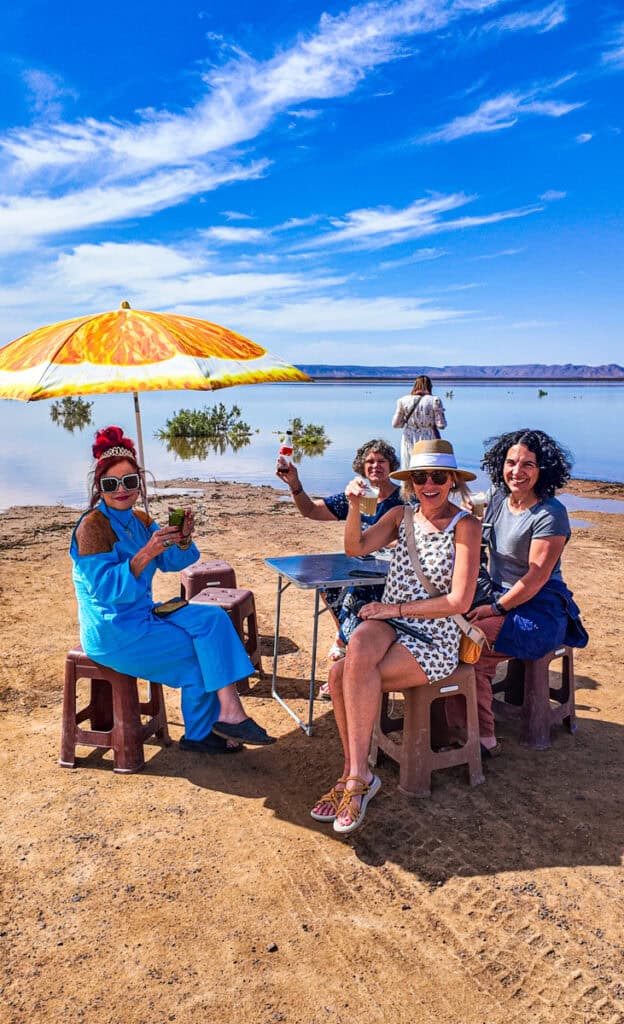
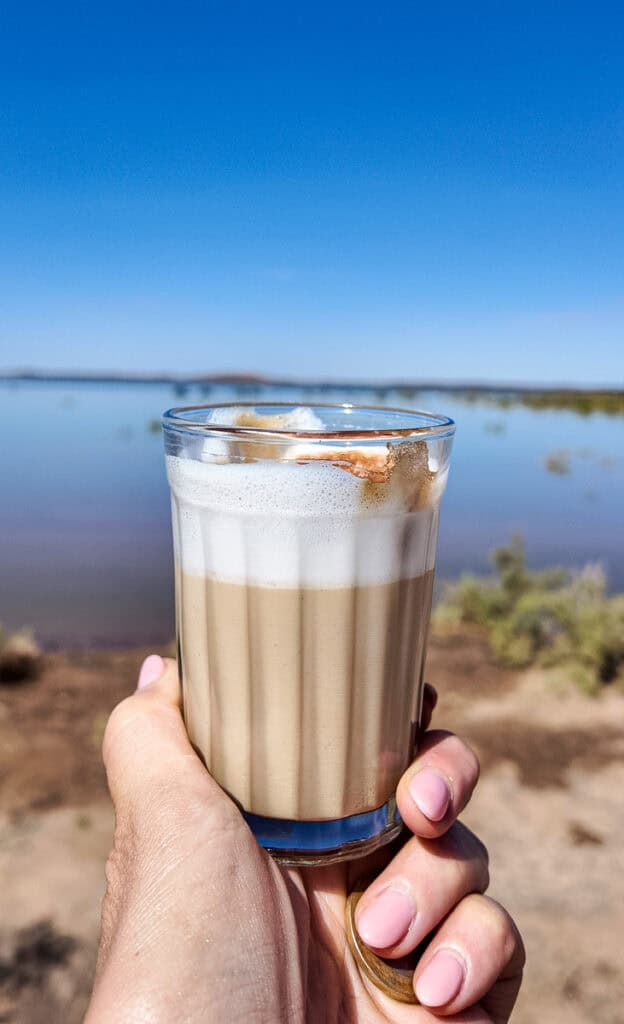
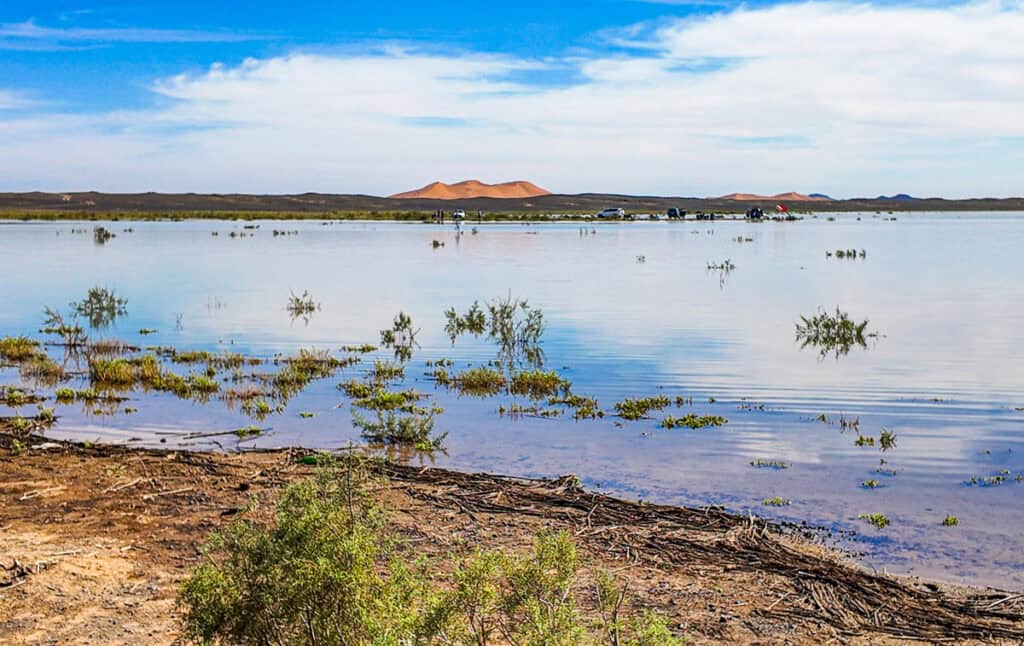
One of my favorite stops was an oasis lake with a coffee cart parked beside it. The coffee was okay, and none of us minded, because we were drinking it beside a lake in the Sahara. A group of weekend trail-bike riders had pulled in for a coffee too, and the cart had mint tea for the non-coffee drinkers.
You can book a 4×4 tour with lunch with a Berber family in Merzouga if your camp or tour doesn’t include one.
Learn Gnawa drumming in Khamlia village
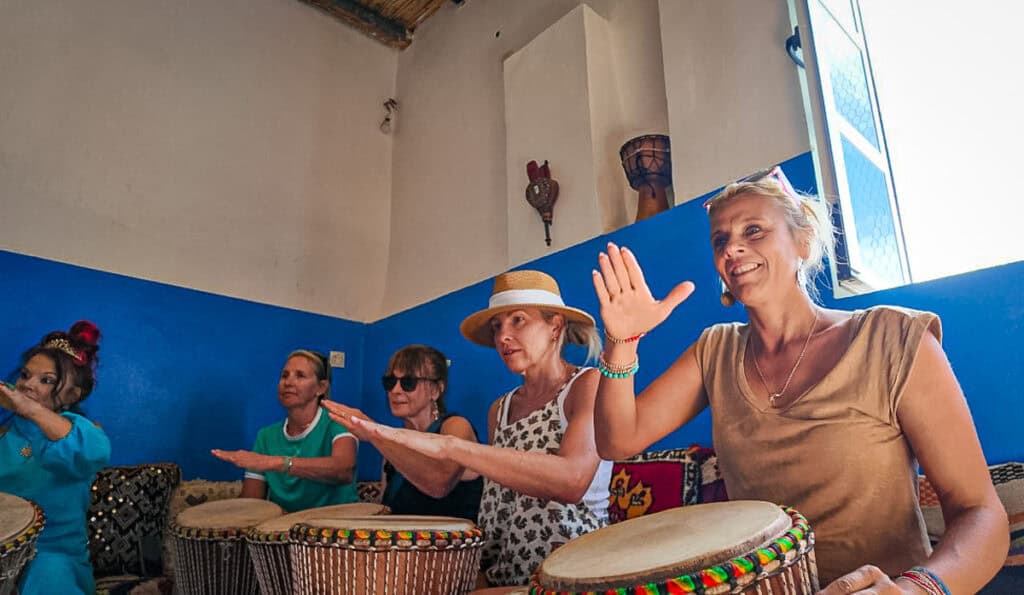
Khamlia is a small village about 7 km south of Merzouga, and it’s known across Morocco for its Gnawa music. The Gnawa of Khamlia are descendants of sub-Saharan Africans who were brought north across the Sahara as enslaved people, and their music carries that history, with metal castanets, drums and trance-like rhythms that are traditionally believed to heal. UNESCO added Gnawa to its list of the Intangible Cultural Heritage of Humanity in 2019, and the village holds its own Gnawa festival every year.
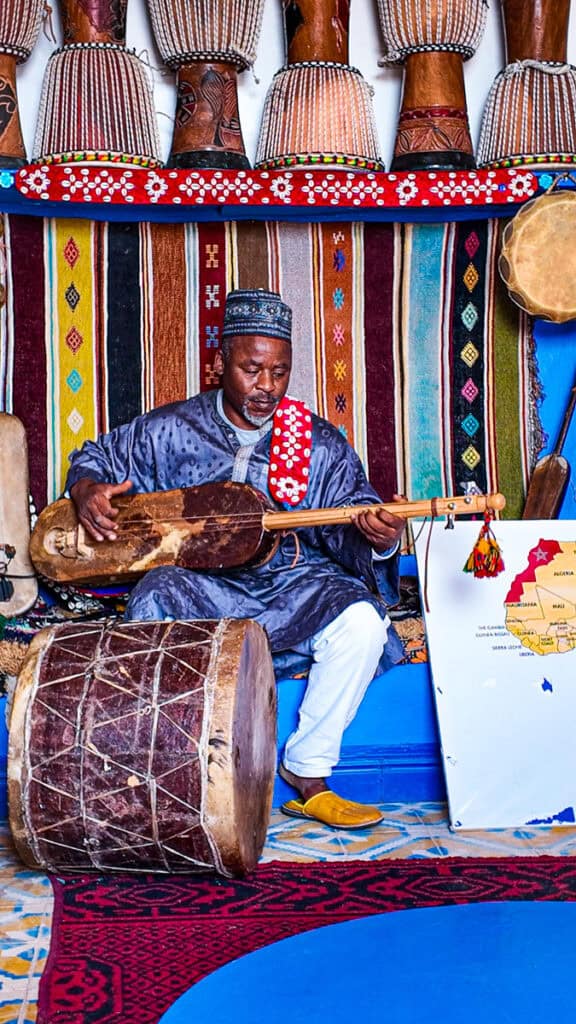
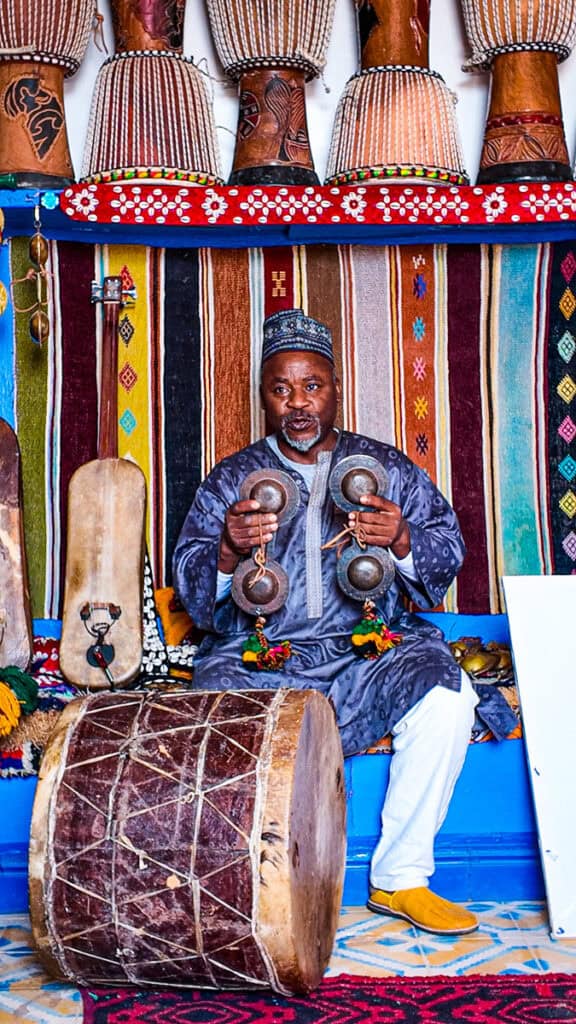
We sat in a room with a musician who told us a little of that history, played each of the instruments for us, and then handed us drums. He taught us a few beats, and then led all of us through a song together, which was a lot more fun than my sense of rhythm deserved.
Next door, a group of men were singing, dancing and playing the same instruments we’d just been fumbling with. The room was crowded and it was hard to see everyone, but we danced along at the back, Mo joined in, and it was a fun half hour.
Share lunch with a nomad family near Merzouga
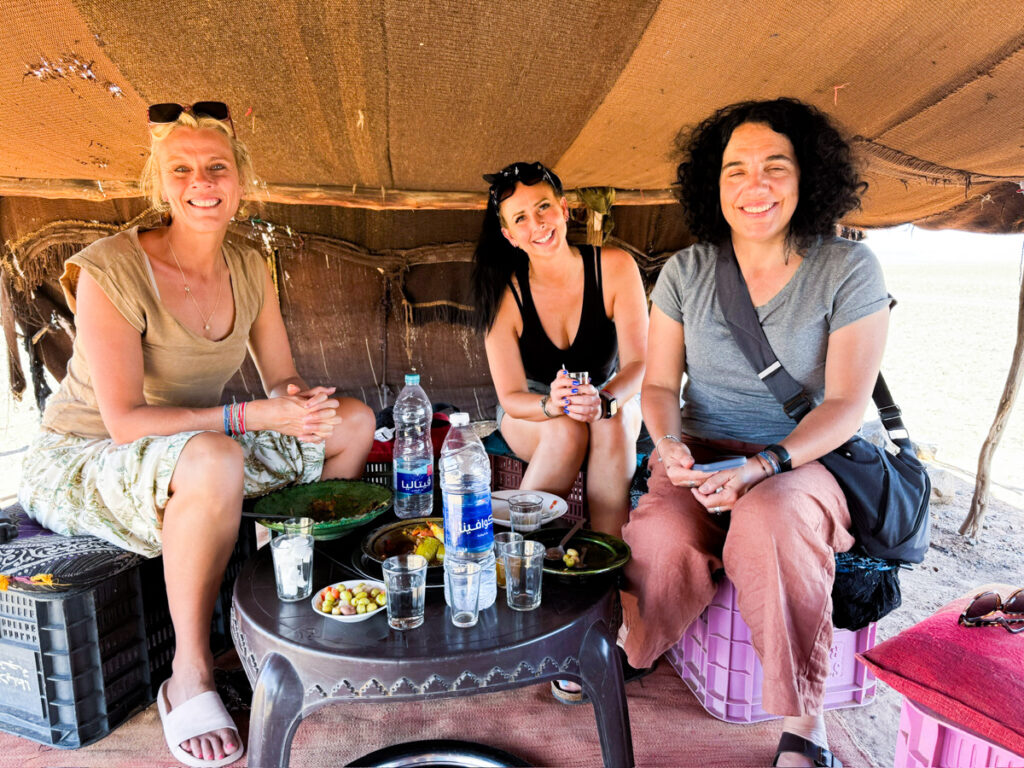
Lunch at a nomad camp is something Mo arranges for his groups, and it’s one of the reasons I’d recommend him. He told us visitors rarely get to do this, and he set it up so that travelers spend time with the families who live off the desert, and those families earn something from tourism.
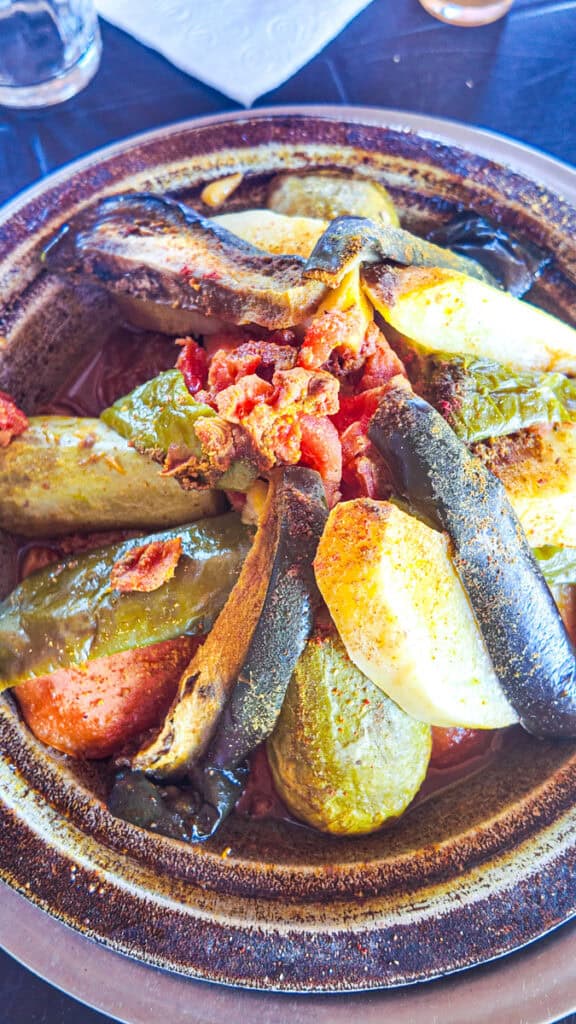
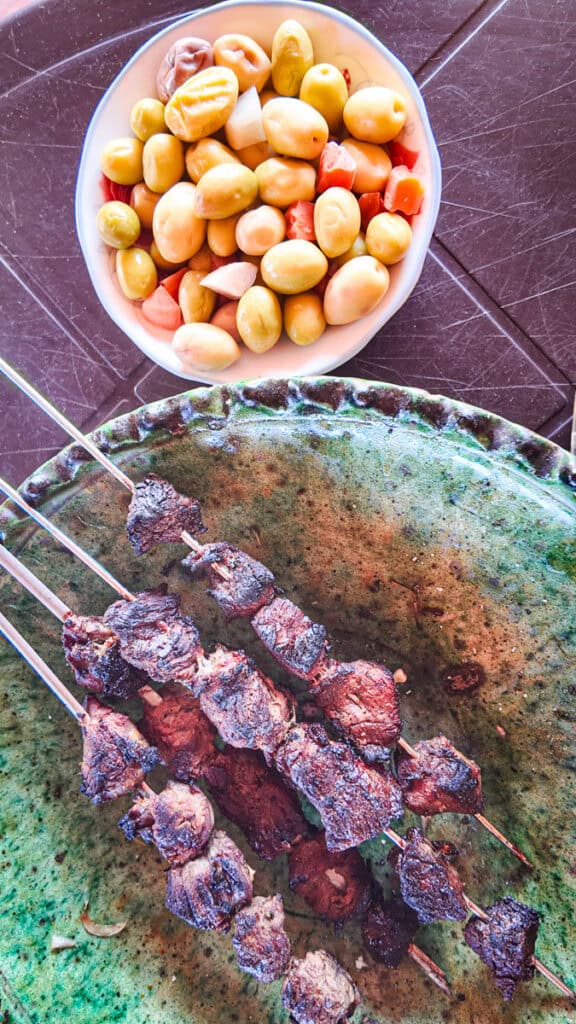
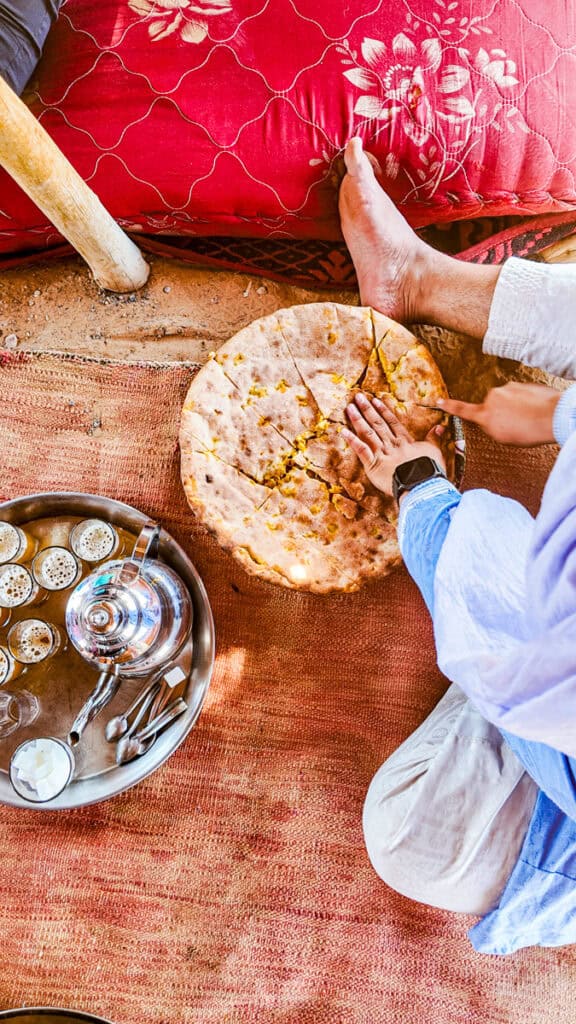
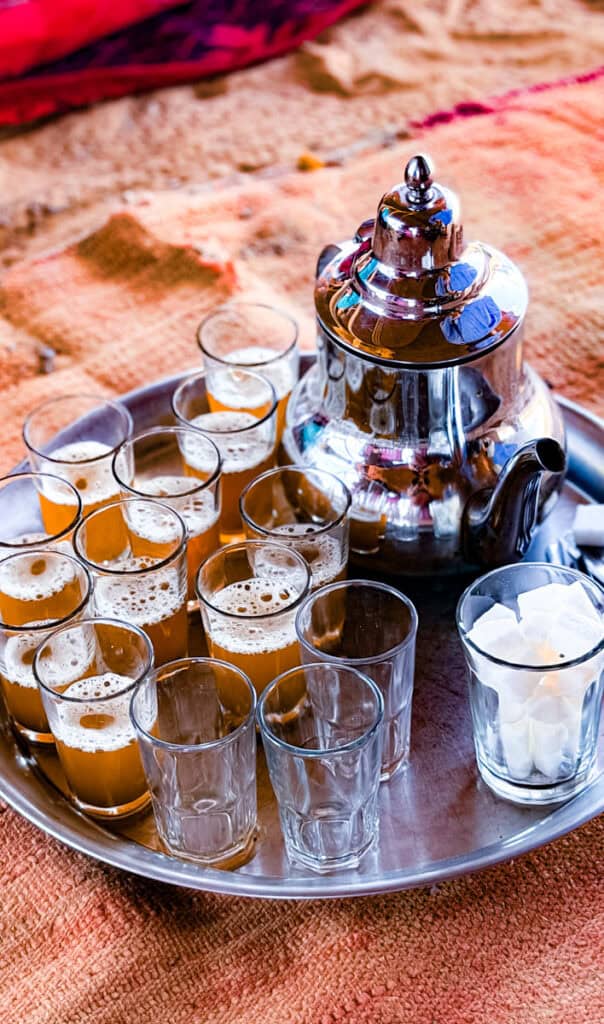
We ate in a dining tent: olives, a Berber pizza the others couldn’t stop talking about, meat skewers, and a tagine cooked perfectly. They made sure there were gluten-free options for me and the other women who needed them, and of course there was mint tea.
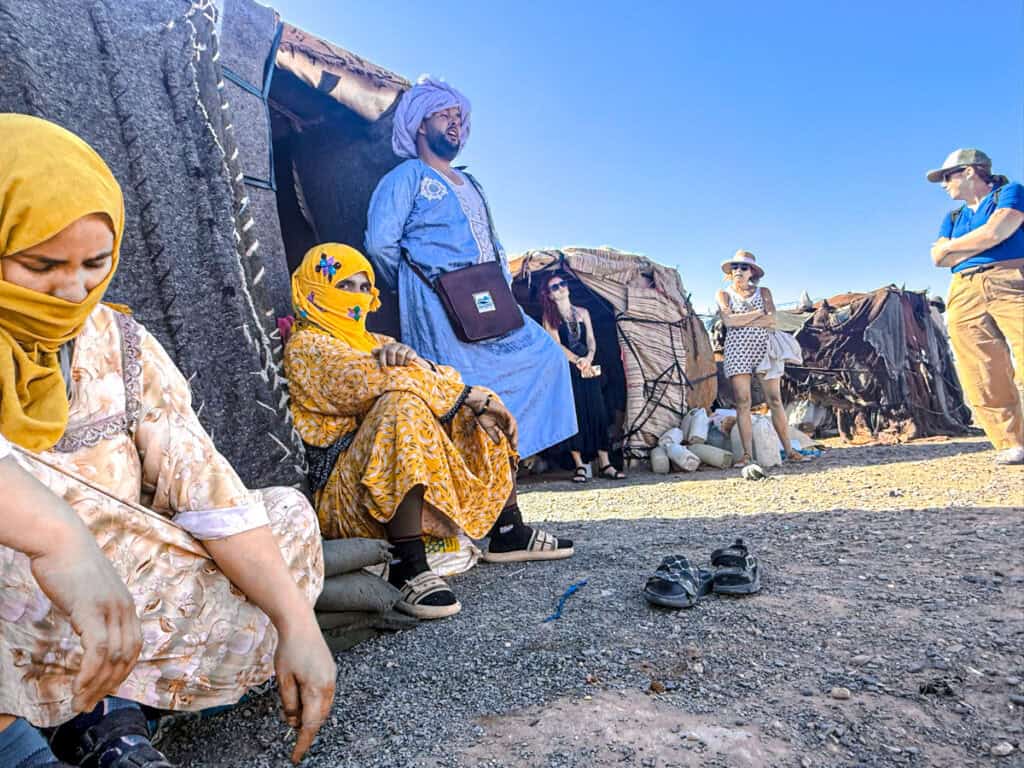
Afterwards, Mo took us to the family’s communal shelter, a canvas roof held up on logs with seating underneath, and a few small huts for sleeping and cooking. He explained how the families move to the mountains in summer, when the desert is too hot, and come back down in winter. As I understood it, the children take turns living in the village to go to school, swapping with another group partway through the year. On the drive out, we passed their goats running across the sand.
If you’d like to book Mo for your own trip, you can reach him through his Morocco Helping Tours Instagram.
Ride quad bikes and sandboard the dunes of Erg Chebbi
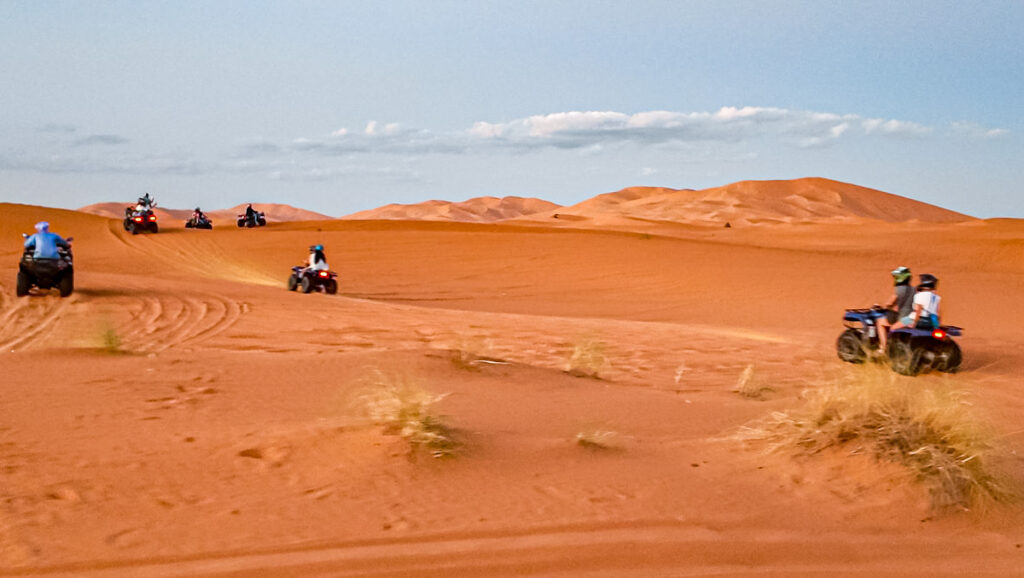
After a rest back at camp, we spent the afternoon on quad bikes, riding in pairs, with me riding alone for a stretch. The bikes we rode were speed-limited, which I fully support in principle and resented in practice when I hit my first steep dune. I had it on full throttle, ran out of speed halfway up, and stopped dead. Two of the other women got stuck right beside me, which did wonders for my dignity. On the next climb I took a longer run-up and made it to the top.
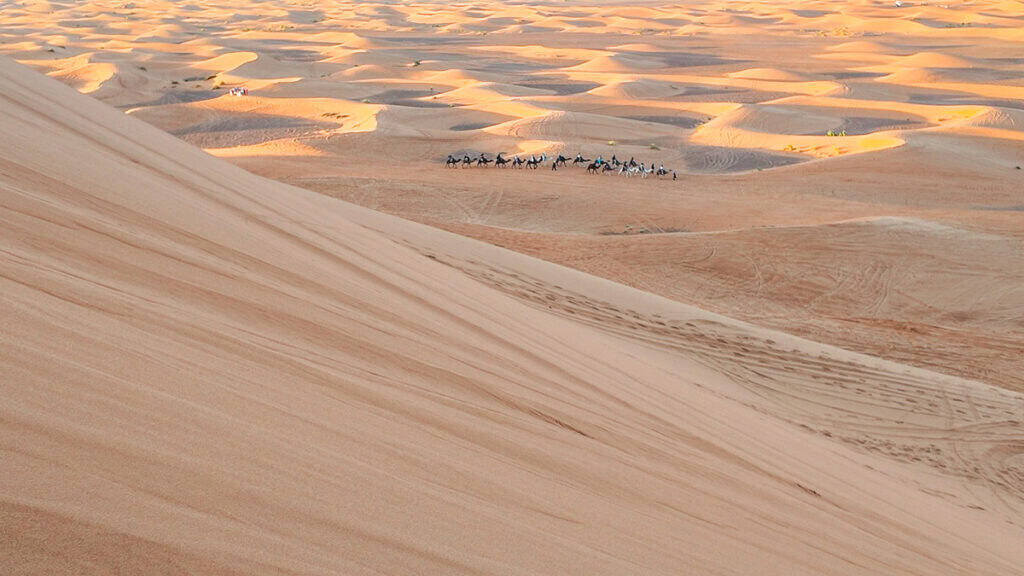
From the top of one of the highest dunes, we watched the camel trains crossing the sand below, the same way we’d come in the night before. Down there the dunes had towered over us, and from up here the camels looked tiny.
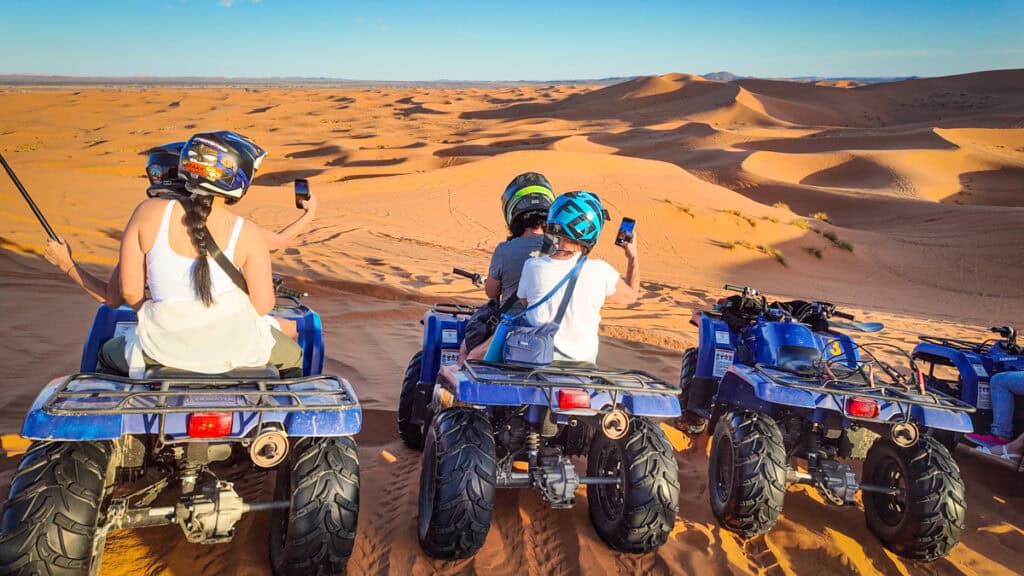
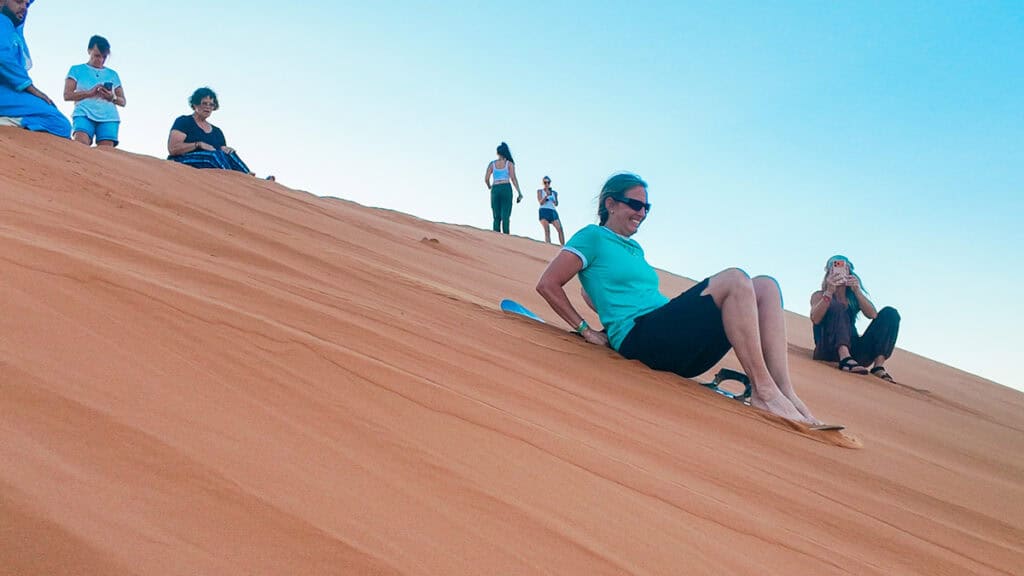
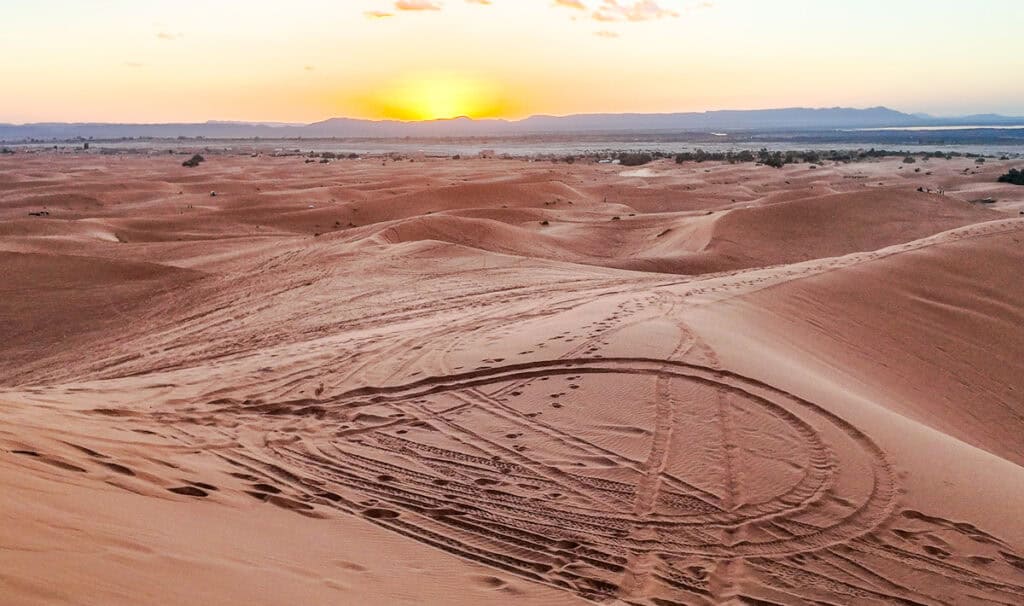
Then came the sandboarding. Mo had a snowboard, we sat on it (sitting is the safe way), and he gave each of us a push down a big dune. We only had time for one run each, and we all had a blast. Our quad guide then drove us back up, so we didn’t have to climb, and his bike was not speed limited. Ali and I were last to go, so we got a few extra minutes of him chasing Mo around the dunes with me hanging on behind him.
We then had a few minutes to watch a spectacular sunset over the Sahara. The sky went to bed with a lovely soft pink and orange glow. And then we rode our way back over the dunes back to the Sahara camp. What a fun experience that was in the Sahara; I liked it more than the camel ride.
We rode back to camp at dusk with the full moon in front of us, begging Mo to let us go faster (he didn’t, because safety). If your camp doesn’t run quad bikes itself, you can book a quad bike ride with sandboarding in Merzouga.
Dance around the campfire at Sahara Majestic Luxury Camp
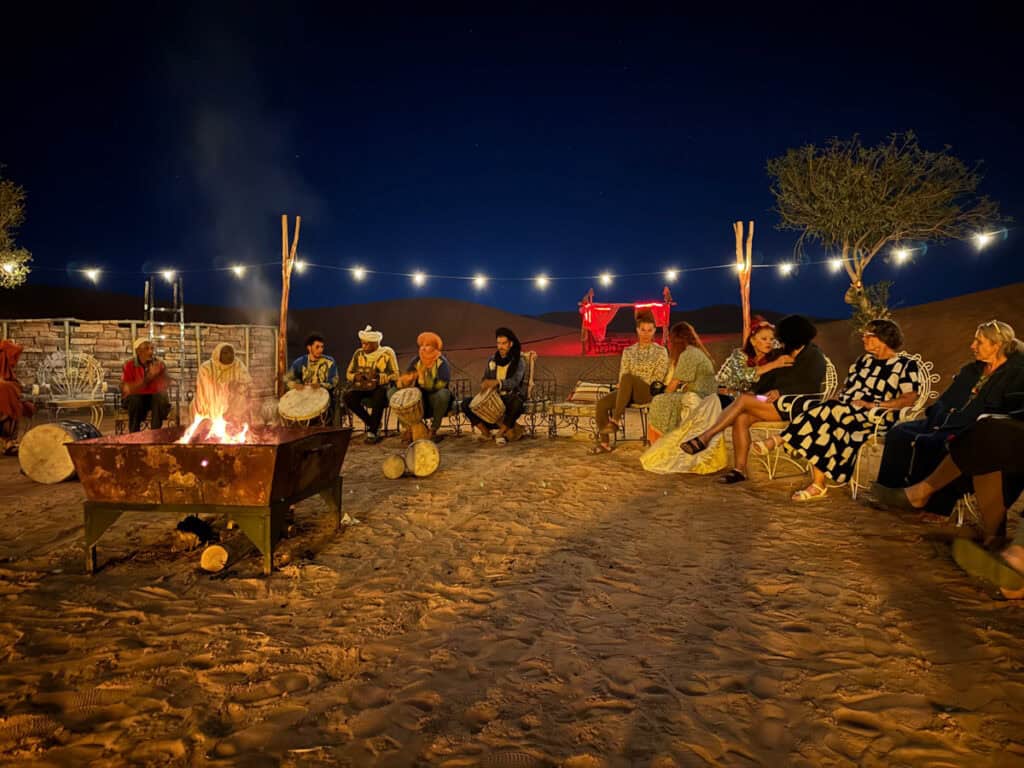
Every night at Sahara Majestic Luxury Camp, the staff finish serving dinner, pick up drums and the same instruments we’d played in Khamlia, and sit down around the fire to play. On our first night we were too tired from the drive and went to bed, and we decided to save the campfire for the next night, which happened to be Charlotte’s 60th birthday.
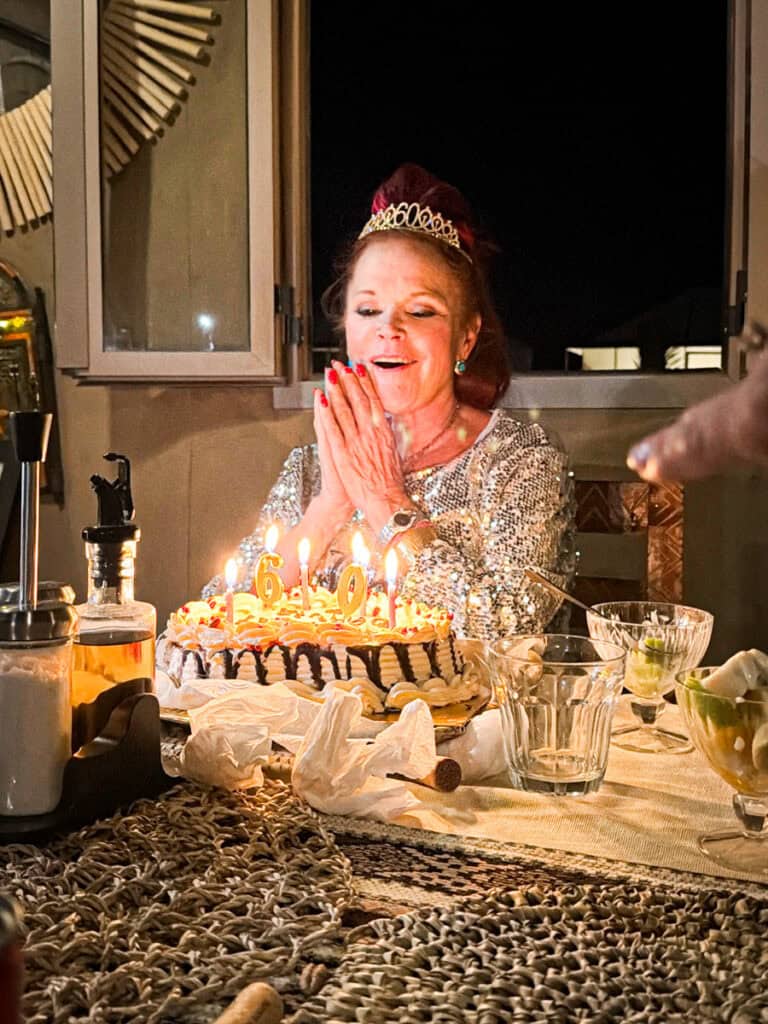
I’d secretly organized a cake with Mo and the camp staff, and when it came out I went over to help light the candles. It was heart shaped. Charlotte had set an intention around love at the start of the trip and had been finding hearts all over Morocco, so I was so delighted by the heart that I carried it straight over and set it down in front of her. We sang Happy Birthday, she blew out the candles, and then she looked down and read the name on it. Olivia.
Another guest at the camp was also celebrating a birthday that night, and I’d delivered Charlotte her cake. The staff whisked it away, I followed them into the kitchen, and we laughed so hard. Then out came Charlotte’s own cake, round this time, and we got to sing to her twice. I’m convinced the Creator orchestrated this, and my dodo brain, so Charlotte could see another heart sign!
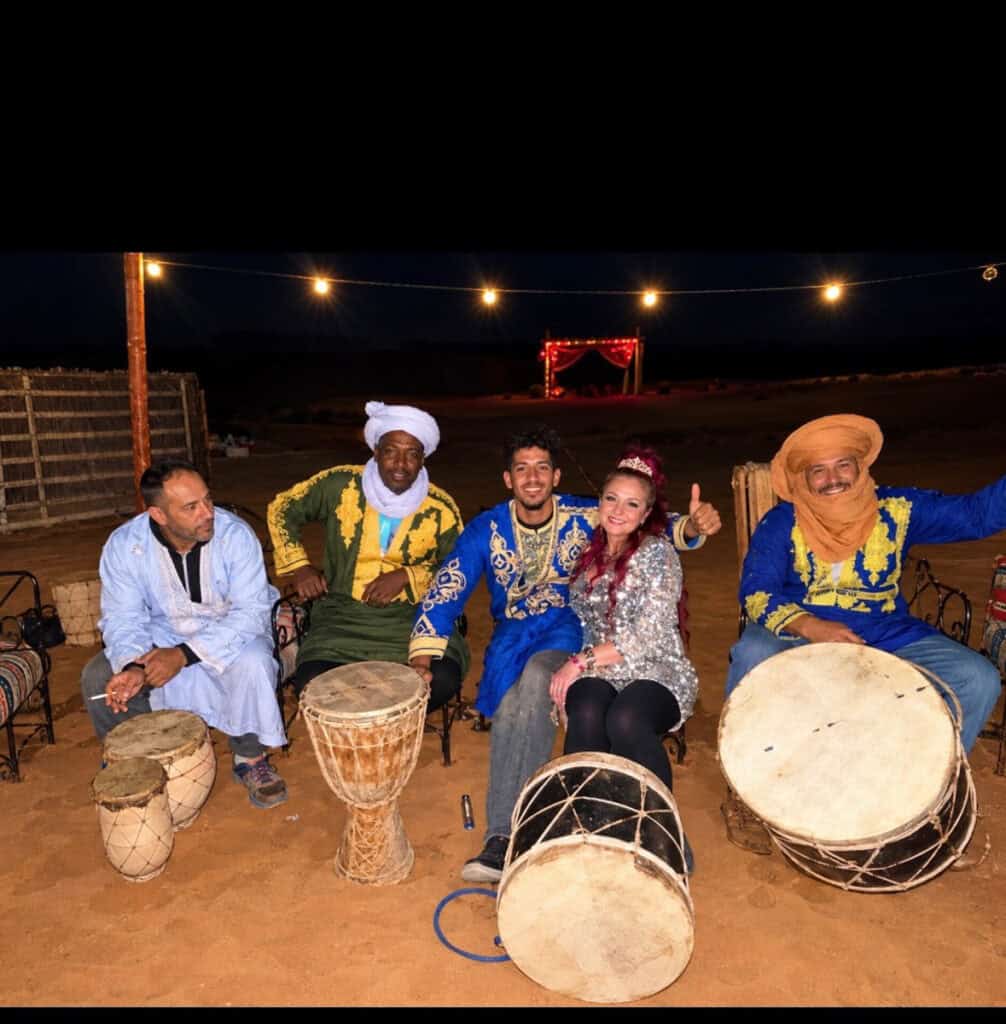
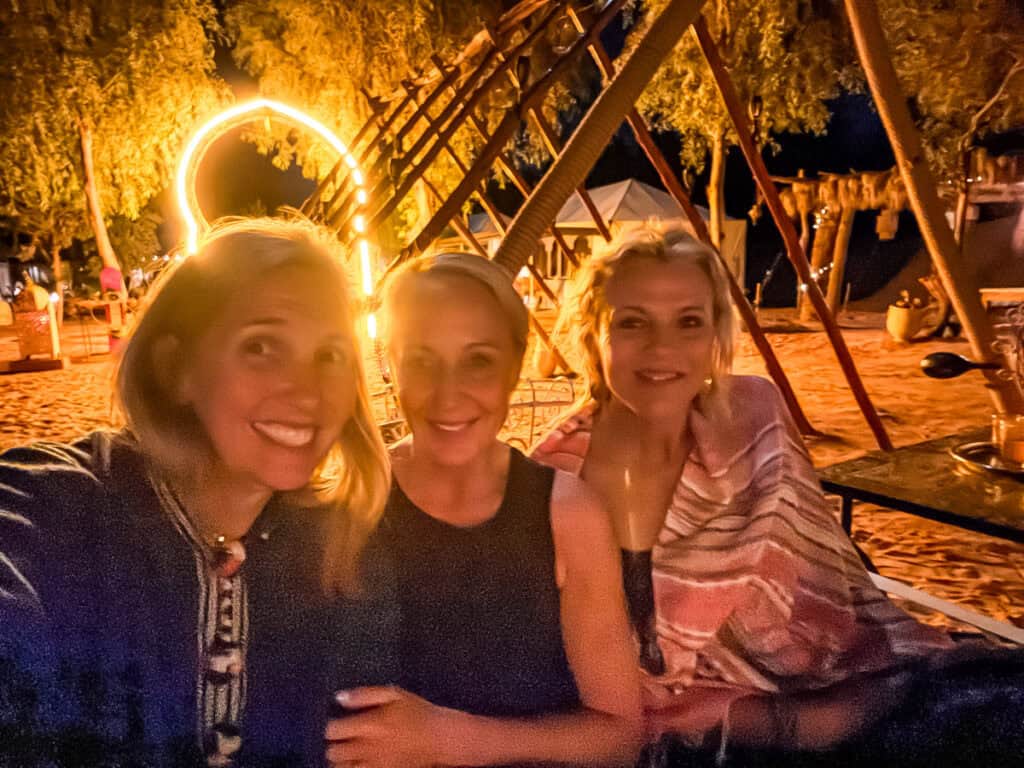
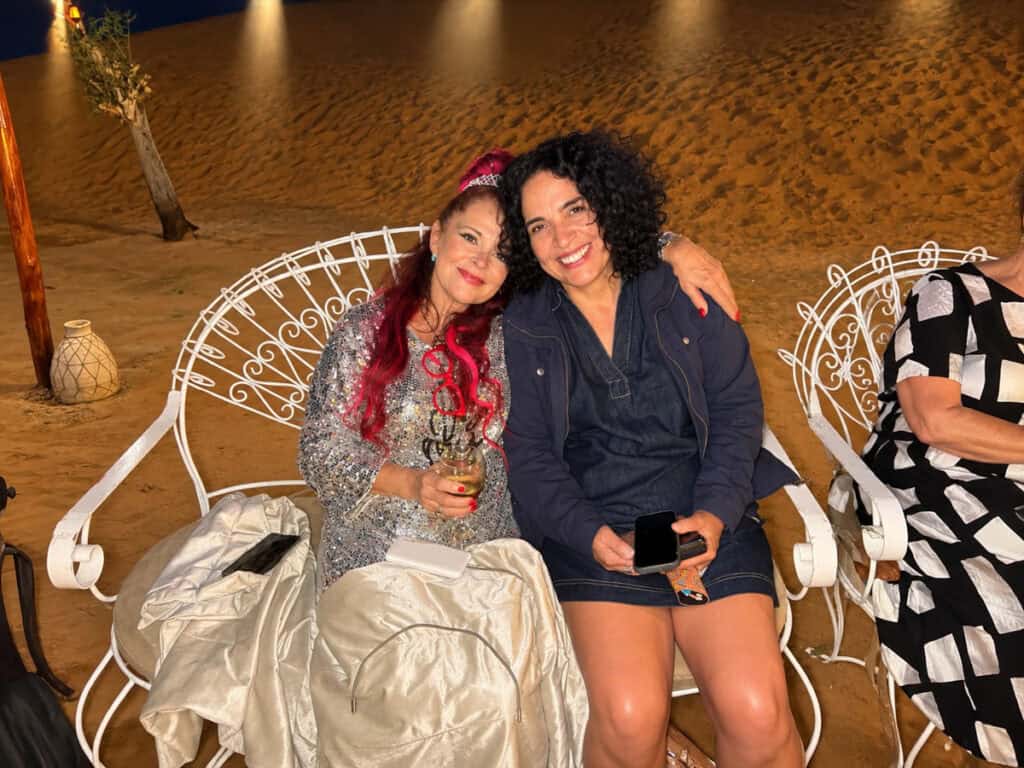
After dinner the music started around the fire, and when the musicians stood up to play the camel dance, we took that as our cue. None of us can tell you what the camel dance is, but a dozen women who’d been strangers five days earlier danced like maniacs around that fire, completely sober, until we were worn out and in bed by 9:30.
If you have a special celebration like this on your visit to the Sahara, let your desert camp know in advance so they can arrange a special cake. Mo says it happens quite a lot!
Gluten-free food at a Sahara desert camp
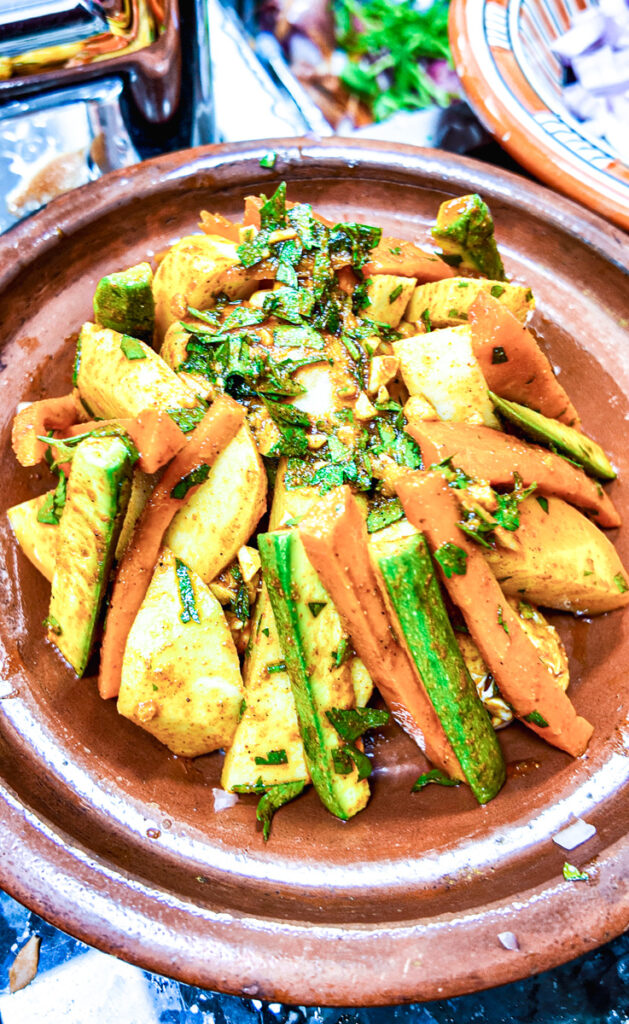
I was nervous about eating gluten-free in the desert, and I didn’t need to be. At Sahara Majestic Luxury Camp, the dinner staff knew exactly what I could eat and had gluten-free options for me at dinner. Of course, there was plenty of tagine! They did not have gluten free bread for me though, which I’m not bothered about as I don’t eat bread much. Perhaps if you give them enough notice they can organize it for you. However, our guide, Mo thoughtfully had his mum make some gluten free bread for Kate and I to eat for dinners and breakfast during our stay.
On our second night the staff brought me a pumpkin soup in a bowl so big that I shared it with the woman beside me, and it was delicious. The nomad family accommodated us at lunch too.
That matched the rest of Morocco for me. Every server we met understood gluten-free and steered me away from what I couldn’t eat, and hotels found gluten-free bread when they had notice. Tell your camp or tour operator about your dietary needs when you book, so the kitchen has time to plan, and skip the harira soup, which is thickened with flour.
What to wear and what to pack for the Sahara
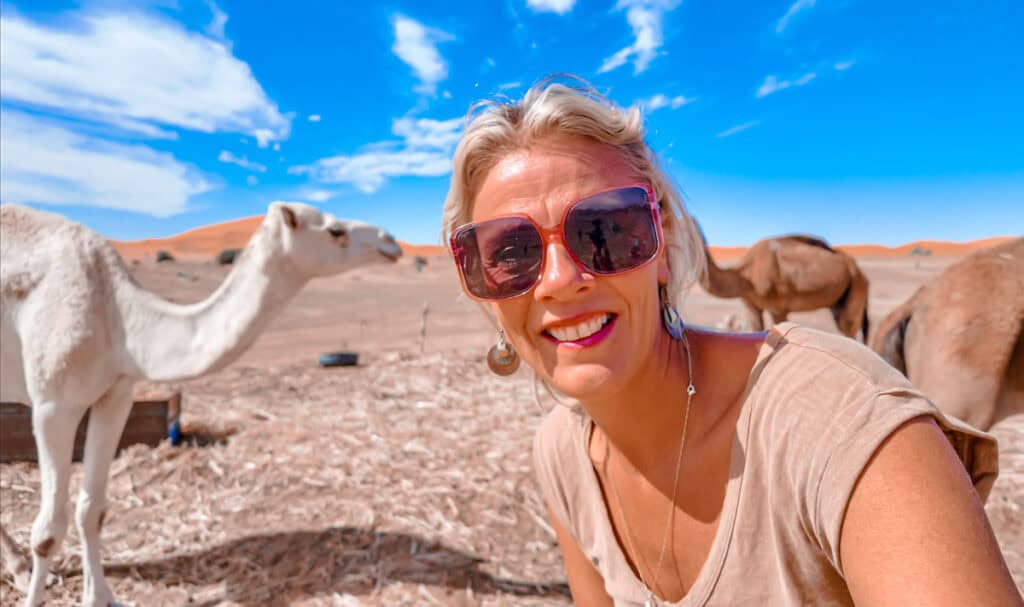
We had warm, dry days in late October. Climate averages for Merzouga put October daytime highs at around 30°C (86°F), and desert nights cool off sharply, with tour operators putting spring and autumn nights at roughly 10 to 14°C (50 to 57°F). In December to February, nights can drop below freezing, and in midsummer daytime highs can pass 40°C (104°F).
- A scarf. It keeps the sand off your face when the wind picks up and the sun off your neck. We bought ours at a scarf shop in Ksar Mellab on the drive in (mine was the first pink one I saw).
- Layers for the early mornings and evenings. Sunrise shoots and campfire nights are the cool parts of the day.
- Sunscreen, sunglasses and a hat. There’s no shade on a dune.
- A small bag for the camel ride. Your main bag travels separately by 4×4, so keep your scarf, phone and water with you.
- Something you’d love to be photographed in. Sunrise in the dunes is the photo of the trip, and several of the women packed an outfit just for it. The camp also leaves Berber outfits on the bed.
- Cash. Card machines failed on us twice elsewhere in Morocco, so carry dirhams for extras and tips. There are no ATM machines at the desert camps.
- Your own wine, if you drink. Our camp let us bring it in for a corkage fee, and Mo stopped at a liquor store for us on the way.
As for clothes, Mo told us to wear whatever we liked. If you’d like guidance for the cities, see our tips for dressing modestly in conservative countries.
One night or two at a Merzouga desert camp?
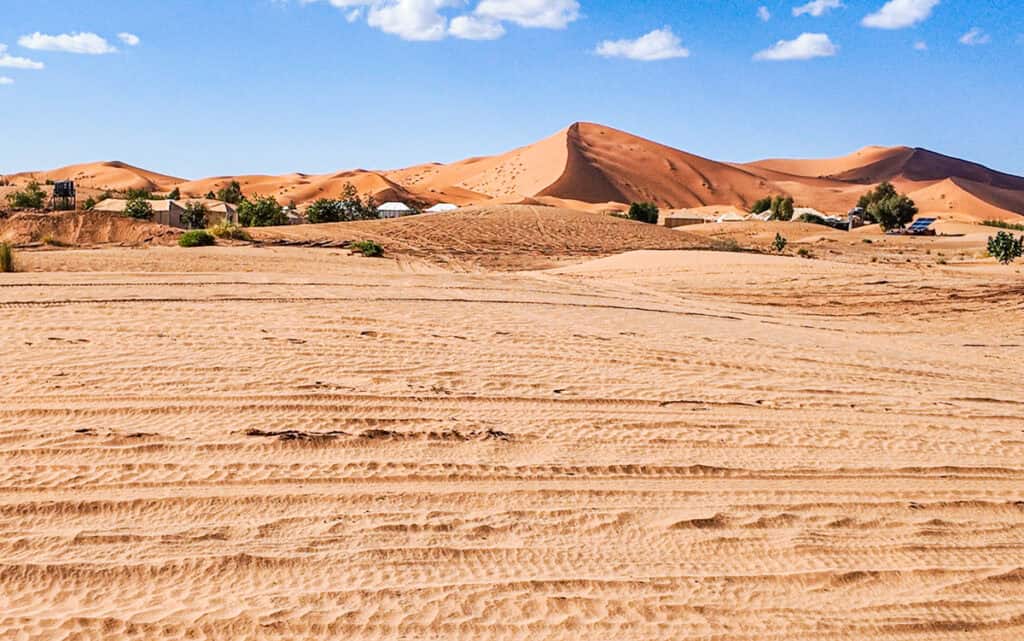
Book two nights if you possibly can. With one night, you arrive at sunset, sleep, watch the sunrise and get back in the car, and the desert becomes the place you passed through on the way to Fes. Our second night gave us the whole middle day: the 4×4 tour, Khamlia, the nomad lunch, the quad bikes, a second sunset and the campfire.
Even with two nights, I left wishing for more mornings and evenings out there with nothing planned. A desert looks empty from the window of a bus, and once you’re in it you see how much life it holds, and how quiet your own head gets when the noise of home is that far away. If you’re stretching our route into two weeks, a third night in the desert is one of the additions I suggest in our 10-day Morocco itinerary.
How to book a Sahara desert camp in Morocco
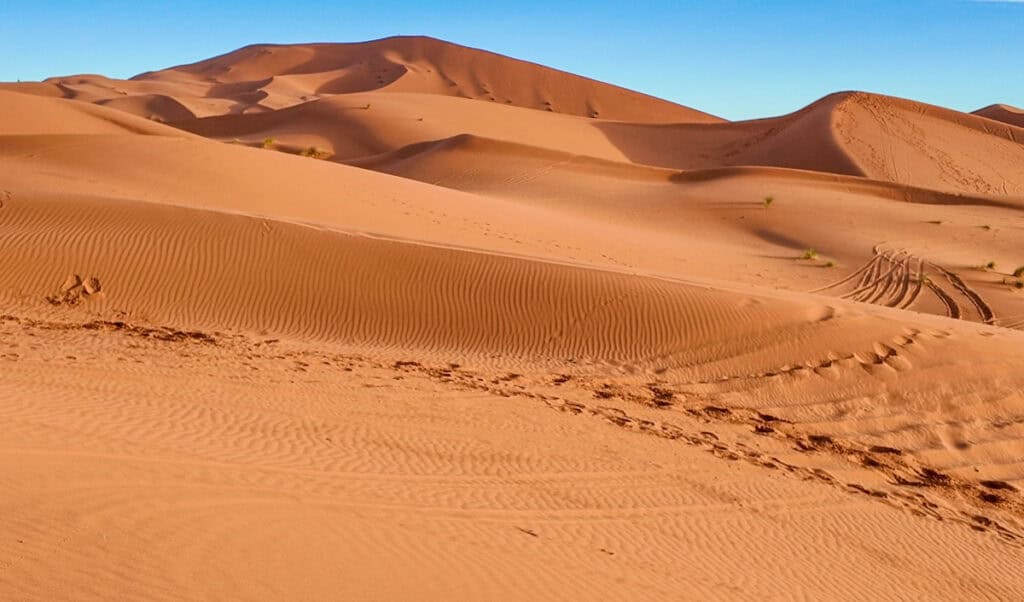
There are several camps lining the edge of the Erg Chebbi dunes, and you can get to one in a few ways.
- On a group tour. We went with Your Limitless Adventures, so the transfers, camel ride, camp, 4×4 tour and quad bikes were all arranged. Here is a three-day tour on Viator leaving from Marrakech
- With a private guide. Mo can arrange private and small-group trips that include the desert and the nomad lunch.
- On your own. Book the camp directly, like Sahara Majestic Luxury Camp, and add the camel ride and camp night or activities separately. Ask the camp how they get you and your bags across the dunes.
If you’re starting in Marrakech, our 3-day Marrakech itinerary and our guide to things to do in Marrakech will help you plan the days before the drive, and I’d book the Marrakech night street food tour for your first evening.
Common questions about a Sahara desert camp in Morocco
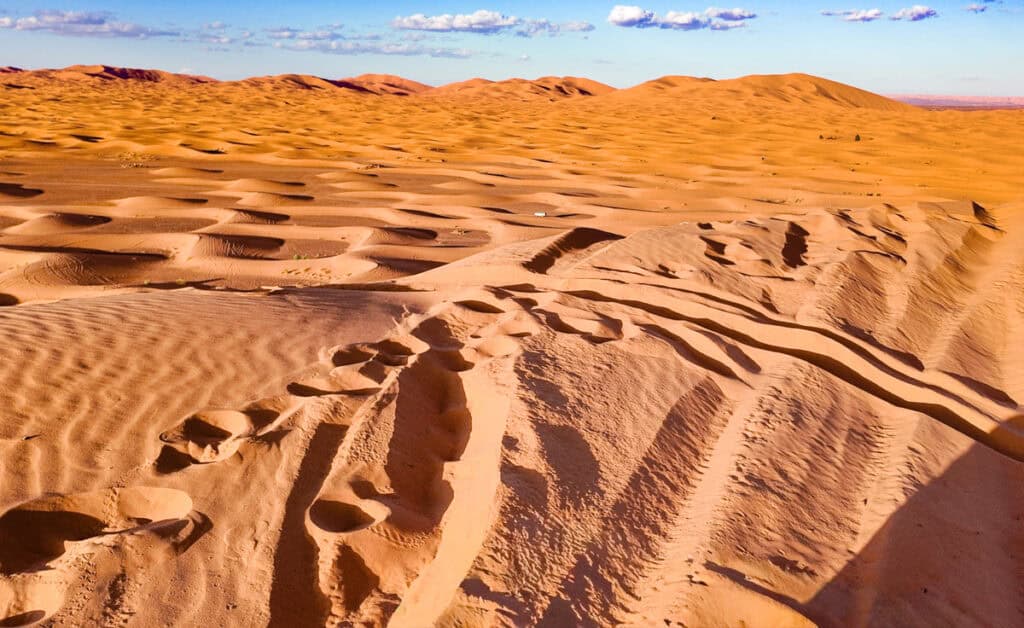
How long is the camel ride to a Merzouga desert camp?
Ours took about 90 minutes from the edge of the Erg Chebbi dunes to Sahara Majestic Luxury Camp, including a stop on a ridge for sunset. The length depends on where your camp sits in the dunes.
Do luxury desert camps in Morocco have bathrooms?
Ours did. At Sahara Majestic Luxury Camp, each canvas tent had double or twin beds, a shower and a bathroom. If a private bathroom matters to you, check the tent description before you book.
How cold does the Sahara get at night?
In spring and autumn, nights near Merzouga are cool, at roughly 10 to 14°C (50 to 57°F), and from December to February they can drop below freezing. Pack layers for sunrise and the campfire whatever the season.
Is one night at a Sahara desert camp enough?
One night covers the camel ride in, dinner and sunrise. Two nights gives you a full day for a 4×4 tour, Gnawa drumming in Khamlia, a nomad lunch, quad bikes and sandboarding, and it’s what I’d book.
Can you eat gluten-free at a Sahara desert camp?
Yes. Our camp had gluten-free options for me at dinner, and the nomad family accommodated us at lunch. Tell your camp or tour operator when you book so the kitchen can plan ahead.
If the Sahara is on your list, I’d love to hear when you’re going and what you’re most excited about, so leave me a comment below. I share more stories like this in The Golden Thread, my weekly newsletter, and if you’d like to travel like this with a group of women, I’m leading Your Limitless Adventures trips to Thailand in February 2027 and Vietnam in March 2027.
More Morocco guides
Original Article on yTravel Blog