



This post may contain affiliate links. We may receive a small commission, if you make a purchase. Read Disclosure.
On my first morning in Marrakech I got lost in the souks on purpose, and within the hour a scarf seller had wound my head in three different Moroccan styles, walked me past the dye vats behind his shop and handed me over to his father, who sold me argan oil and face cream for more than I should have paid. That afternoon I ran into the son again. “Did my father give you a good price?” he asked, and when I said I didn’t think so, he checked my bag, grinned and told me I must have been the first customer of the day, because that was a very good price. (It wasn’t, and we all laughed about it.)
That’s Marrakech, and it’s why my list of things to do in Marrakech starts with getting a little lost. I spent five days here in October 2026, two on my own and three leading 12 women on a Your Limitless Adventures trip, before we crossed the Atlas Mountains on our 10-day Morocco itinerary.
This guide began as an interview with Amanda from MarocMama, who met her Marrakchi husband in the city in 2004. She knows Marrakech in a way five days never could, so I’ve kept her tips wherever my own experience can’t match them, and they’re marked as hers.
What are the best things to do in Marrakech?
As of November 2026, the top things to do in Marrakech are Jemaa el-Fnaa square after dark, the souks at opening time, Bahia Palace, Ben Youssef Madrasa (50 MAD), Le Jardin Secret (100 MAD), Jardin Majorelle (tickets sold online only), a hammam, a night street food tour and a sunrise hot air balloon ride over the Atlas Mountains. Three days covers the highlights. The souks open around 9am and most stalls close around 9pm.
Last updated Nov 2026
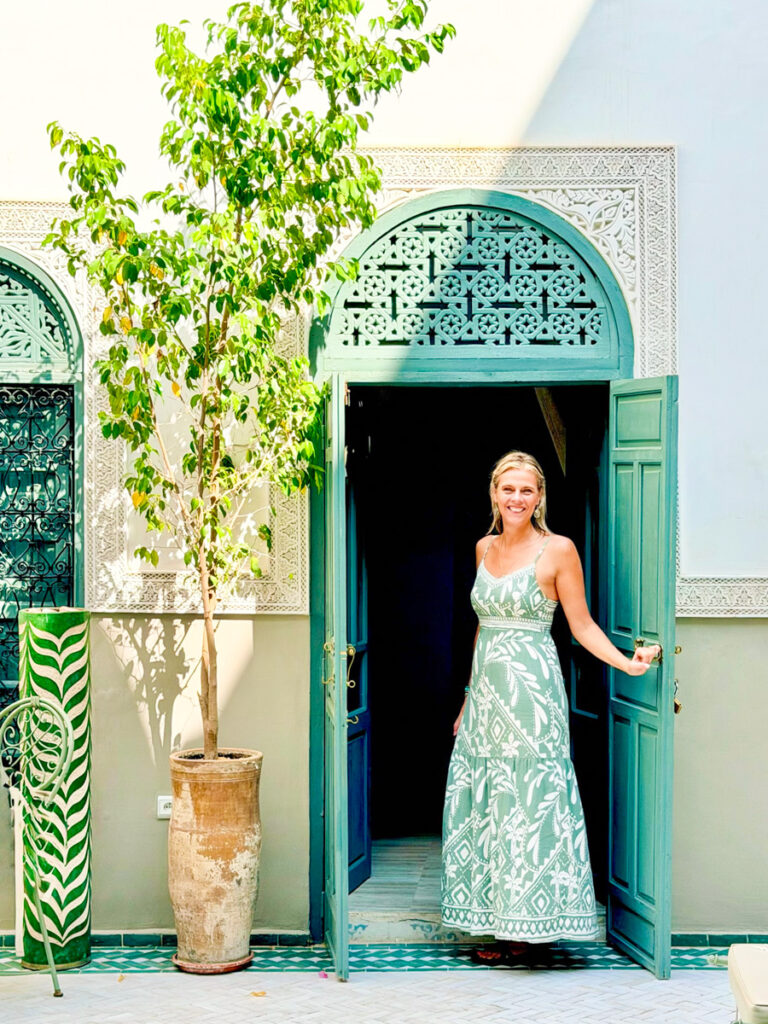
Marrakech at a glance 🔍
- Where to stay: a riad inside the medina for a first visit, or Gueliz and Hivernage for wider streets and newer hotels. Compare riads, hotels and guesthouses here.
- Getting around: walk everywhere inside the medina, and use petit taxis outside it.
- Unmissable sights: See the famous souk markets, admire the El Badi Palace, relax in a Hammam, do a Marrakech street food tour, and try the Moroccan wine!
- How long: three full days, four if you want the palaces and gardens without rushing.
- Book ahead: Jardin Majorelle (online only), skip-the-line tickets for Bahia Palace and Ben Youssef Madrasa, and a balloon ride.
- Money: carry dirhams. Card machines failed on us more than once.
- Saving money: eat street food, eat away from the main square, and always haggle for souvenirs (Amanda’s tip, and a good one).
- Good to know: shop early, and if you get lost, ask anyone for Jemaa el-Fnaa.
Looking to reserve an apartment in Marrakech? Click here to browse.
Things to do in the Marrakech medina
The medina is the old walled city, listed by UNESCO in 1985, and it’s where you’ll spend most of your time. Cars can’t fit down most of its lanes, so you’ll be dodging motorbikes, donkey carts, tok toks, and the odd cat asleep in a doorway, and you’ll walk a lot more than you expect.
1. Get lost in the Marrakech souks at opening time
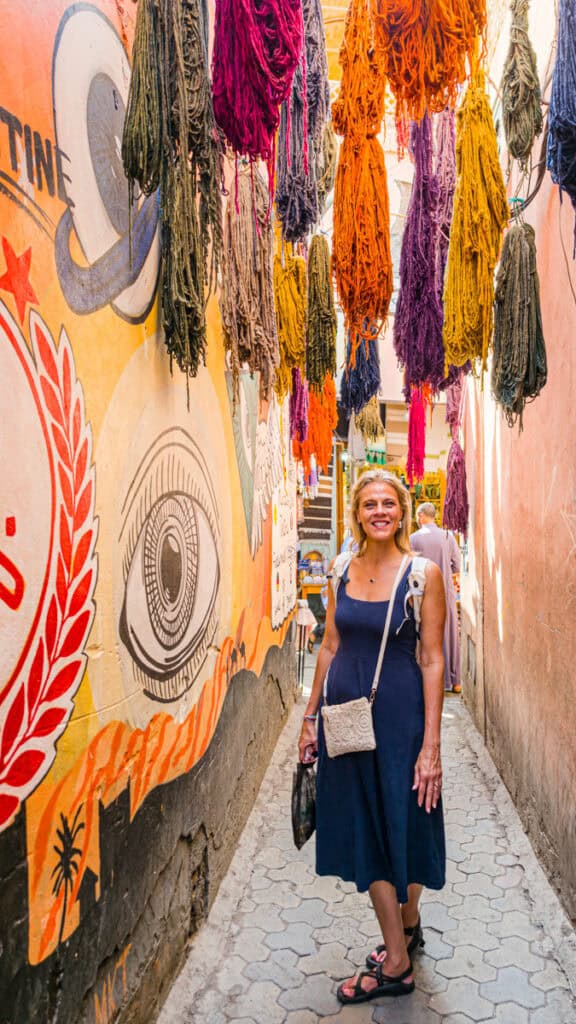
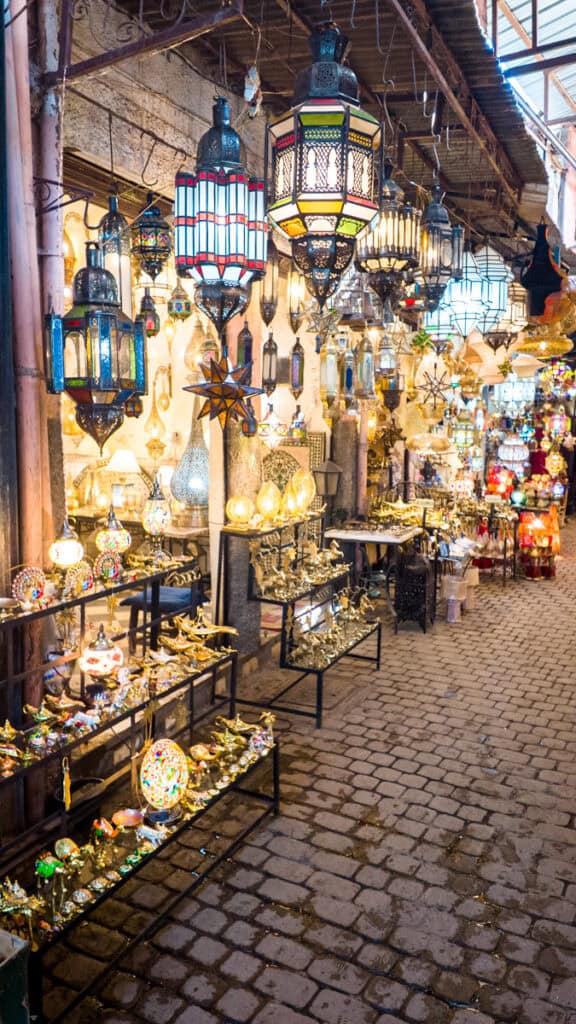
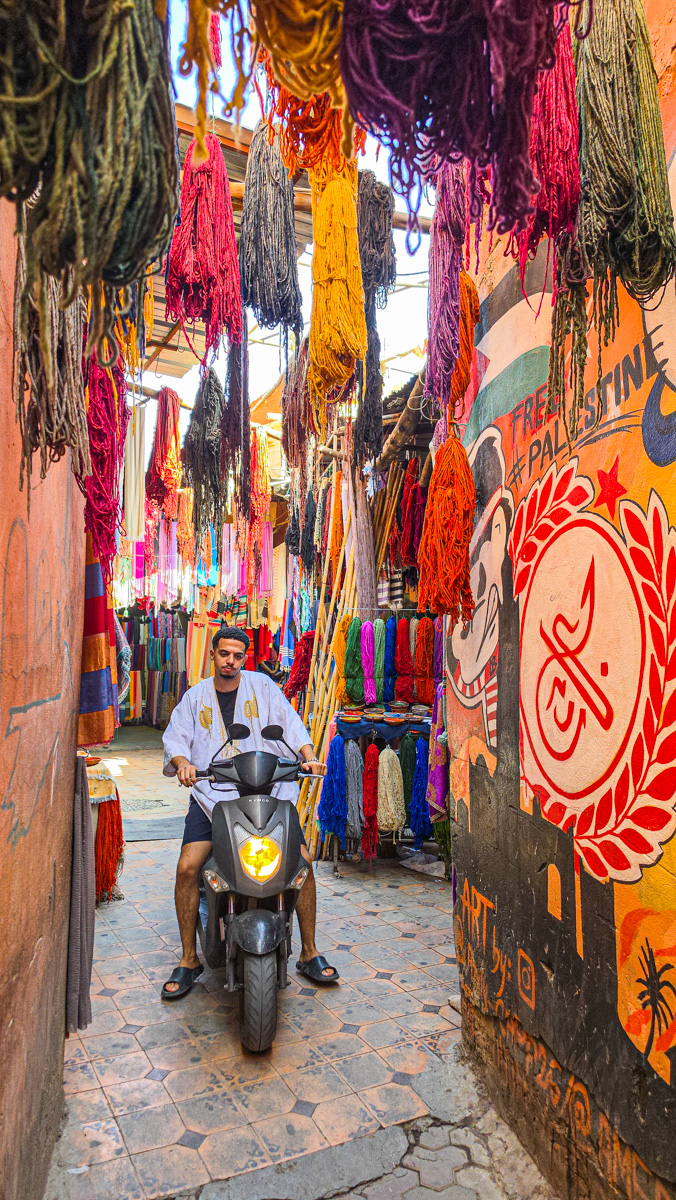
The souks are the covered market lanes that spread north of Jemaa el-Fnaa, selling spices, lanterns, leather, rugs, ceramics and argan oil. Keep wandering past the shopfronts and you’ll find the people making it all, metalworkers hammering trays, woodworkers carving and dyers coloring the wool, silk and cotton you’ll see hanging overhead in bright skeins.
Go at 9 or 9:30am, when the stalls open. The lanes are quieter, and many sellers believe the first sale of the day brings luck, so they’re keen to make it. By the afternoon the souks are packed (our group had to walk in single file to stay together), and some sellers have already made their money for the day and care less about yours.
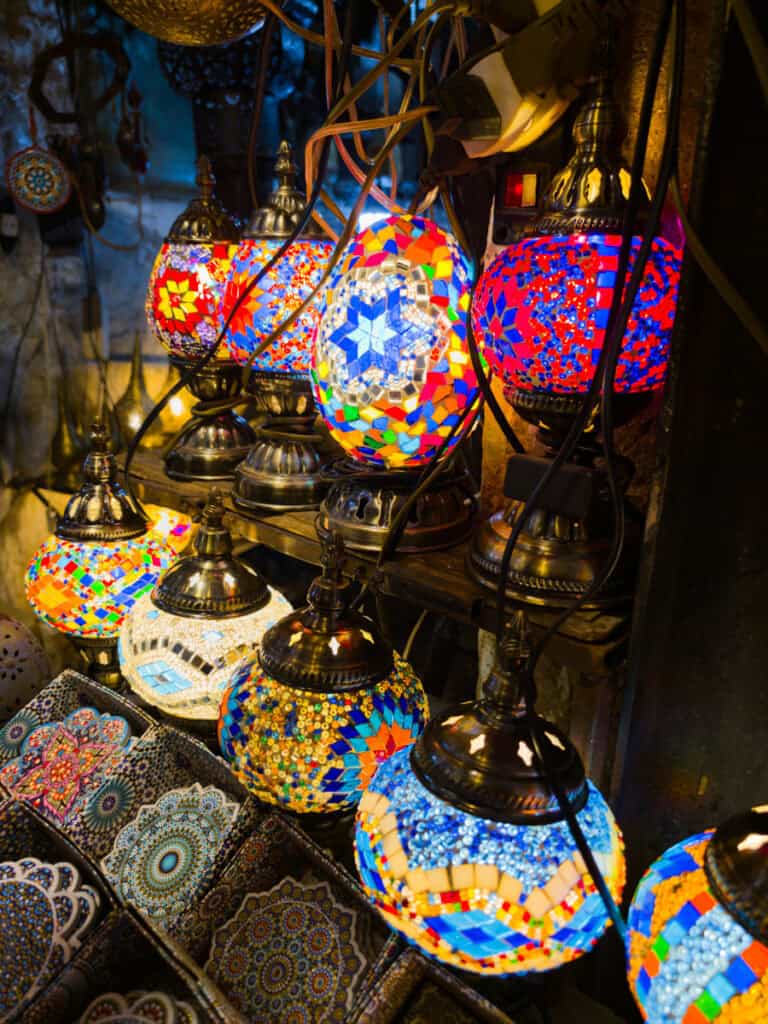
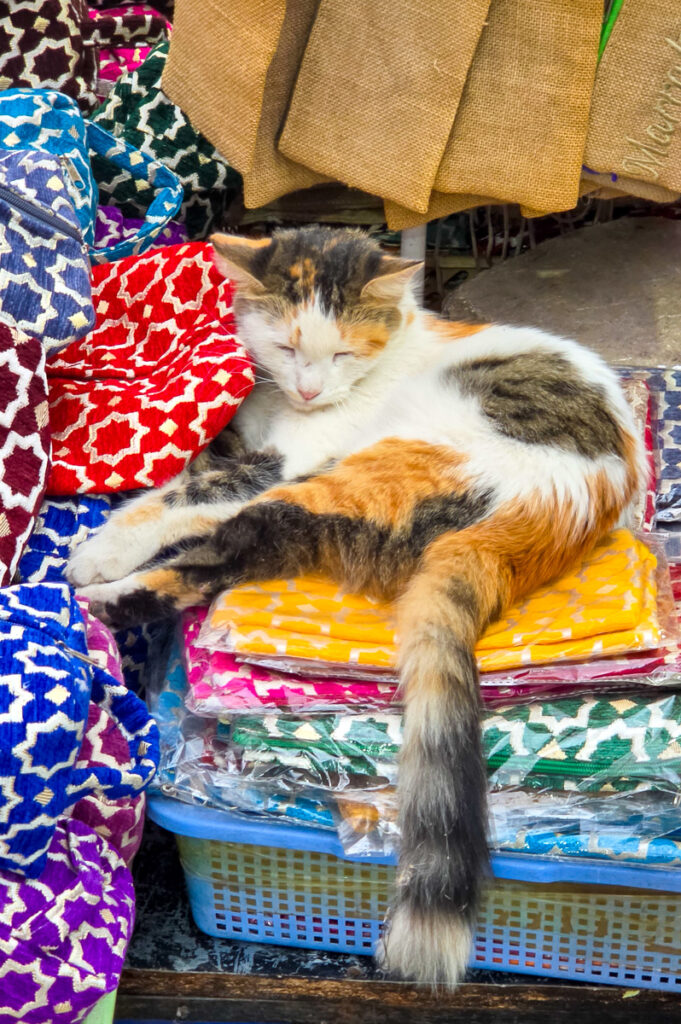
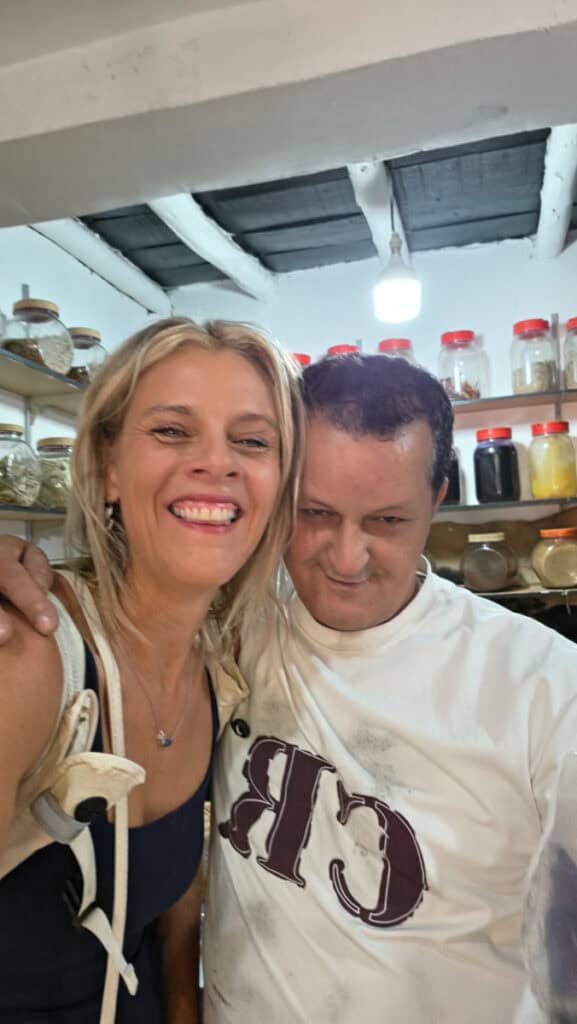
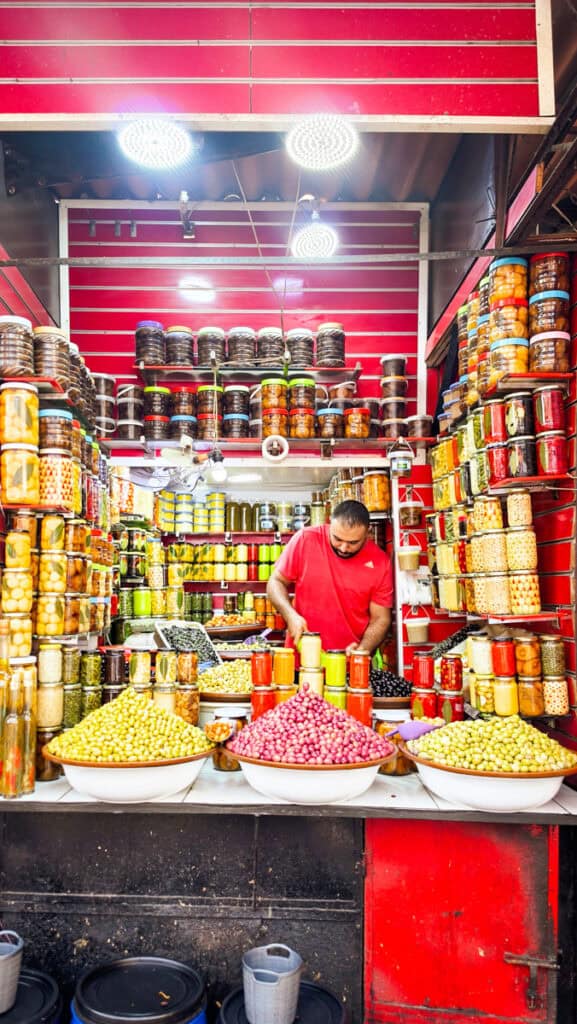
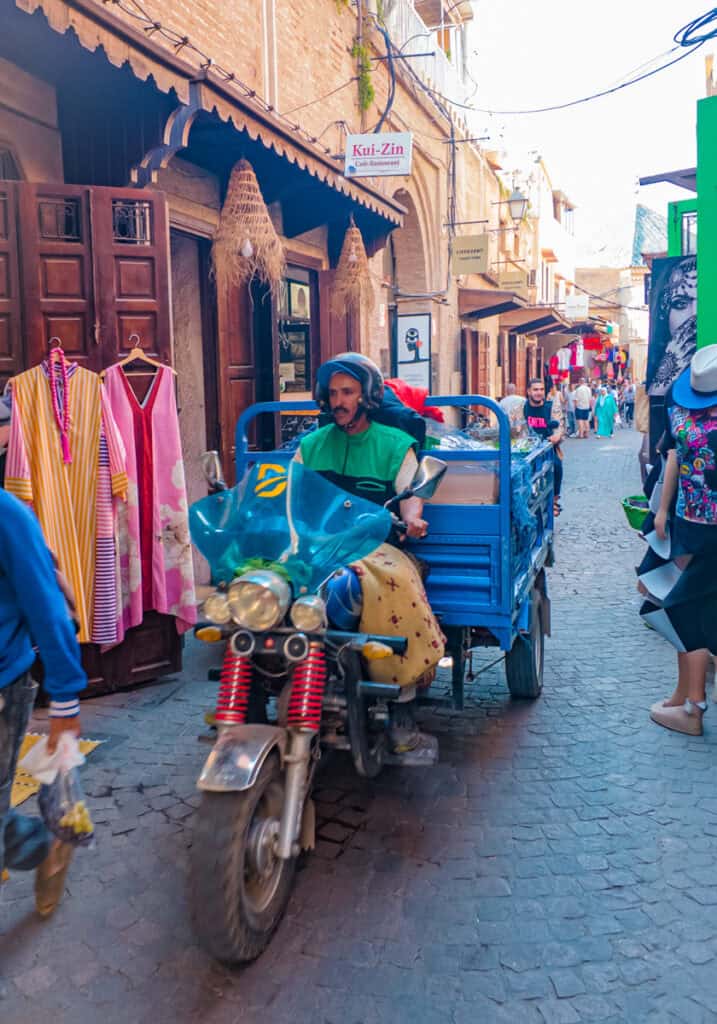
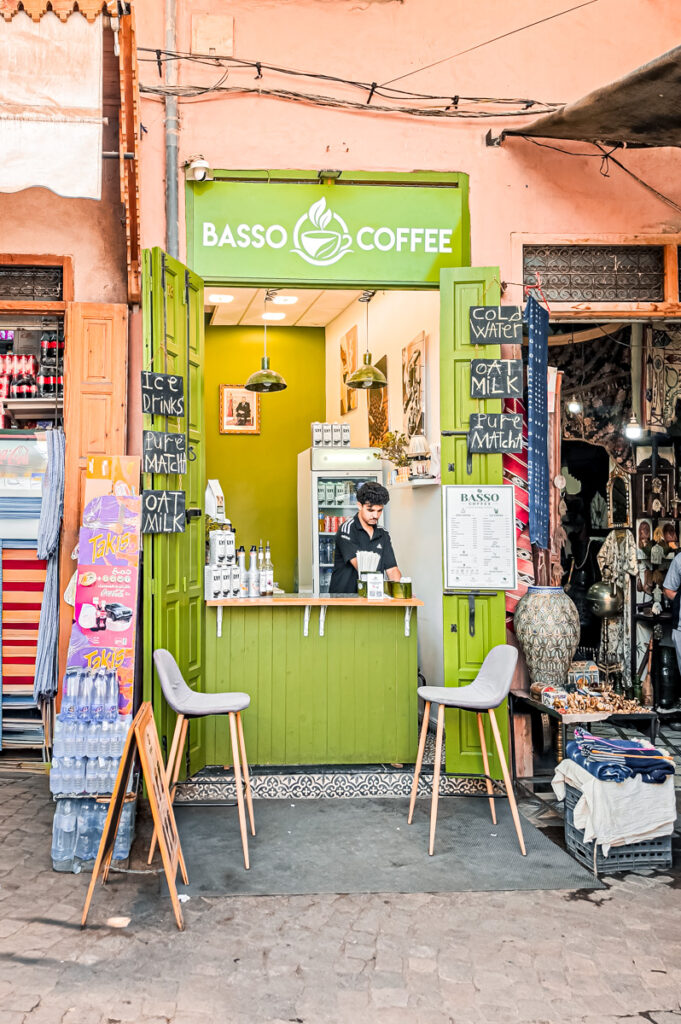
Start your offer low, at about a third of the asking price, and aim to land somewhere near half. I opened far too high on my first morning, the seller agreed almost instantly, and I laughed and asked him, “I messed that up, didn’t I?” He threw in a few gifts, which helped my pride a little. The souks of Marrakech are known for their textiles, spices, and will ave higher prices than Fes. Apart for my medicines and skin care, I bought bracelets for the girls with their names etched in Arabic.
Amanda’s tip: “The layout can be confusing; however, it is divided into different sections such as the woodworking souk, the clothing souk, the leather goods souk, the spice souk, etc. My best advice is to go as deep in as you can and then start shopping. Anything on the perimeter will be the most expensive, and odds are very good that you will find the same things for less money further inside.”
If you lose your bearings, ask anyone to point you toward Jemaa el-Fnaa. Every lane eventually feeds back to the square.
\If you are traveling solo and feel a little overwhelmed by the souks (trust me they’re fun), you can take a guided tour through them., Here are a few options, and I did consider this Airbnb experiences tour of the souks, but I ran out of time.
2. Shop the Mellah, Place des Ferblantiers and Gueliz

Amanda’s tip: “The Mellah is the Jewish Quarter of Marrakech (though the Jewish population itself is waning). Here you’ll find some great gold and jewelry as well as a wonderful spice souk. Remember to haggle for the best price. In recent years, gold has not been such a bargain. Sellers, for the most part, are looking for market rates or close to them. Nearby you’ll also find Place Ferblantier where metalwork is for sale. This is the place to get Moroccan lanterns and lights as well as other metal furnishings.”
“Gueliz is known for its boutique and specialty shops. This is not the rough and tumble haggling/shopping but higher end.” One of her favorites is Scènes de Lin on Rue de la Liberté, a textile boutique with natural linens that can be made into custom pieces.
I walked through the Mellah at night on my food tour, eating sfenj (Moroccan doughnuts) with mint tea, and it felt like a quieter, more local corner of the medina, a short walk from Bahia Palace.
3. Visit a herbal pharmacy in the souks
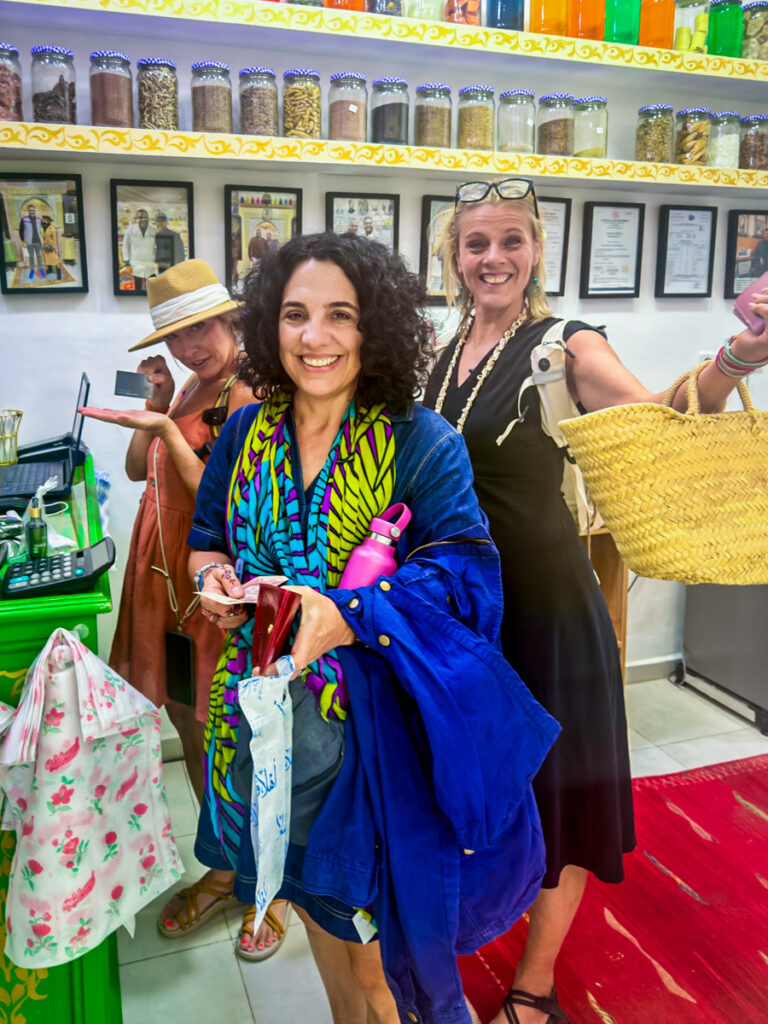
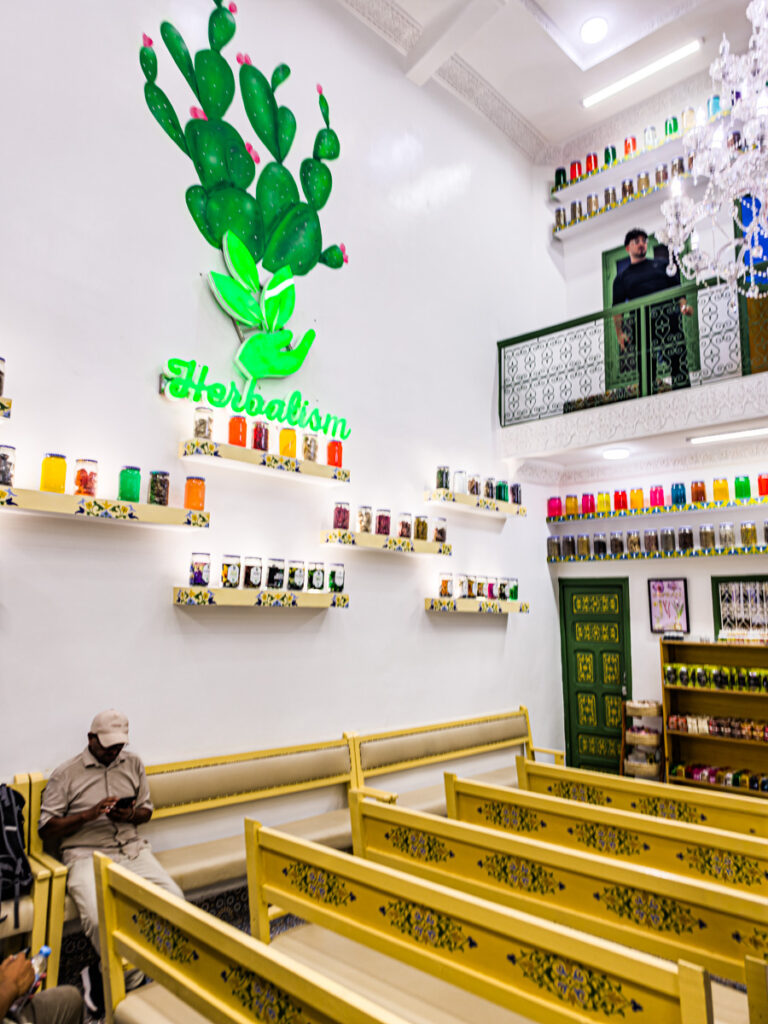
I’ll admit I walked into the herbal pharmacy our guide, Mo, recommended a little skeptical, and I walked out with a basket. The pharmacist must have taken one look at a group of women of a certain age and known exactly what we’d come for, and he ran us through argan oil, cactus seed oil, black cumin, eucalyptus and orange blossom, promising each one would take 10 years off. The shop sat inside what looked like an old church, pews and all (we cackled about that), with photos of famous past customers on the wall.
I bought argan oil, cactus oil for my skin, black cumin and eucalyptus for digestion and sinuses, and orange blossom for sleep, and I’ve regretted not buying more ever since. A pharmacy like this costs more than a souk stall, but souk products aren’t always as pure as they’re sold to be, so ask your riad or guide for one they trust.
4. Drink sand-brewed coffee (and find a proper flat white)
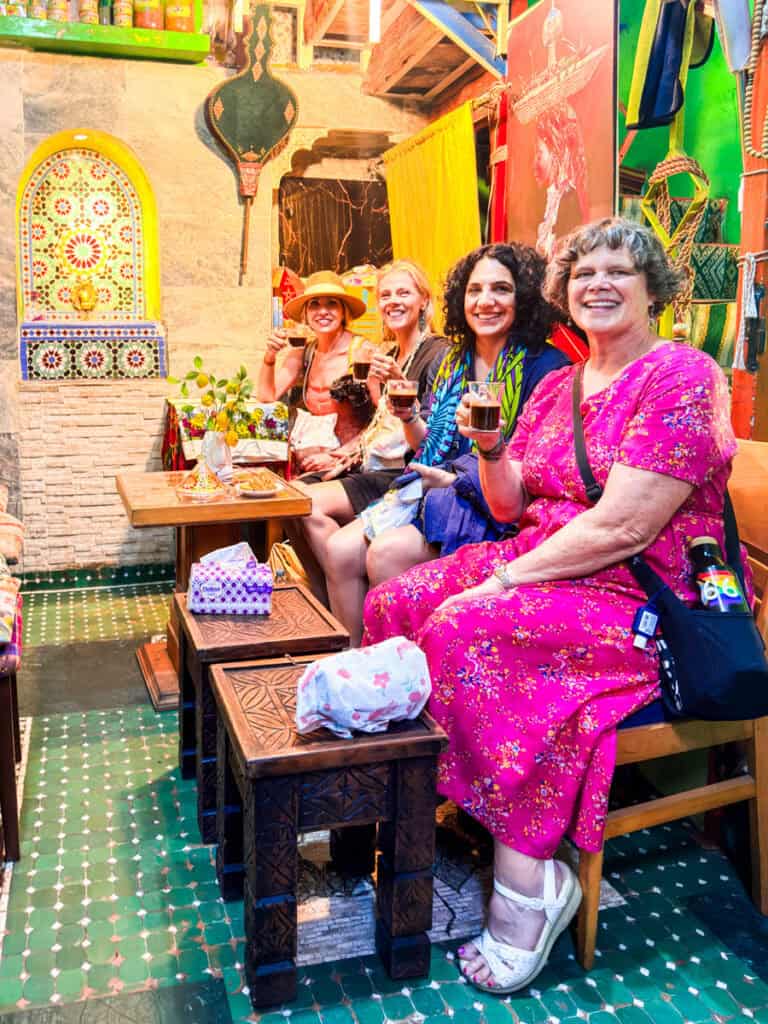
In a stall barely wider than its counter, deep in the souks, we watched a man make Moroccan spiced coffee the old way. The small pot sits in a tray of hot sand, which holds an even heat, and he circles it slowly through the sand until a crema rises on top. It takes a few minutes, and the coffee is smooth and rich. (see video below)
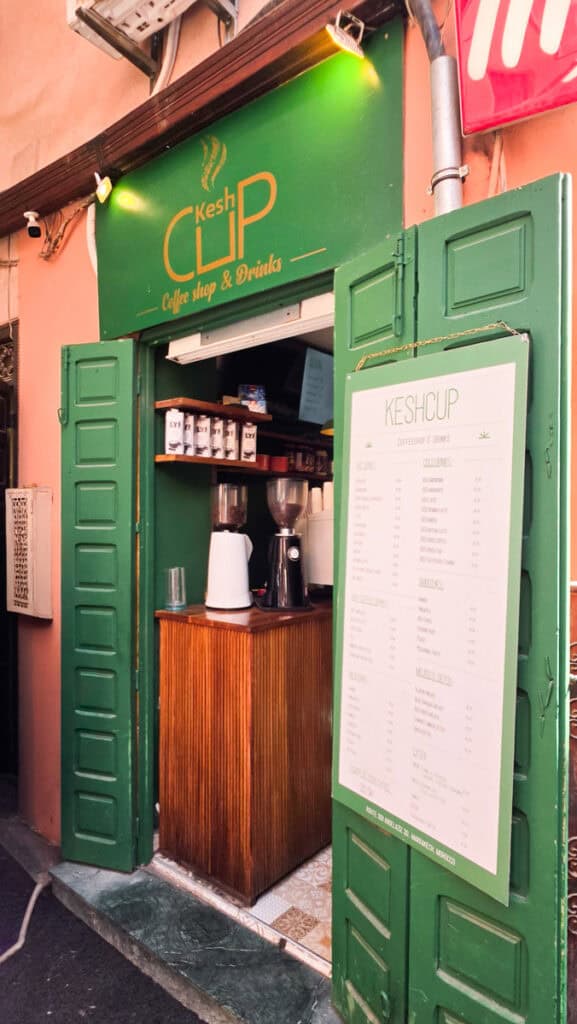
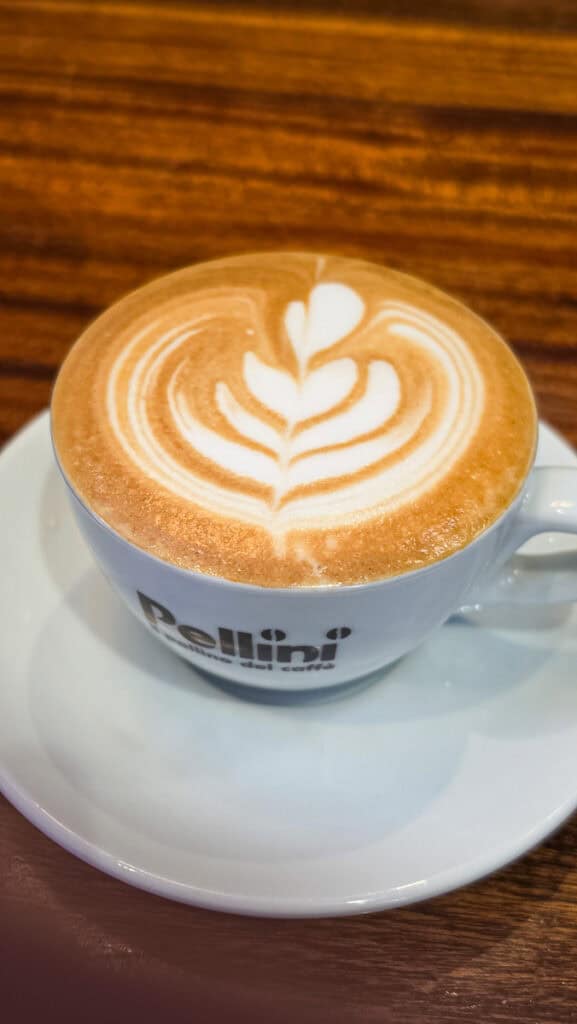
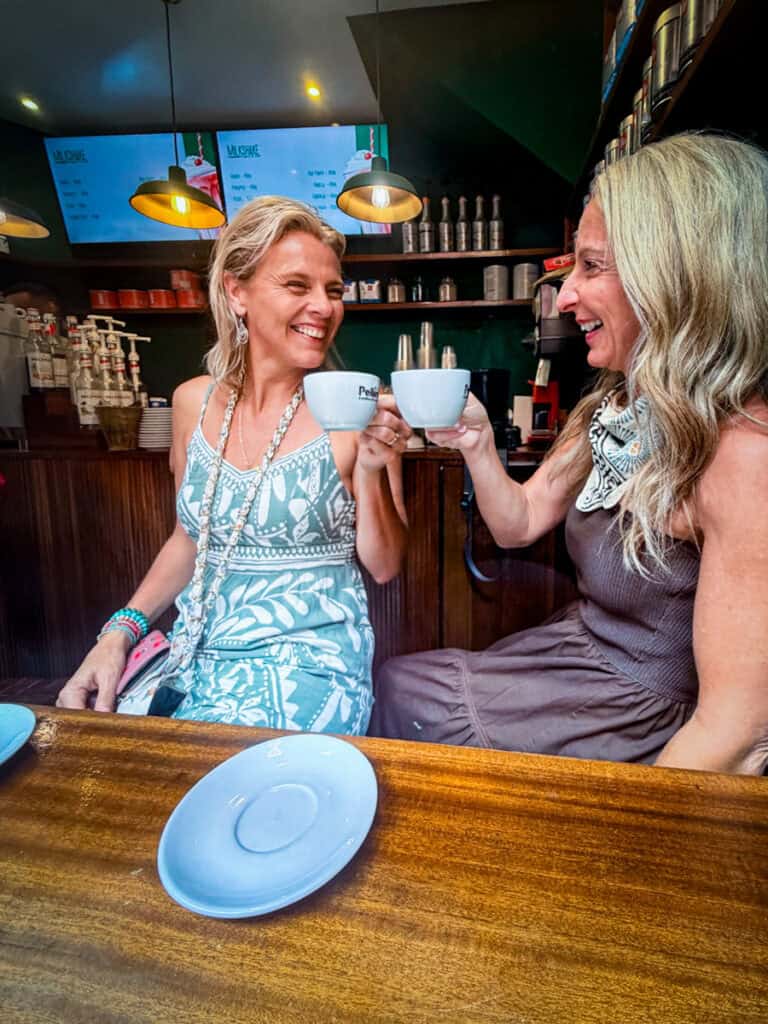
If you need a flat white (I always do), Kesh Cup, a tiny, beautifully designed cafe in the medina, pulls a double shot for about €4. The man on the stool beside me, visiting from Tunisia, swore the barista that day was the best in the city. Café des Épices, on the spice square, is a good lunch stop with a cappuccino that reminded me of the ones at home in Australia.
5. Take a Moroccan cooking class

Amanda’s tip: “A cooking class is a great way to appreciate Moroccan cooking and take home a unique souvenir. Morocco is known for delicious food that is rich in flavor and color, and it usually uses recipes that have been passed down through generations. In a cooking class, you learn all about the spices and ingredients used in Moroccan cooking and their uses.”
Amanda recommends the Marrakech Cooking School, which runs its classes from Riad Africa in the medina, starting with a trip to the Mellah market for ingredients and cooking a three-course lunch on the rooftop terrace. Here are more cooking class options through Viator, and more local cooking classes through Airbnb Experiences.
We did our cooking class in Fes at the end of the trip, and a chicken tagine is simpler than you’d think (the secret is the spice balance).
6. Escape to Le Jardin Secret
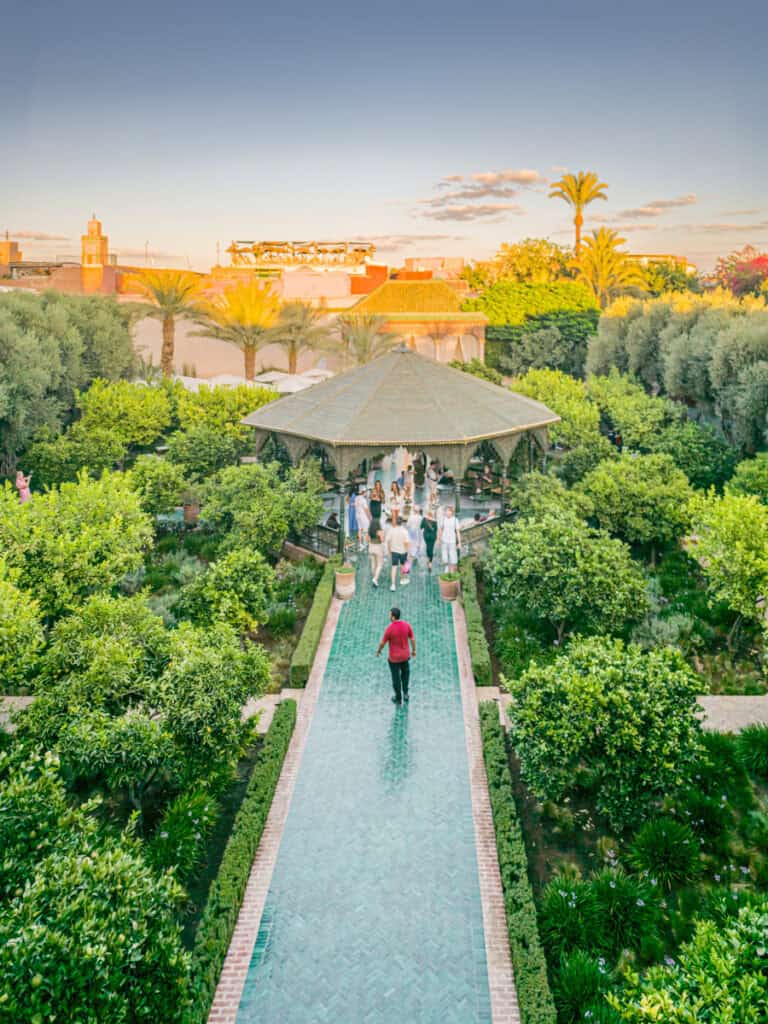
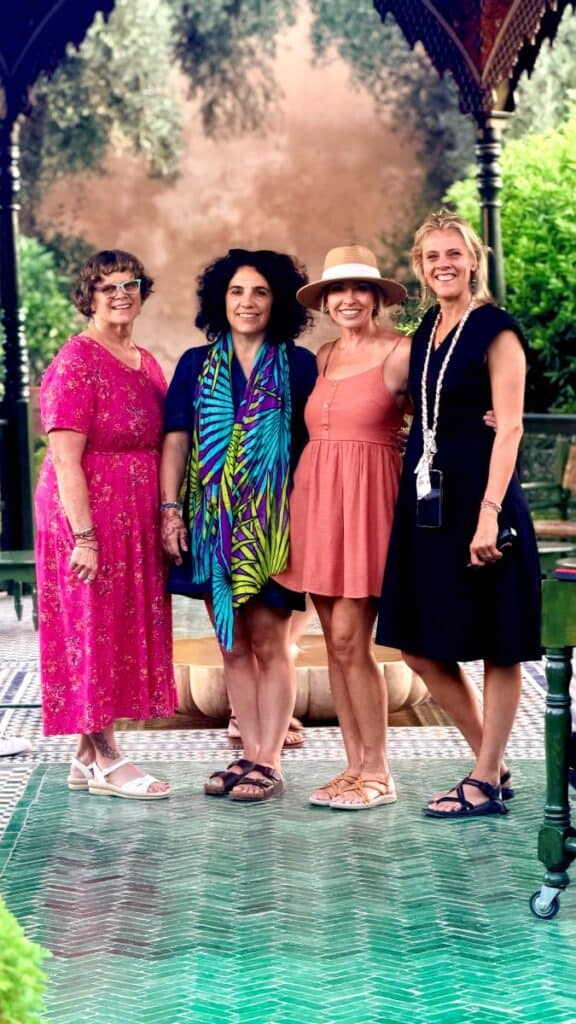
Le Jardin Secret, at 121 Rue Mouassine, is a restored riad garden hidden behind a plain wall in the middle of the souks, and stepping inside feels like someone turned the volume down. It’s small enough to wander in half an hour. Climb the tower for the view over the gardens and the medina rooftops.
As of November 2026, entry is 100 MAD, plus 40 MAD for the tower, and children under 12 go free. It’s open daily from 9:30am to 5:30pm in November and December, until 6:30pm from January to March, 7:30pm from April to September and 6pm in October, with last entry 30 minutes before closing.
7. Walk the Koutoubia Mosque gardens
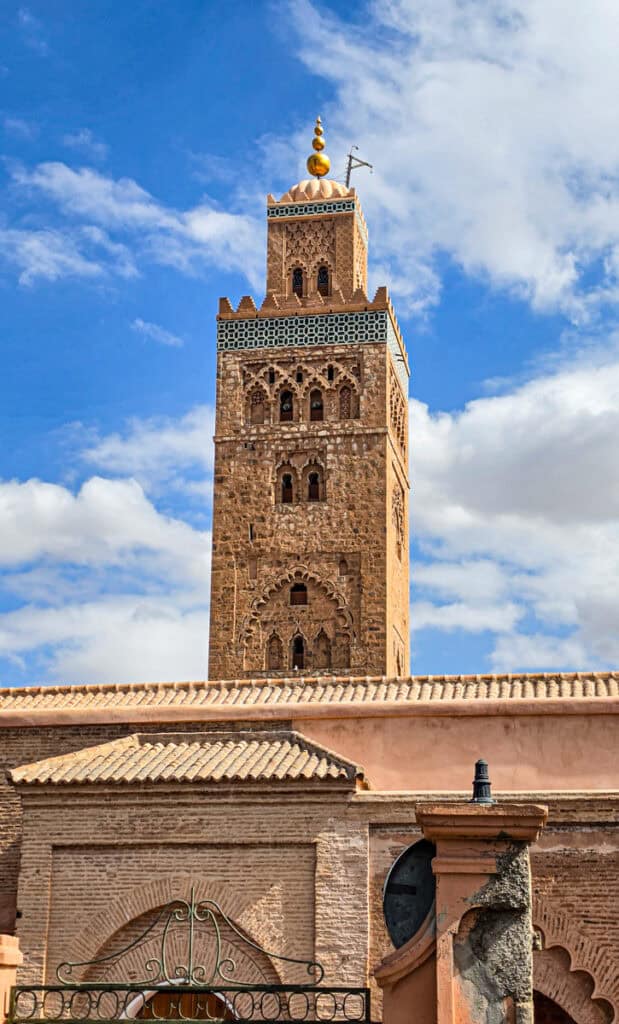
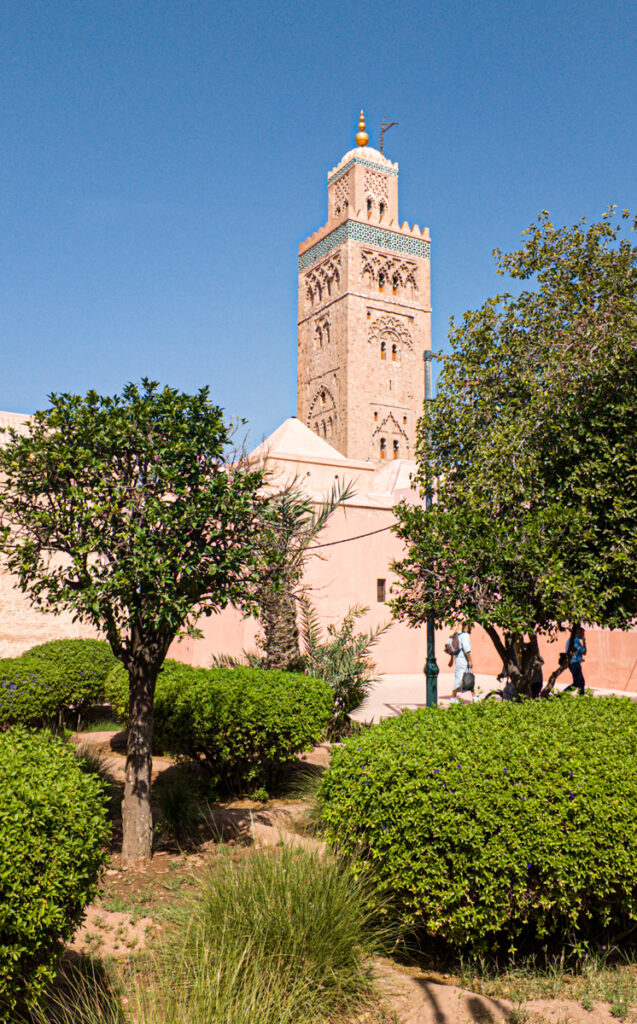
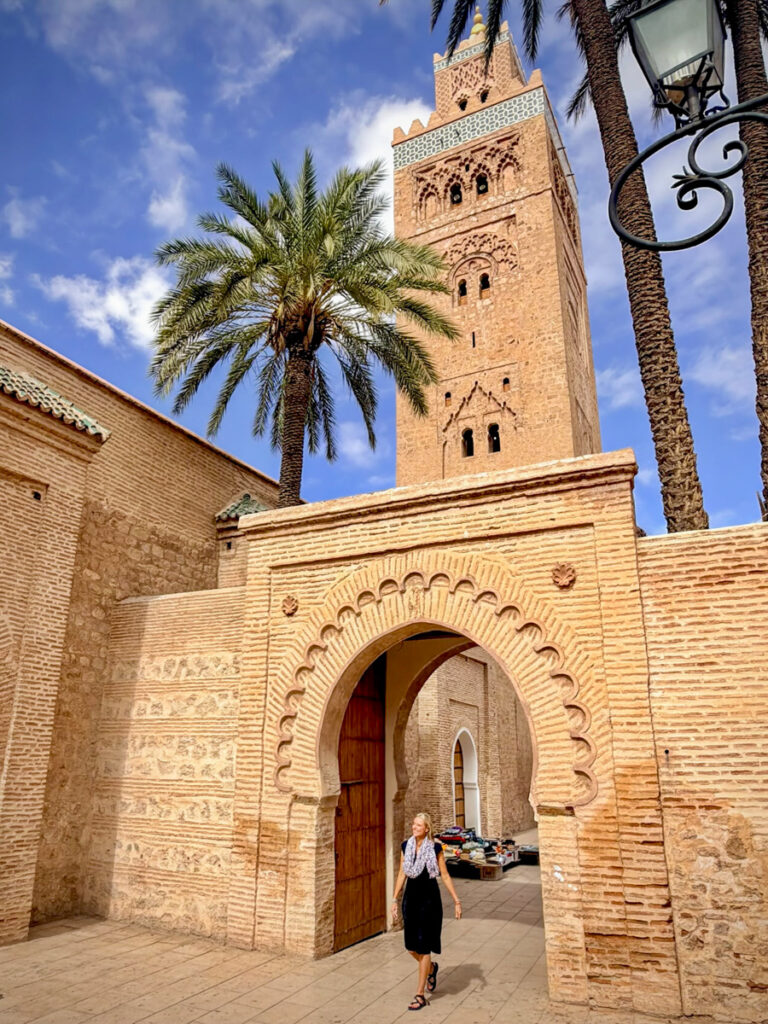
The minaret of the Koutoubia Mosque is the landmark you’ll navigate by from every rooftop in the city. It rises 77 meters (253 feet), and it’s one of the oldest buildings in Marrakech. The Almohad caliph Abd al-Mu’min built the first mosque here in 1147, soon after he conquered the city, rebuilt it in 1158, and the minaret was finished under Ya’qub al-Mansur around 1195.
Non-Muslims can’t go inside, but you can walk the grounds and the rose gardens around it. When the noise and smells of the souks got to be a bit much for me, the small garden behind the mosque was where I went to breathe.
8. Take a free walking tour or hire a local guide
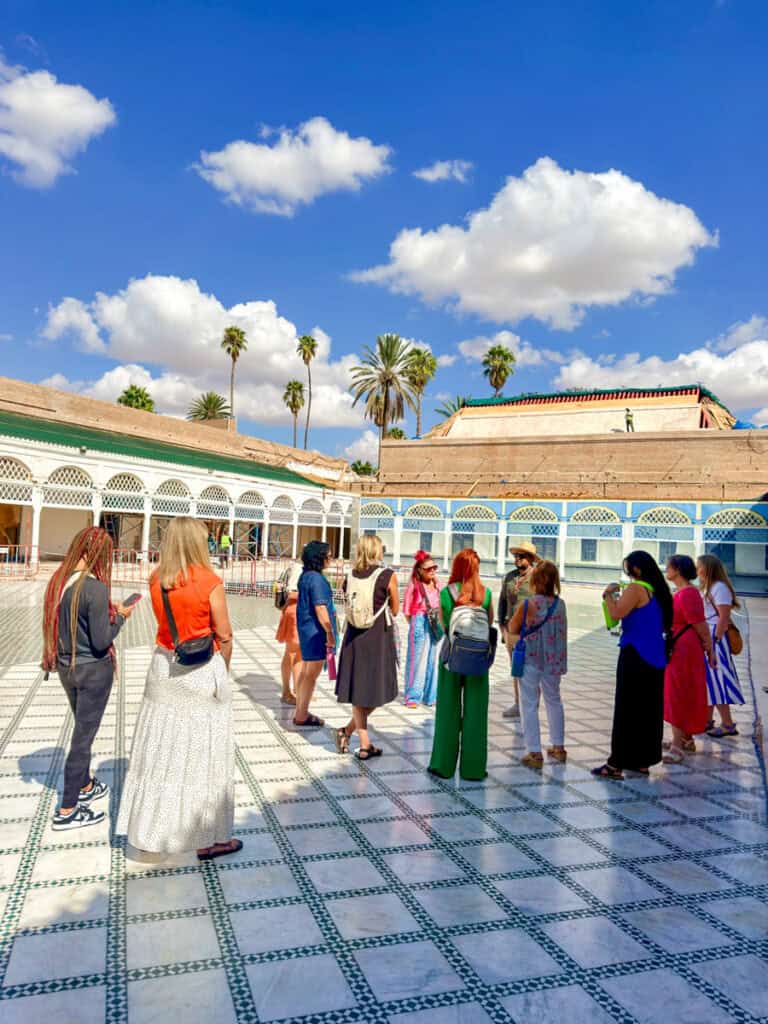
Amanda’s tip: “My best tip would be to make friends with a local and have them show you around. If you don’t know a local, you should take a free walking tour, which are always run by friendly locals who love their city. Not only do you get to see all the highlights with a knowledgeable guide and learn about the history and culture, but you can ask your guide for recommendations on where to eat, drink, and explore. Of course, the tours are free, but it’s expected to give your guide a tip if you enjoy the tour.”
As of November 2026, GuruWalk lists 20 free walking tours in Marrakech, most around two to two and a half hours, and it suggests a tip of about 100 MAD per person. Official guides carry a license card, so ask to see it.
Having Mo with us made a big difference. He’d pre-booked our skip-the-line tickets, steered us to shops he trusted, and filled every stop with history and stories about Berber life we’d never have found on our own.
Check out the following Marrakech walking tours available on Viator or see what is available on Airbnb Experiences.
9. Book a hammam and massage
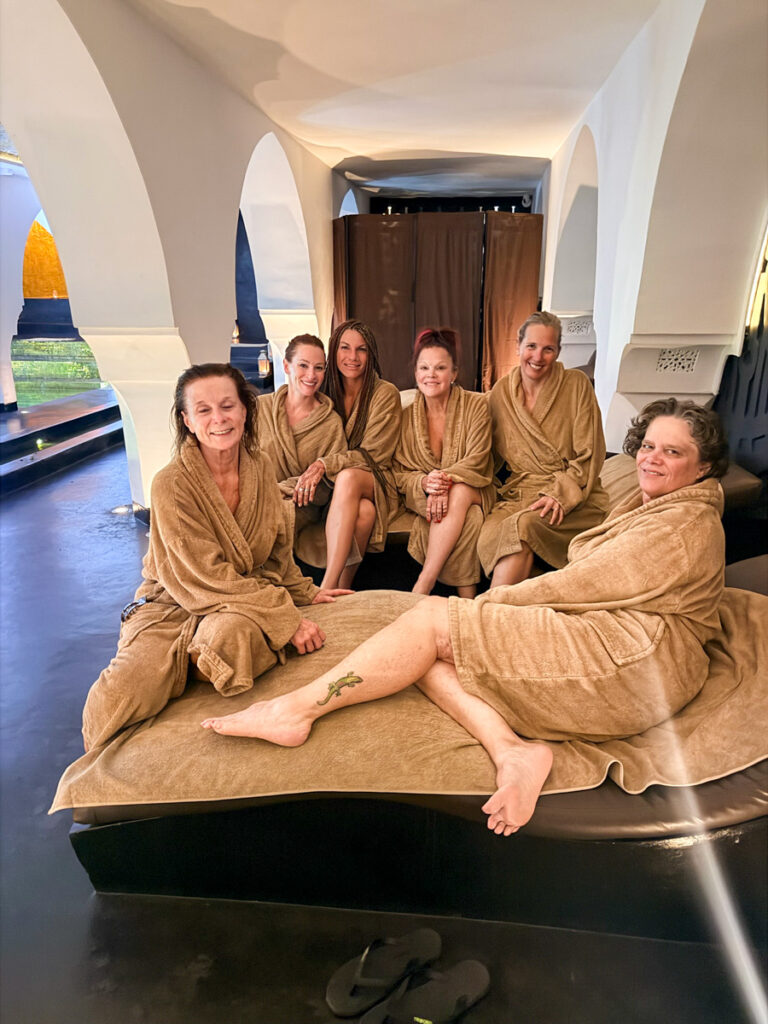
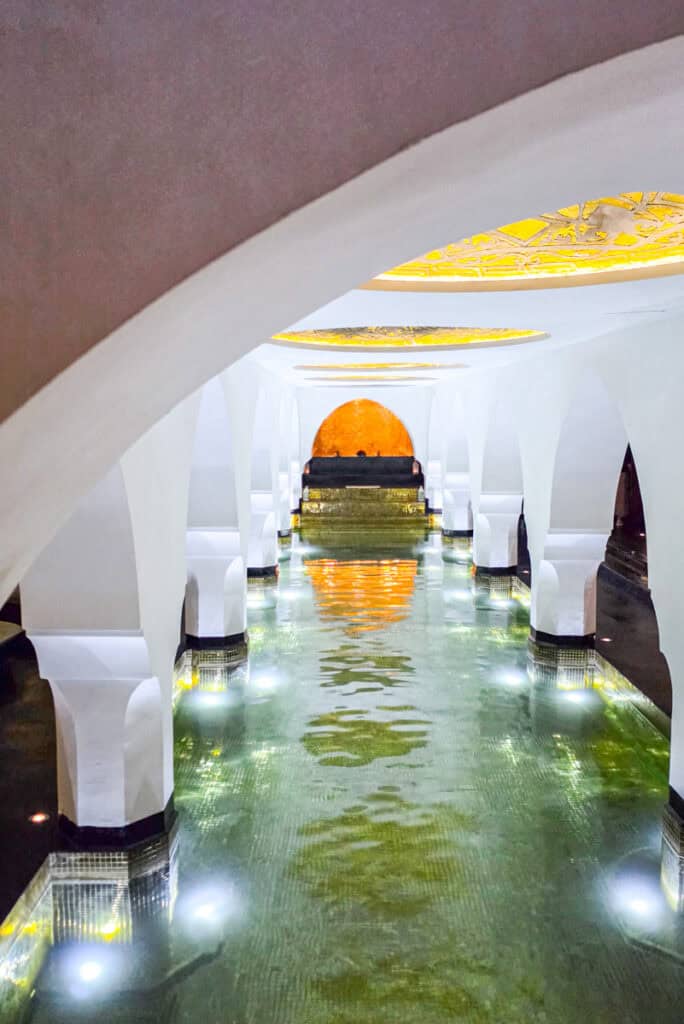
A hammam is a traditional steam bath where an attendant lathers you in black soap, scrubs you down with a rough kessa mitt and rinses you off, and it’s a Moroccan ritual worth trying at least once. Ours was at Riad Elisa, with an hour-long massage on the side, and with 12 of us we rotated, six in the hammam and six on the massage tables. Lying on a wet marble slab with women I’d met two days earlier, slipping about like seals while the attendants scrubbed and hosed us, had us laughing for the rest of the trip.
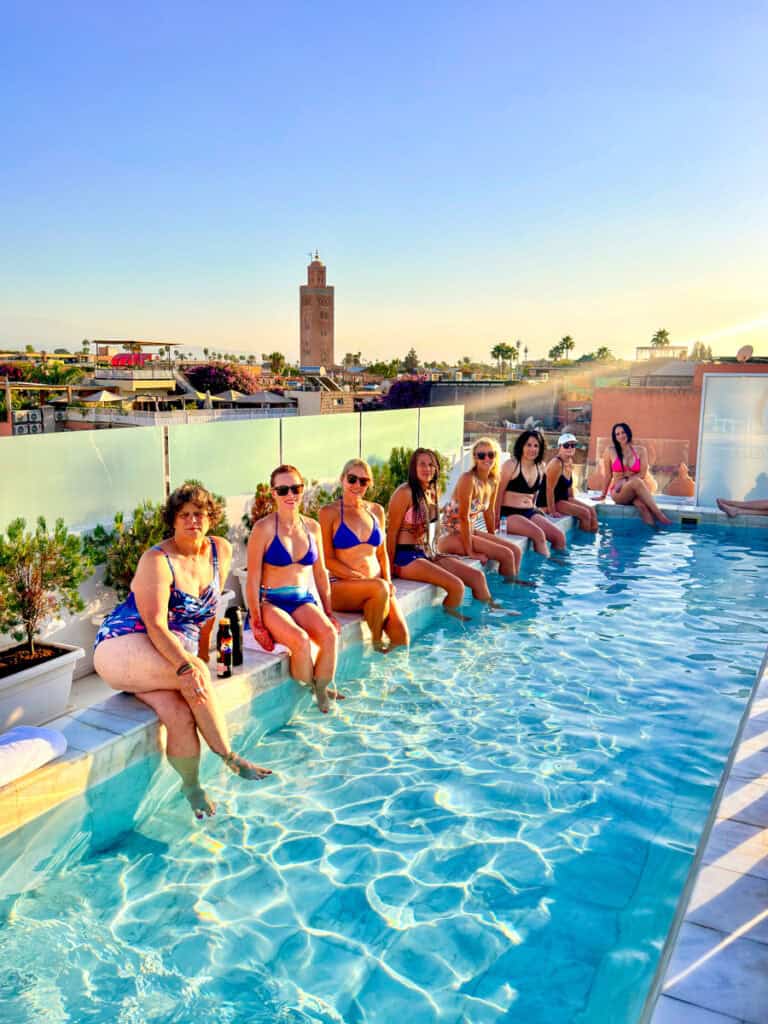

Do the hammam first and the massage second. I did it the other way around, which meant I came out fresh and clean, but the scrub is energetic, and the massage is where you want to finish. Afterwards we sat on the riad’s rooftop with our legs in the pool and a clear view of the Koutoubia minaret. As of November 2026, Riad Elisa’s spa is open to non-guests, with hammam and massage packages from 750 MAD.
Amanda’s tip: “You are welcome to visit any of the neighborhood baths but may feel more comfortable in a more resort-like setting.” She suggests Le Bain Bleu, on Derb Chorfa Lekbir in Mouassine, and Les Bains de Marrakech, near Bab Agnaou in the Kasbah. As of November 2026, Le Bain Bleu’s Gourmet package (hammam, scrub, massage and a meal) is 950 MAD, and Les Bains de Marrakech’s one-treatment Signature starts at 64 euros. Bring a swimsuit to Le Bain Bleu.
Marrakech palaces, tombs and museums
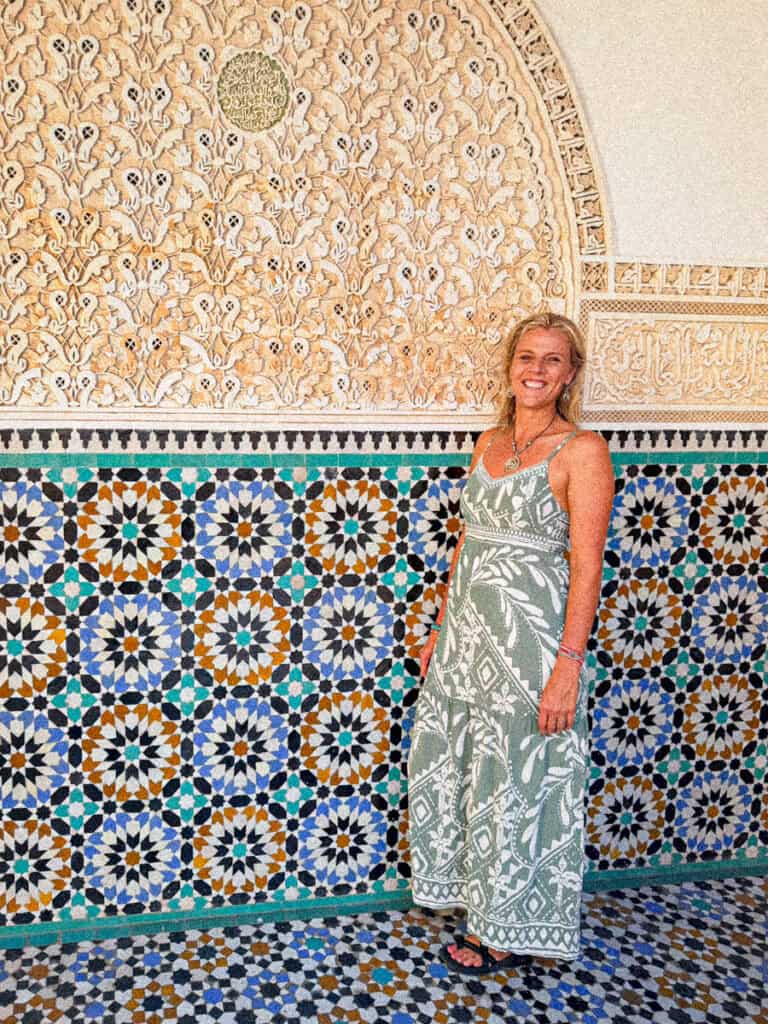
Most of the big monuments sit in two clusters. Bahia Palace, El Badi Palace and the Saadian Tombs are in the south of the medina, close enough to string together in a morning, and Ben Youssef Madrasa and the Marrakech Museum sit side by side north of the souks.
10. Tour Bahia Palace
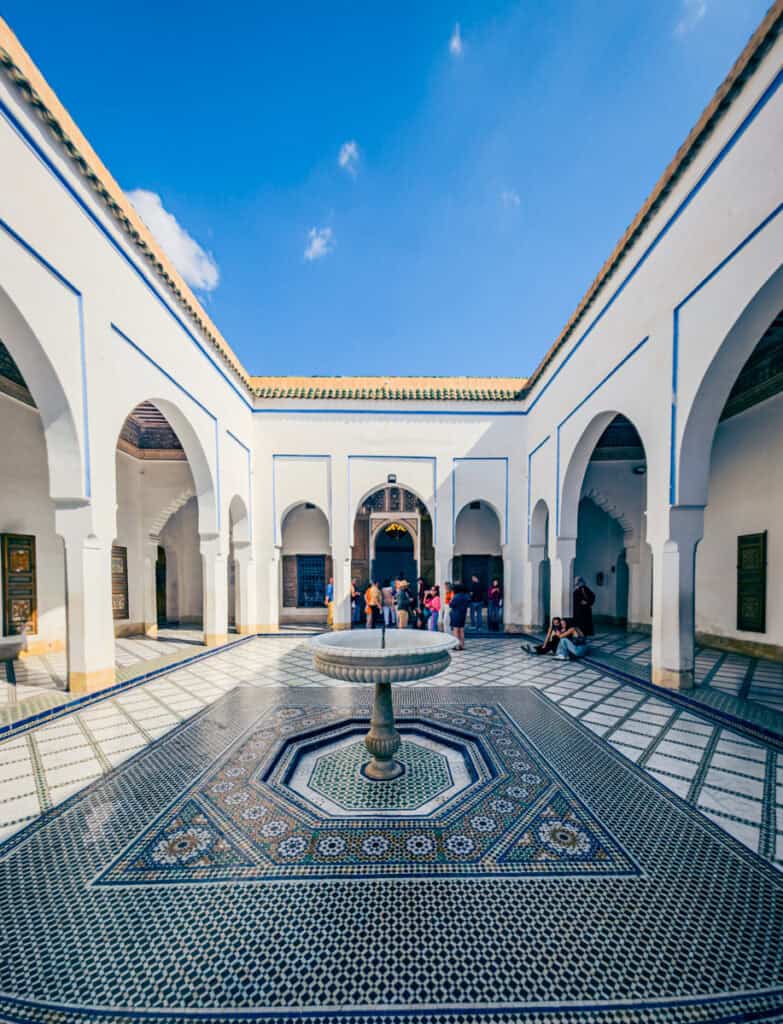
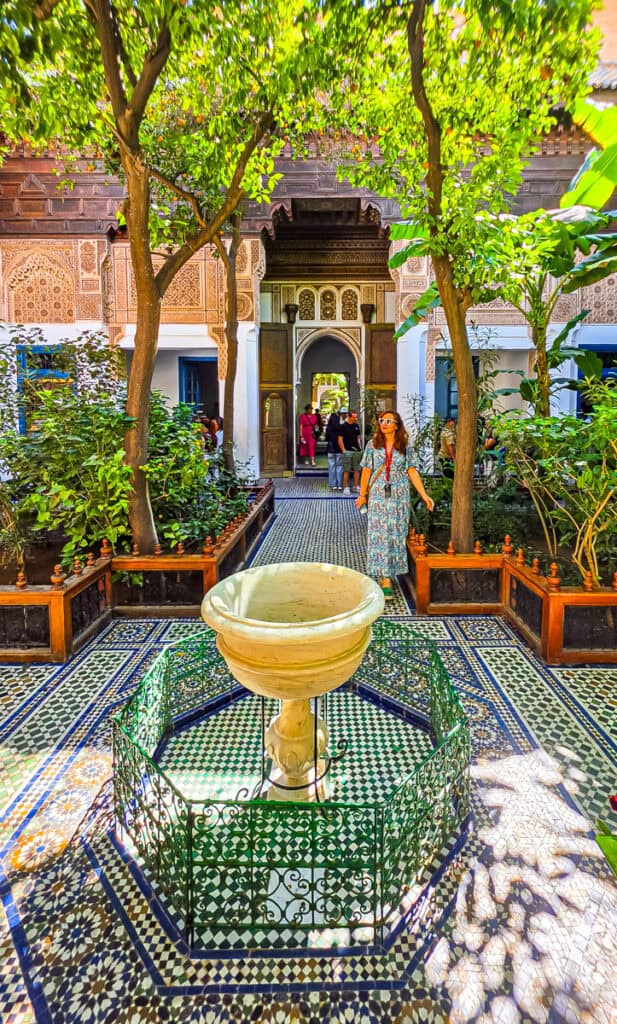
Bahia Palace was begun in the 1860s by Si Moussa, grand vizier to Sultan Muhammad ibn Abd al-Rahman, and his son Ba Ahmed, who ran Morocco in all but name until 1900, expanded it into a complex of about 150 rooms across almost two hectares. Its name means brilliance, and it earns it with carved cedar ceilings, painted doors, tiled courtyards and fountains. The King of Morocco still uses it now and then to host foreign guests.
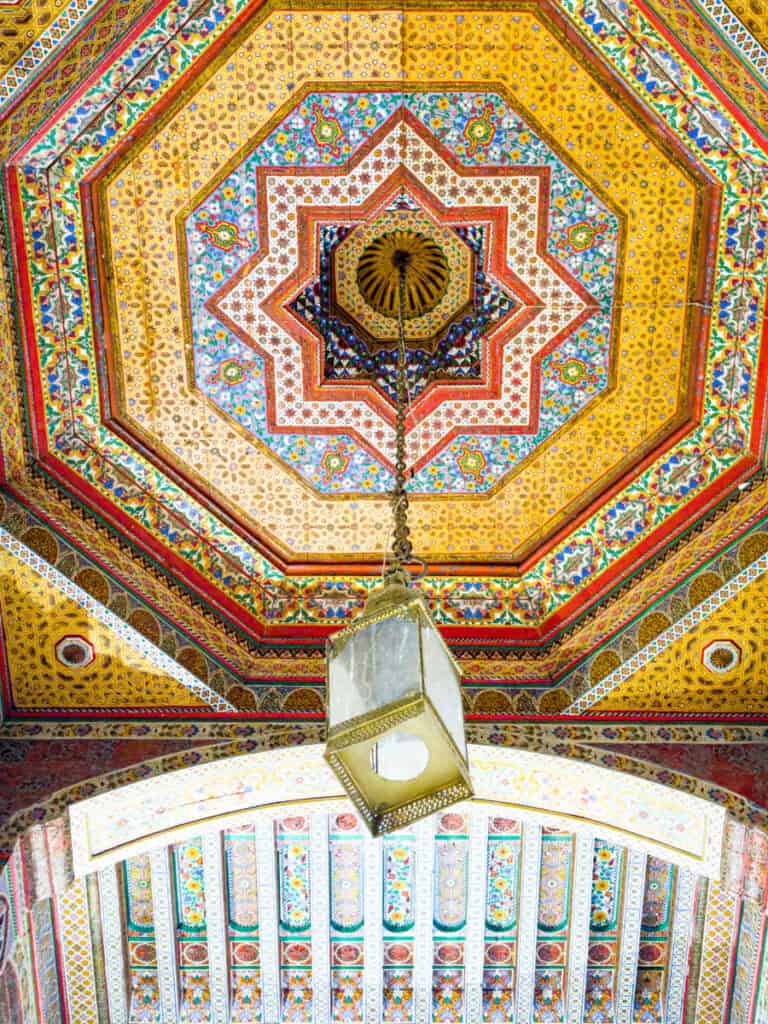
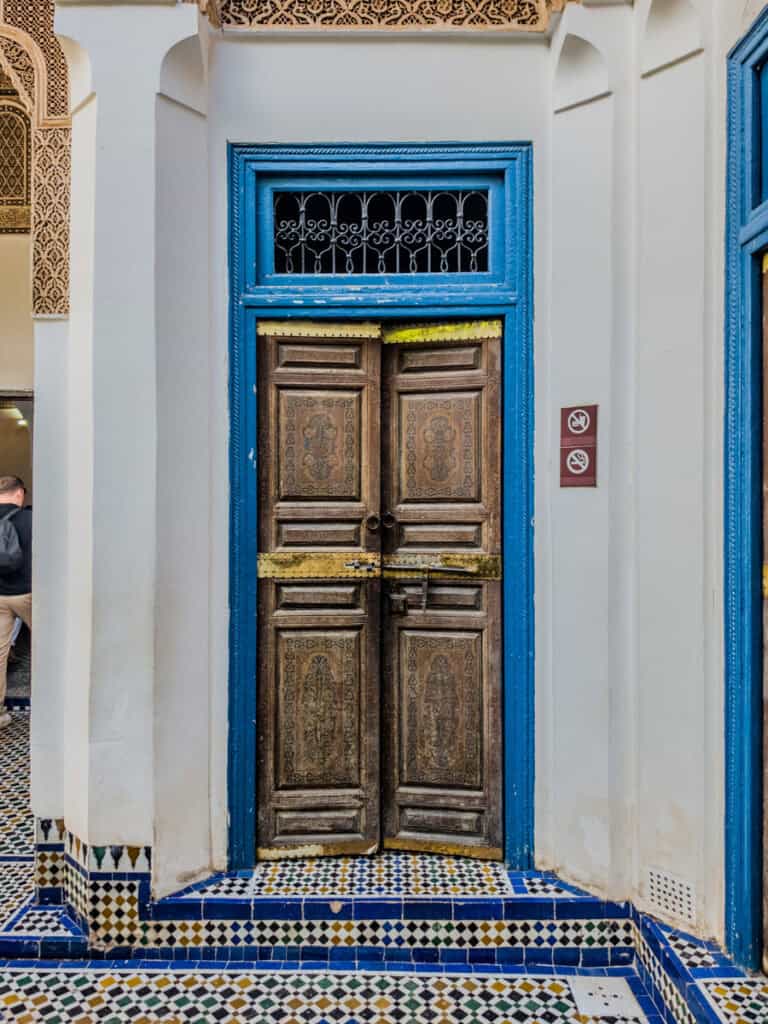
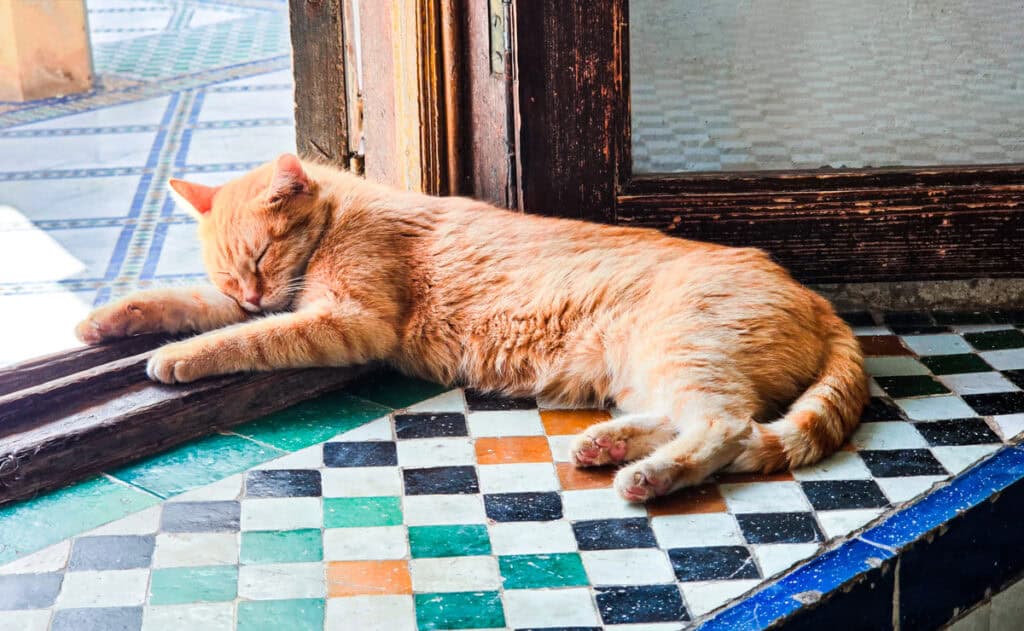
It was packed when we visited, with renovations underway, so getting a clean photo took patience. Mo had our skip-the-line tickets, and we walked straight past a long queue. He told us about the vizier’s wives and concubines, which, for a group of women, sparked plenty of conversation. My favorite resident was a cat asleep on the floor with half her body hanging out a window, clearly in charge of the whole palace.
Get a skip-the-line ticket for Bahia Palace here.
11. Tour Ben Youssef Madrasa
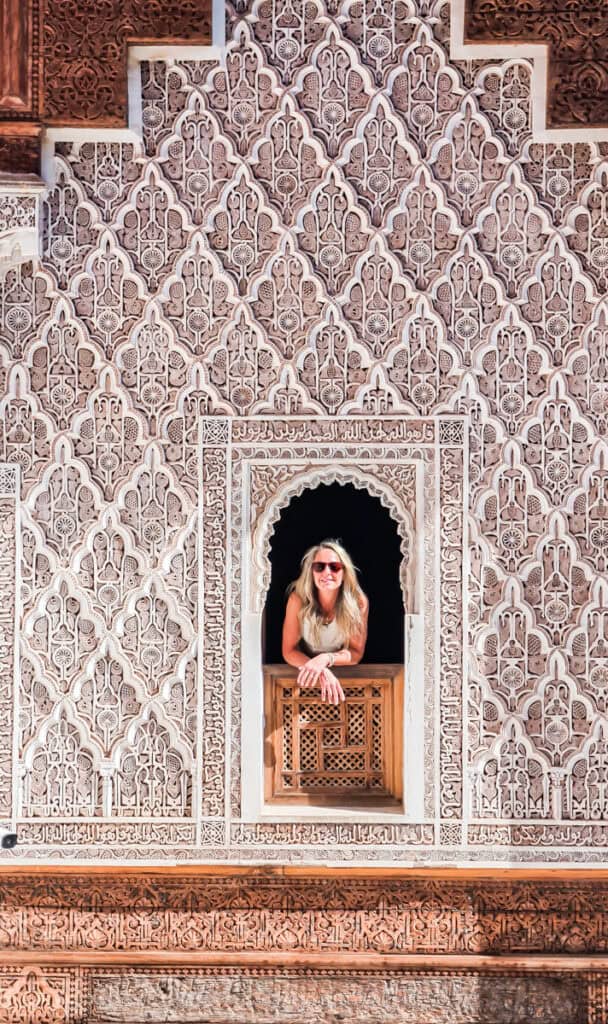
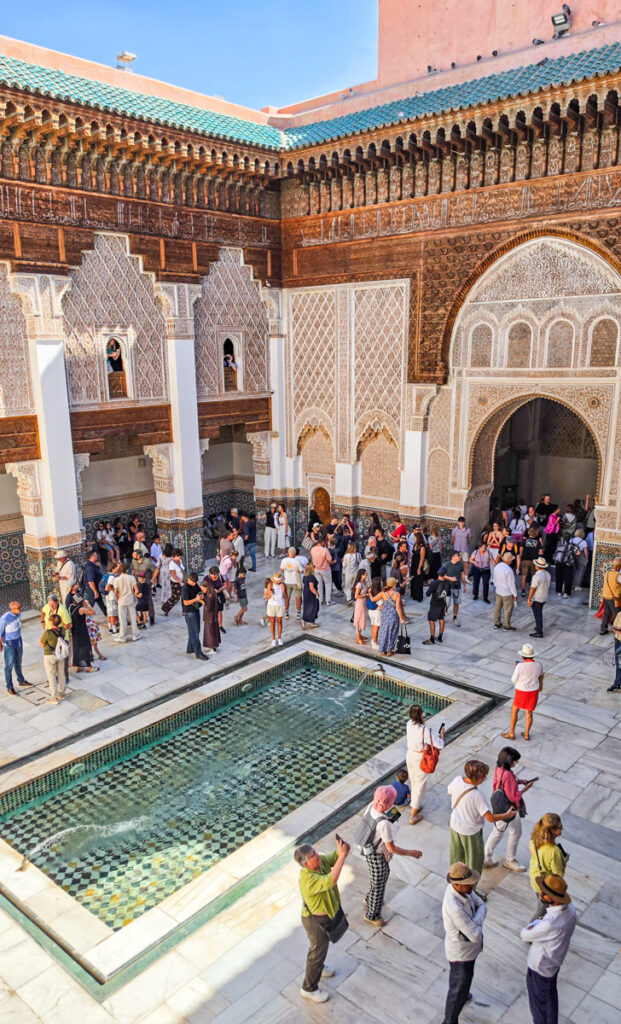
Ben Youssef Madrasa was the largest Quranic school in Morocco. The first madrasa on the site dates to the Marinid sultan Abu al-Hasan in the 14th century, and the building you see today was completed in 1564 and 1565 under the Saadian sultan Abdallah al-Ghalib, with 130 tiny student rooms around a courtyard of carved cedar, stucco and zellige tile. It reopened in April 2022 after a long restoration. As of November 2026, entry is 50 MAD for foreign adults, and it’s open from 9am to 7pm daily (9am to 4:30pm during Ramadan).
The line was very long when we arrived, so book a skip-the-line ticket for Ben Youssef or go at opening time. It’s a small space and fills quickly. Climb the stairs to the student rooms, and if you’re with a friend, stand at windows on opposite sides and photograph each other leaning out. Half an hour inside is plenty.
12. Wander the ruins of El Badi Palace

El Badi Palace was begun in 1578 by the Saadian sultan Ahmad al-Mansur, partly paid for with the ransom from his victory over the Portuguese at the Battle of the Three Kings that year. Its colonnades were Italian marble, reportedly traded for their weight in sugar, and its ceilings were trimmed in gold. In the early 1700s the Alawite sultan Moulay Ismail had it stripped and carried the materials off to build his new capital at Meknes.
What’s left is a vast sunken courtyard, orange-pink walls, empty pools and the outlines of rooms, and you can climb up for a view over the medina. Inside, El Badi displays the 12th-century carved wooden minbar (pulpit) from the Koutoubia Mosque, and every July it hosts the National Festival of Popular Arts. It was damaged in the September 2023 earthquake and reopened that October.
13. See the Saadian Tombs

The Saadian Tombs are the royal burial ground of the Saadian dynasty, beside the Kasbah Mosque. Sultan Abdallah al-Ghalib built the first mausoleum between 1557 and 1574, and Ahmad al-Mansur, the same sultan behind El Badi, added his own. Its Chamber of the Twelve Columns, with Carrara marble pillars and a carved cedar dome, holds his tomb. There are 56 marble tombstones and about a hundred more graves marked in colored tile.
Moulay Ismail walled the tombs off from the surrounding streets, and they stayed hidden until 1917, when they were rediscovered and restored. The site is small and the viewing spot for the main chamber gets a queue, so go early, and pair it with El Badi, a short walk away.
Get a skip-the-line ticket for the Saadian Tombs and El Badi Palace here.
14. Photograph the courtyard at the Marrakech Museum

The Marrakech Museum sits inside Dar Menebhi, a late-19th-century palace built for Mehdi Menebhi, minister of war under Sultan Abdelaziz. Amanda’s advice is to come for the building as much as the exhibits. Its central courtyard has a huge brass chandelier hanging under a glass roof, with light falling onto tiled floors, and it’s a favorite of photographers. It’s next door to Ben Youssef Madrasa, so see both in one visit.
Things to do in Marrakech at night
Marrakech changes after dark. Most Moroccans don’t drink, so evenings are spent out at cafes and food stalls with family and friends, and the medina is at its busiest from about 8pm.
15. Walk Jemaa el-Fnaa after dark
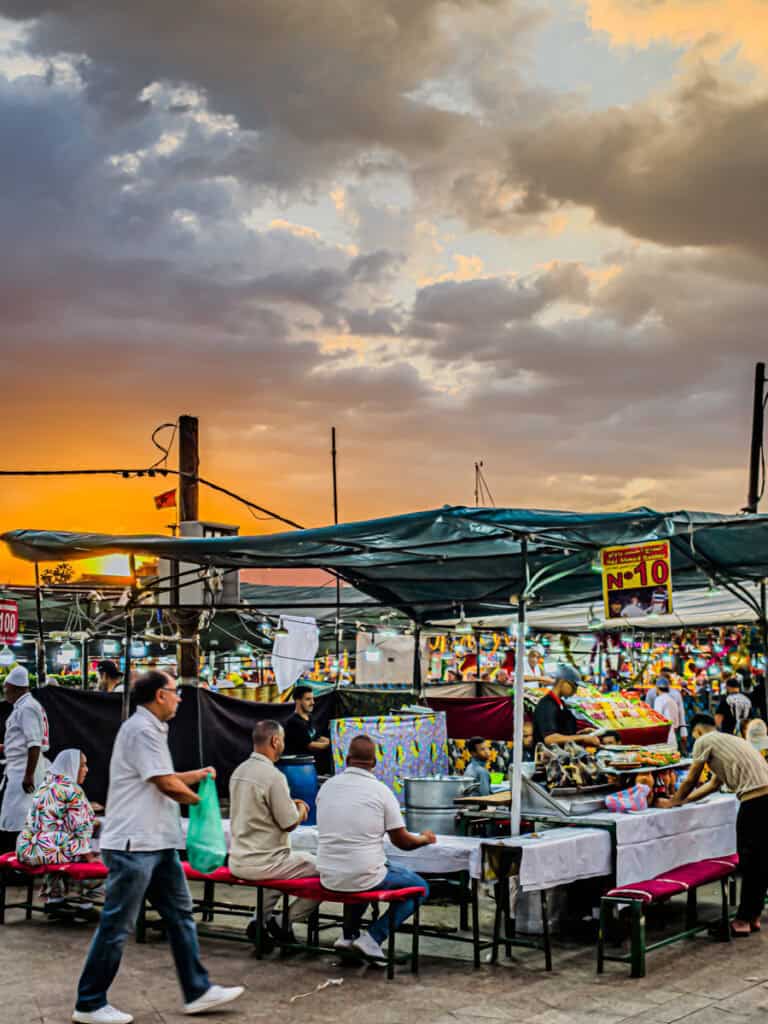
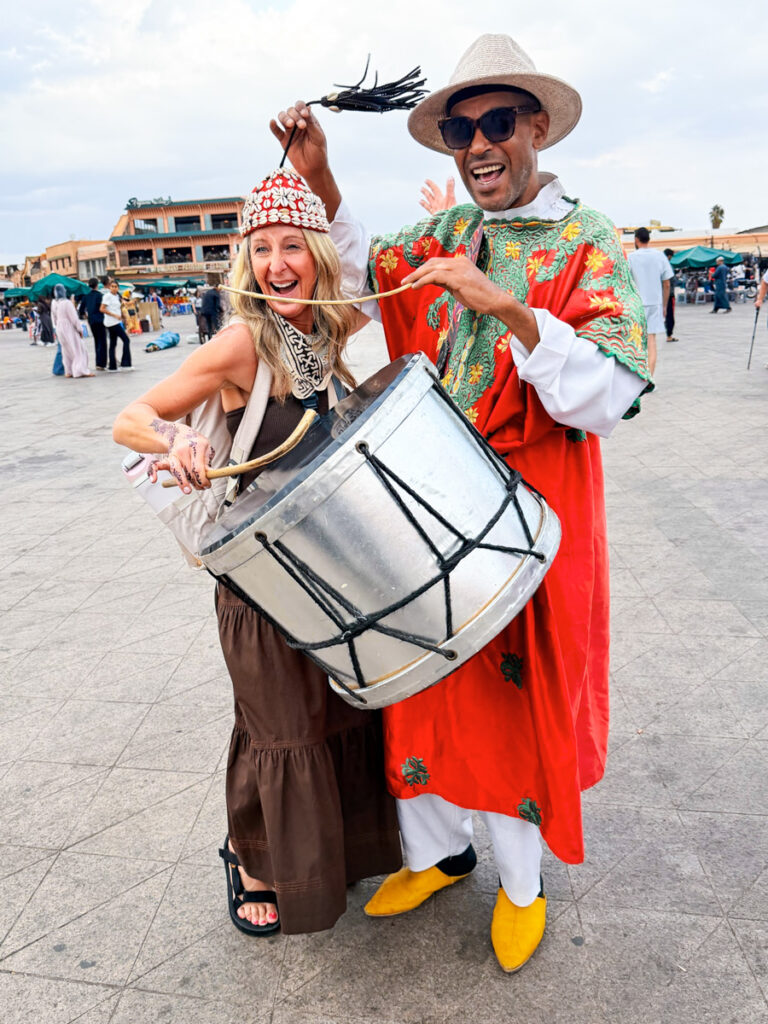
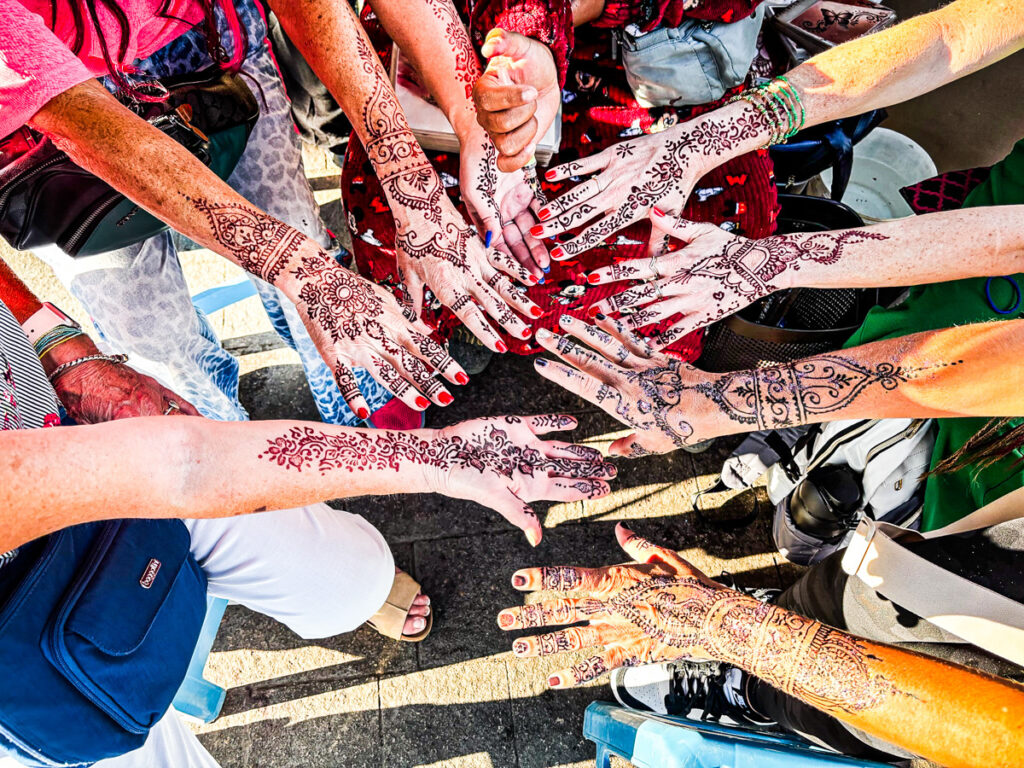
Jemaa el-Fnaa is the main square of the Marrakech medina, and UNESCO has recognized its storytellers, musicians and street performers as intangible cultural heritage since 2001. By day half the square is open pavement, with snake charmers piping to their cobras, juice sellers (a fresh mixed juice was 20 MAD), drummers who’ll want a few dirhams if you take their photo, and women painting henna. Several of the women on our trip had henna done and loved it, and since most of the people you deal with in Morocco are men, we were glad to support the women working there.
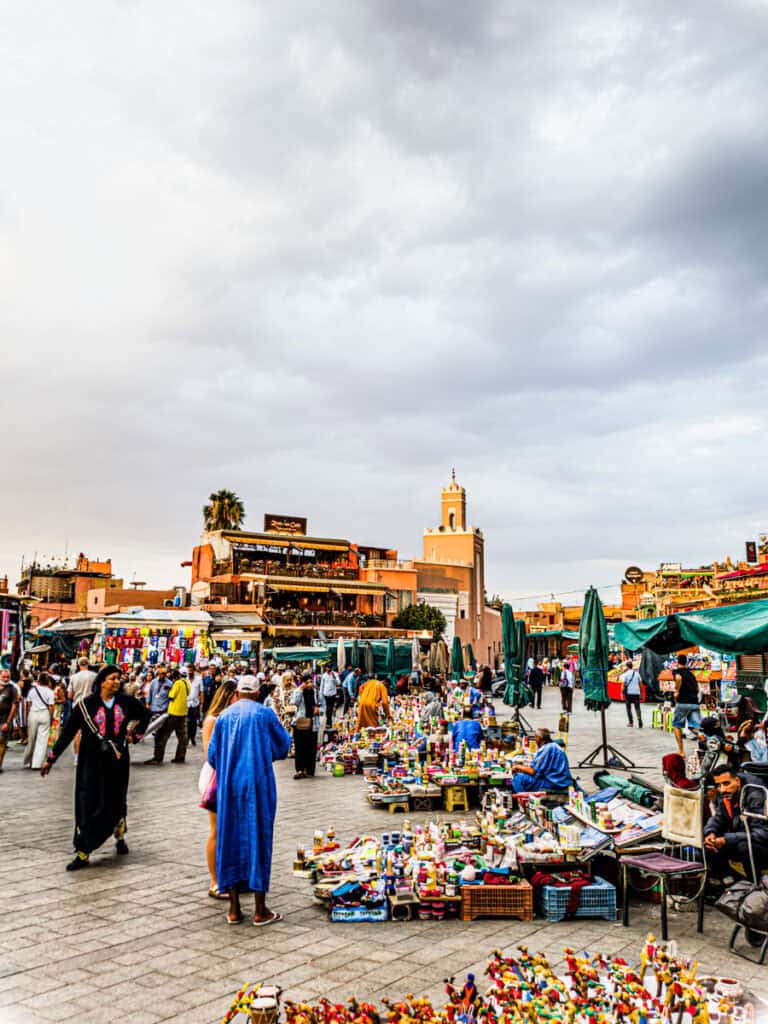
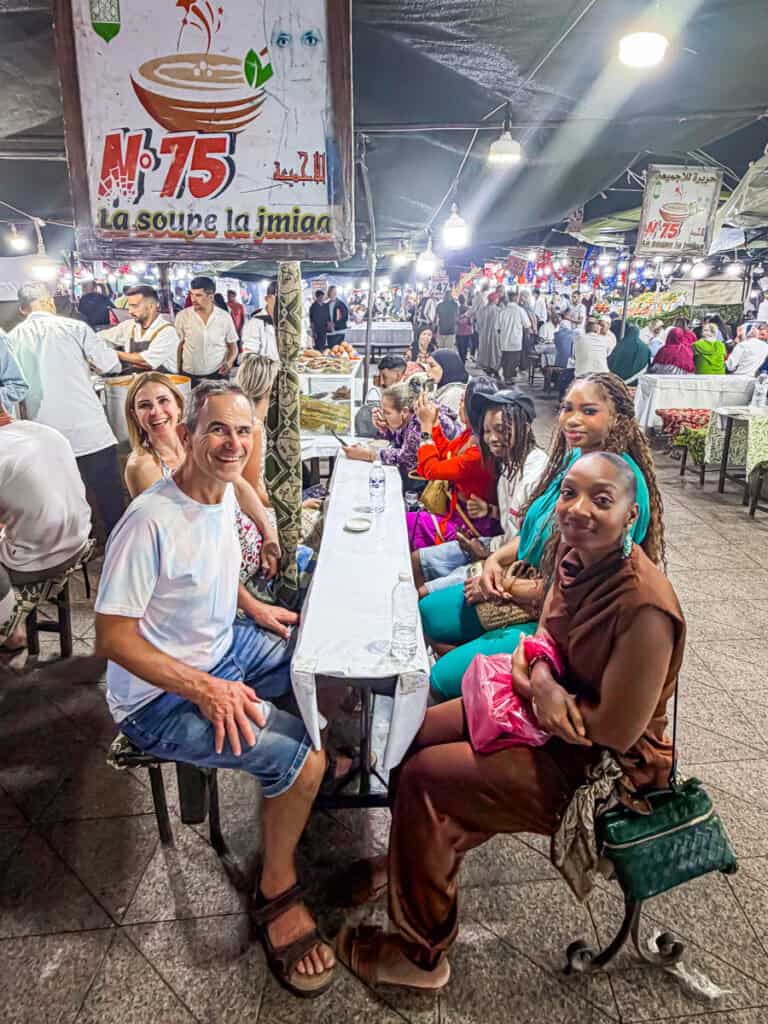
Come back after dark, when that empty half fills with smoking grills and long tables, and hawkers clap and sing to pull you onto their benches. It reminded me of the night markets in Asia, and when I walked through at 9:45pm on my first night, it was the busiest the square had been all day. Find a busy stall and sit down. It’s cheaper than any restaurant, and the stalls keep going until midnight or later.
16. Take a night street food tour
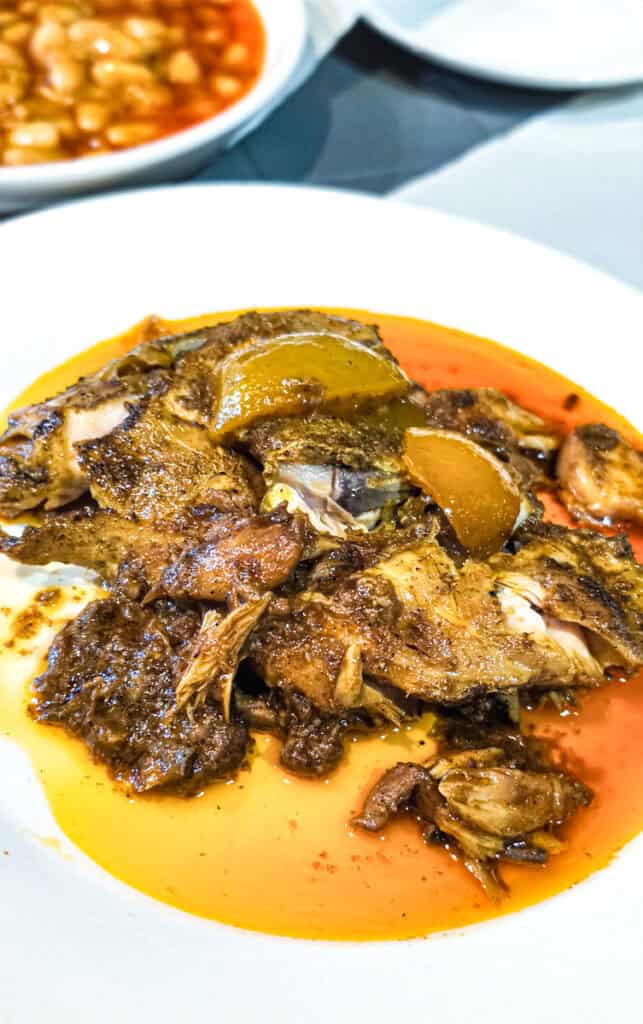
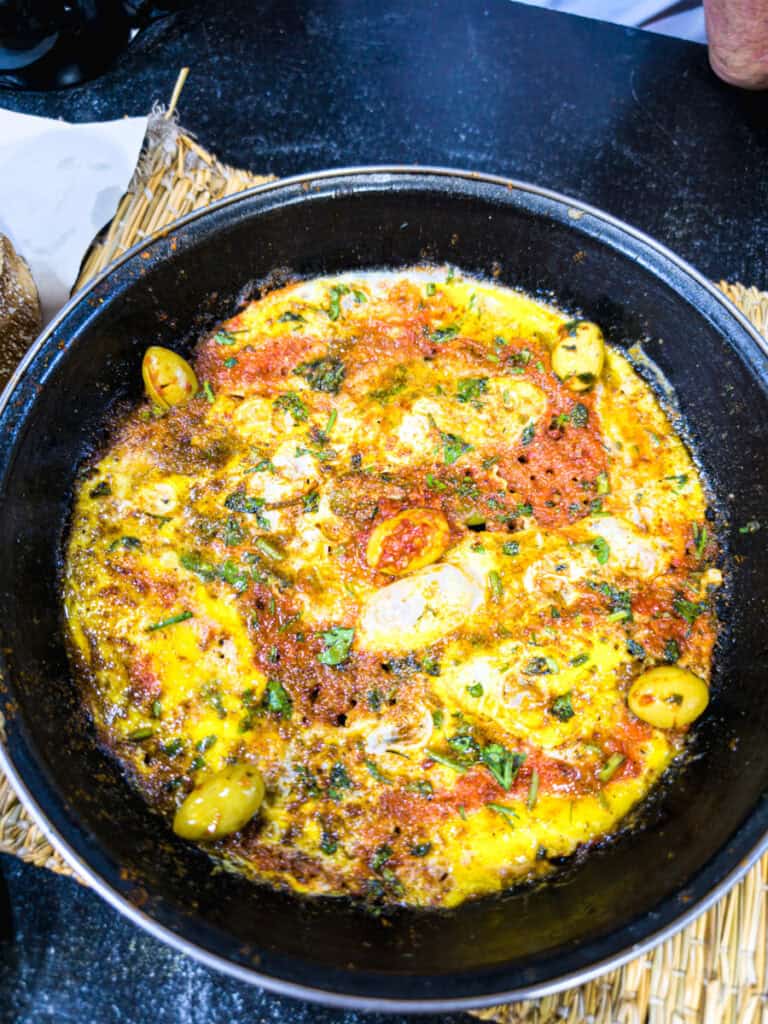
If you’re arriving early or traveling on your own, make a night food tour your first evening. I booked Chef Mustapha’s nighttime street food tour on Airbnb Experiences, and it was one of the best things I did in Morocco. As of October 2026, it costs from $41 per person, runs about three and a half hours and meets outside Café de France on Jemaa el-Fnaa.
We ate at seven stops, from a Berber omelet and a sardine burger to tangia in the Kasbah, and Mustapha adapted almost every dish for my gluten-free diet. Here’s my full review of the Marrakech street food tour.
17. Eat street food and tangia
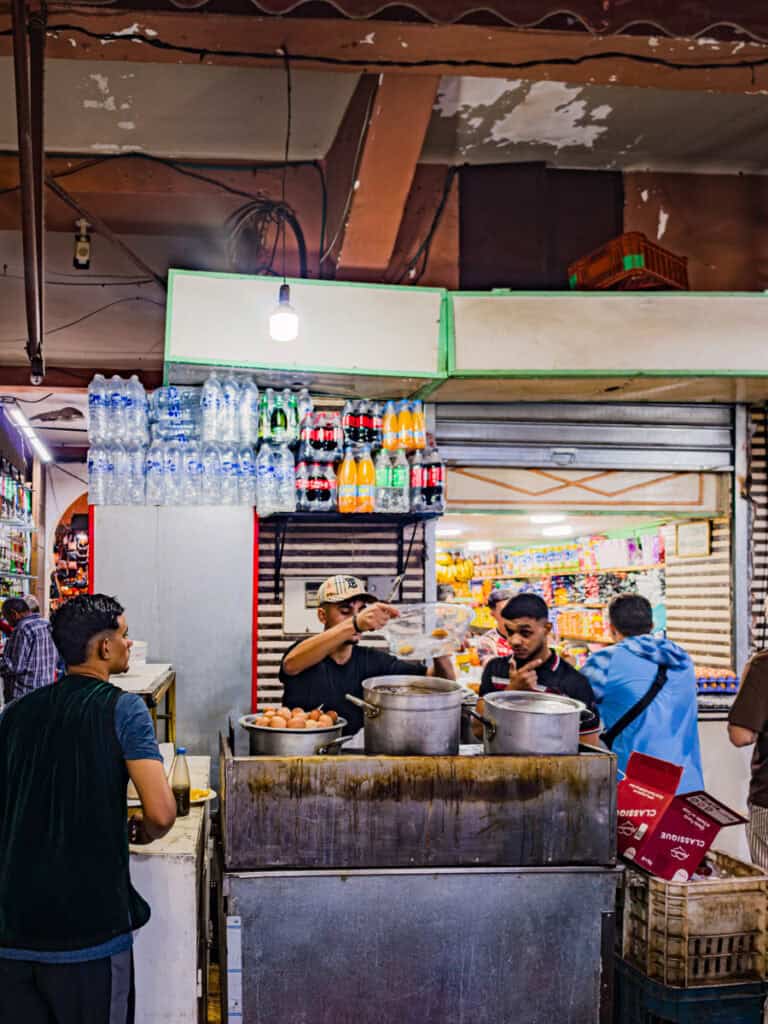
Amanda’s tip: “I truly believe the best food you will eat in Marrakech will be street food. I’ve never gotten sick eating anything in Morocco, but that’s not to say you won’t. Eat at least once in Djemaa el-Fna at the open-air stalls. Try the snail soup. Stop for breakfast at a hole-in-the-wall shop. Pick up a string of sfinge (Moroccan doughnuts) for a snack.”
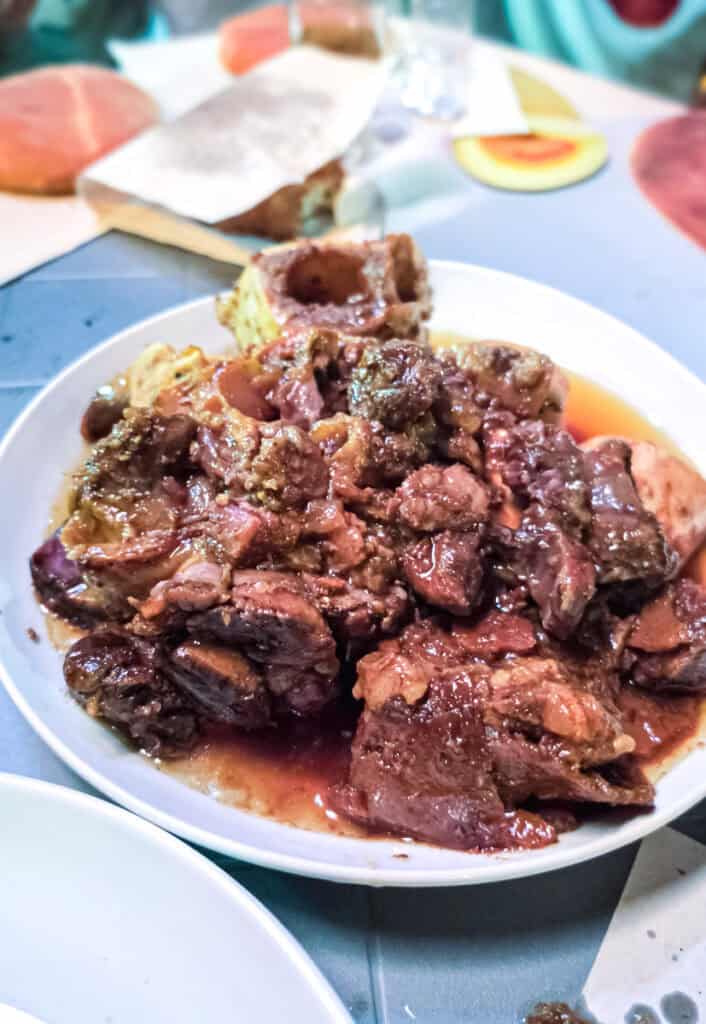
“Be sure to try tangia, the signature dish of Marrakech. It’s traditionally the ‘bachelor’ meal because of the easy preparation, but I promise you’ll never eat lamb so tender and full of flavor.”
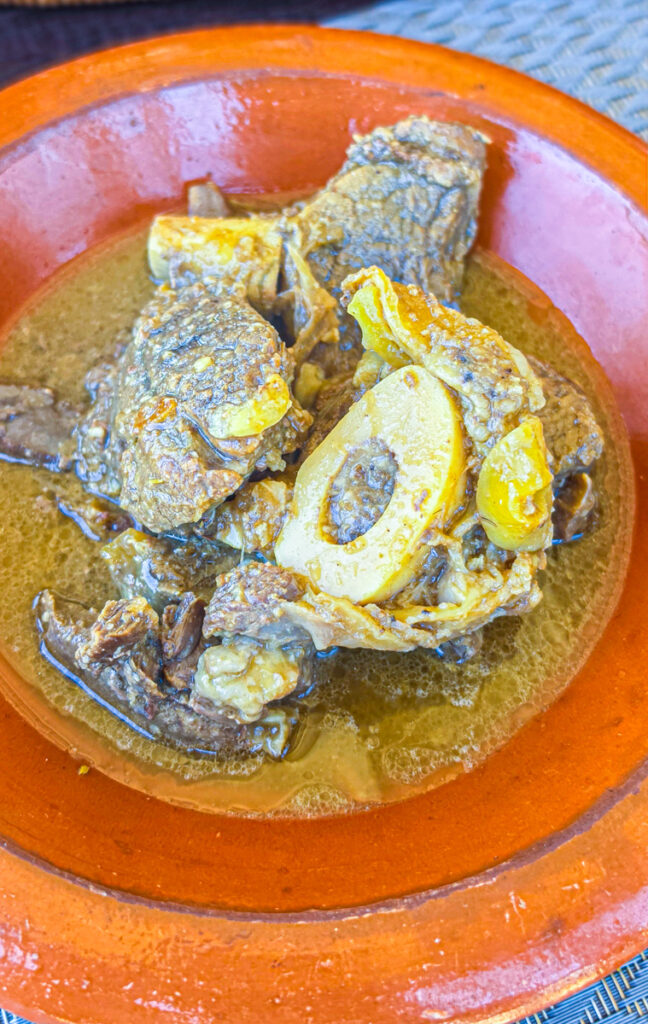
Tangia was my favorite dish in Morocco. Mustapha made ours with beef, sealed in a clay urn and slow cooked for hours, and he explained it’s traditionally left in the embers of the furnace that heats the neighborhood hammam. I ordered it again at Mythe restaurant later in the week, and his was still better.
A note on water from Amanda: brushing your teeth in tap water is probably fine, but stick to bottled water for drinking. We’d add a filtered water bottle like this one by Grayl, which saves you money and a lot of plastic.
18. Try Moroccan wine
Amanda’s tip: “Morocco is a Muslim country, so alcohol is a little more difficult to come by, but you should definitely try some Moroccan wine if you have the chance. When it comes to finding somewhere to drink, most larger hotels have bars, and some have rooftop terraces that double as bars.”
Her picks are Bô Zin, a restaurant and bar with a garden outside the city center on the Ourika road (take a taxi), and Comptoir Darna, on Avenue Echouhada in Hivernage, which is a little more expensive. As of November 2026, Comptoir Darna’s restaurant is open nightly from 7pm to 1am, with a smart-casual dress code.
I liked Moroccan wine a lot. It was smooth and elegant, and I woke up feeling great the next day, which I can’t say for one glass of American wine. Outside Marrakech we bought bottles at a liquor store for about $12 each, and our hotels let us bring them to dinner for a corkage fee.
19. Have dinner on a rooftop above the medina
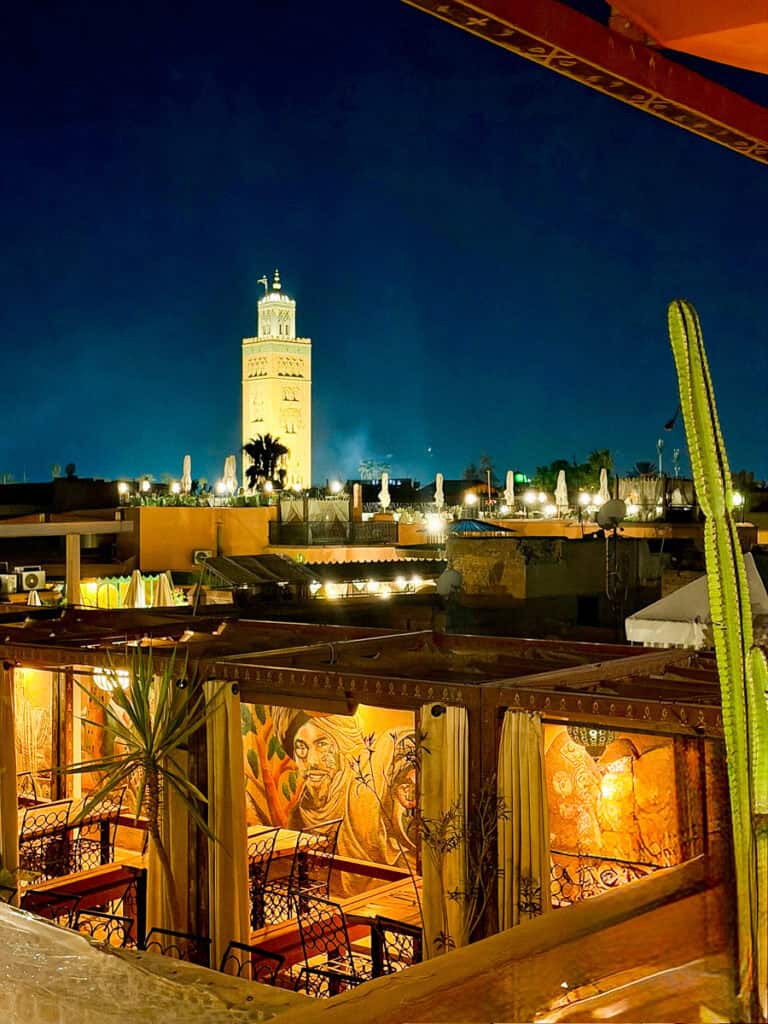
Rooftop restaurants ring the medina, and at night you look across the lit-up rooftops to the Koutoubia minaret. They cost more than street food (closer to American prices), but the view is part of the meal.
Their card machine wasn’t working that night, and nobody warned us before a group bill of about US$400. They found a machine at the hotel the restaurant is in, and I paid the rest in cash. If you’re with a group, check that the card machine works before you order, and always carry dirhams.
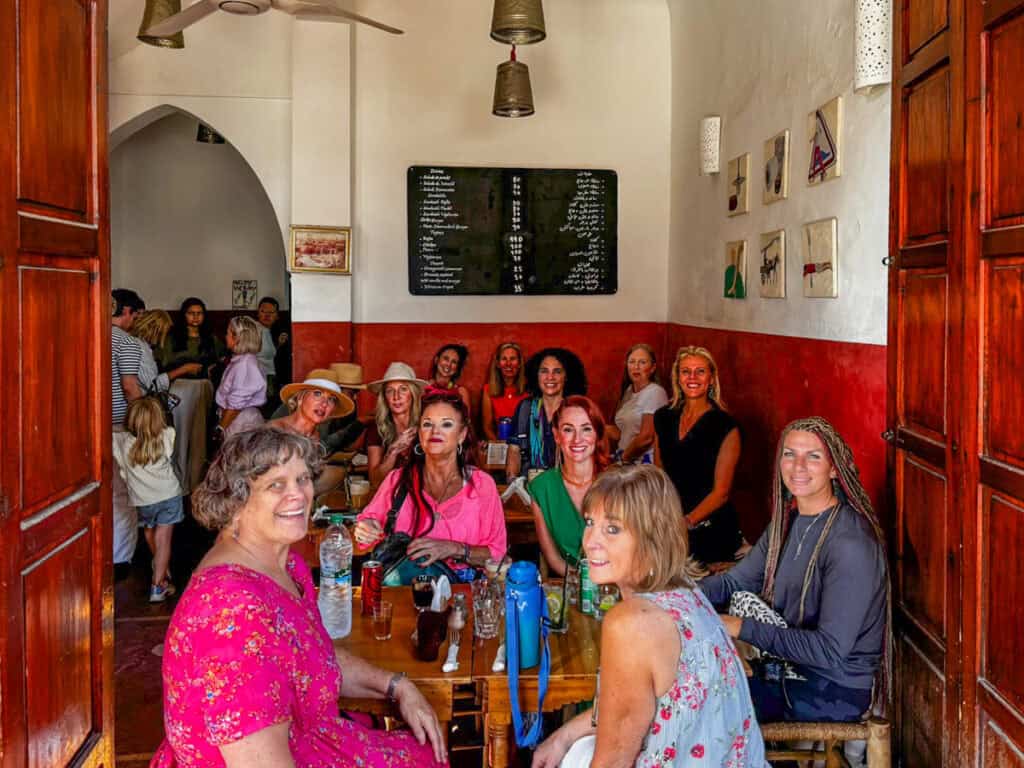

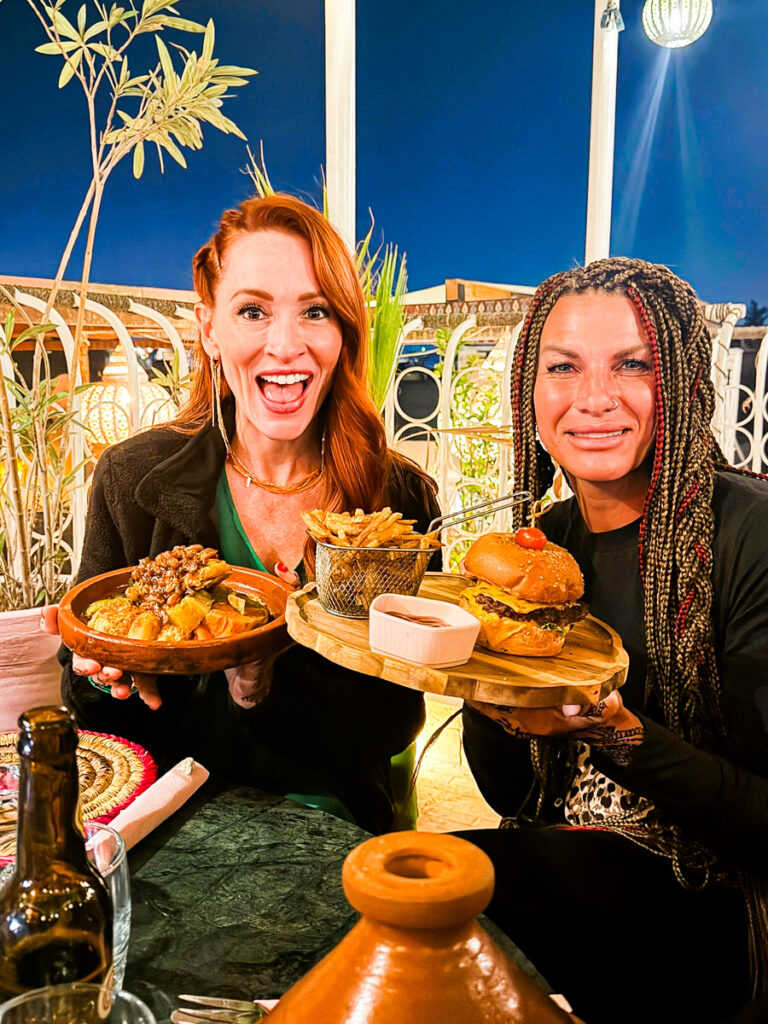
Here’s where I ate in Marrakech can recommend:
- Café des Épices, on the spice square in the medina, was an easy lunch with a good cappuccino. I had a tasty chicken salad!
- For dinner, MK Rooftop had one of my favorite tagines of the trip (beef with prunes and egg) and great night views
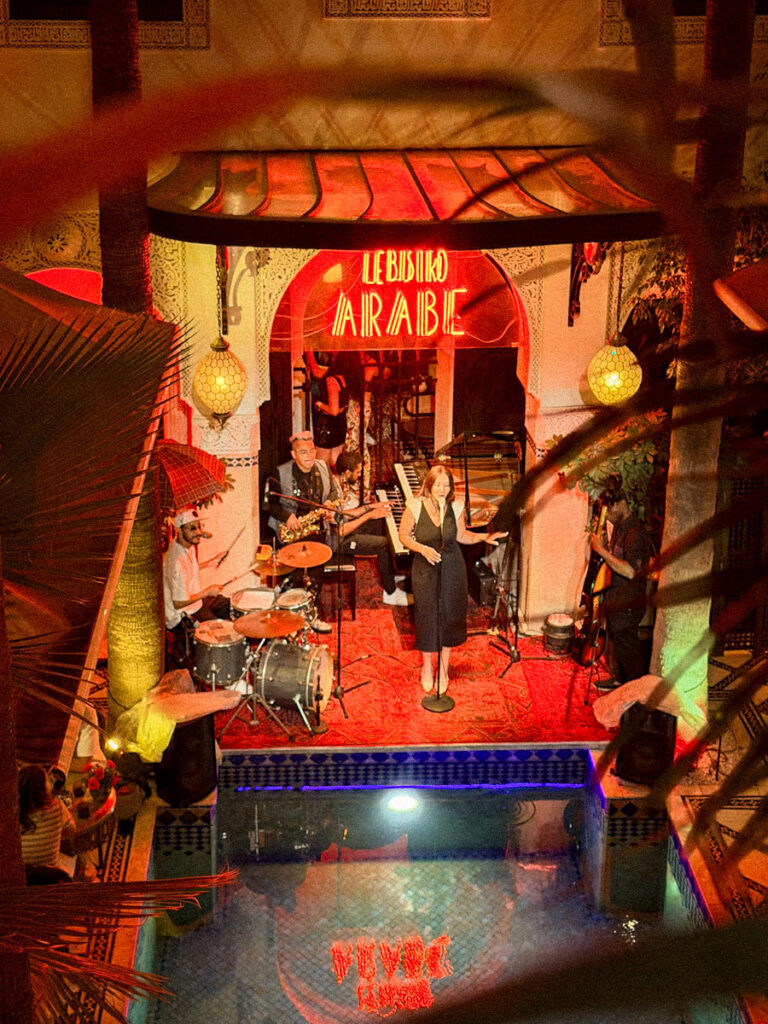
- La Pergola Rooftop was a different Marrakech vibe, with a jazz band playing in the courtyard with jungle vibes. The experience was better than the food (but it could have just been my order).
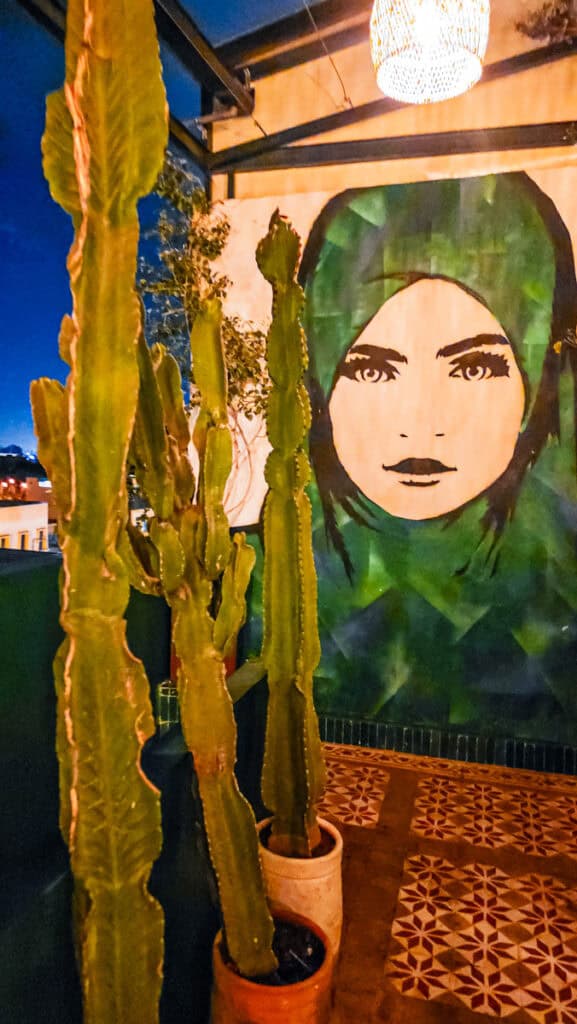
- Allie and I dined at L’Mida rooftop before the trip started. This is a restaurant not to miss with its stunning featured mural and delicious food.
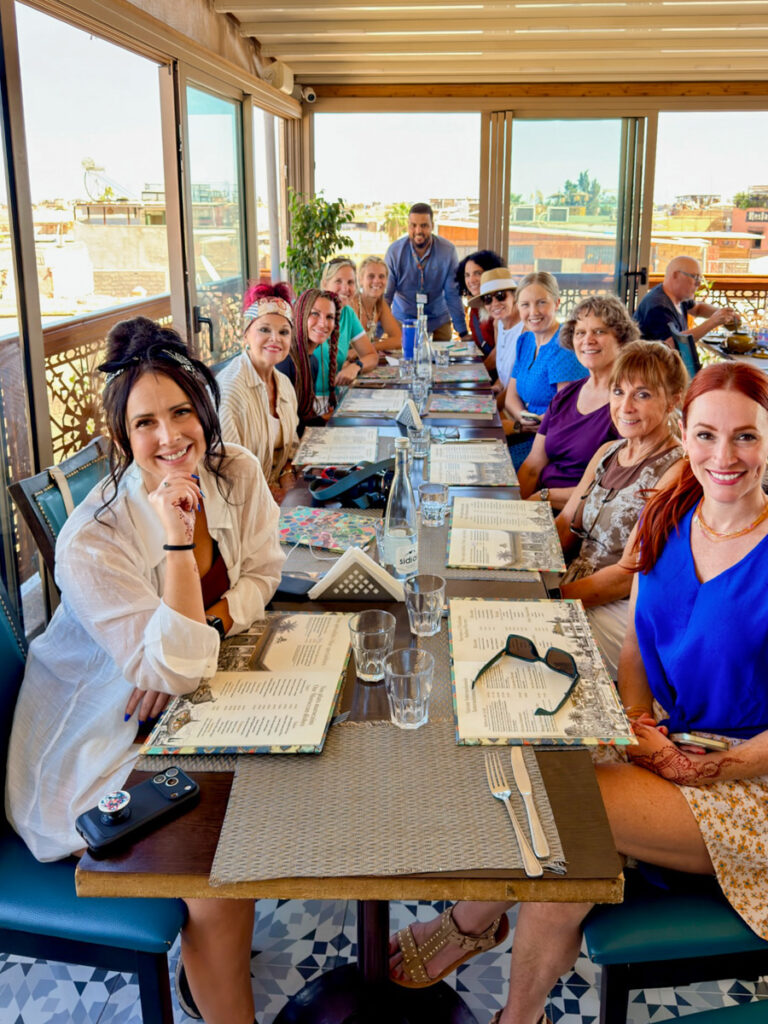
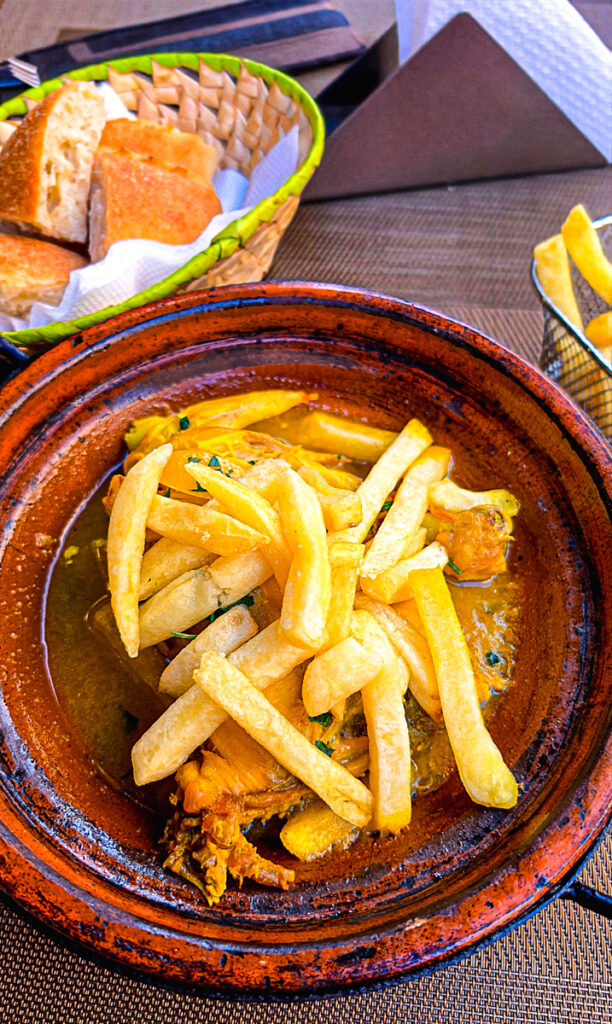
- I liked the enclosed rooftop style of Mythe Restaurant. They had a great tangia and the prettiest mojitos I’ve ever seen
- As mentioned below, Pentanque Social Club was gorgeous and the nixed grill plate I had good, especially with the lamb on it!
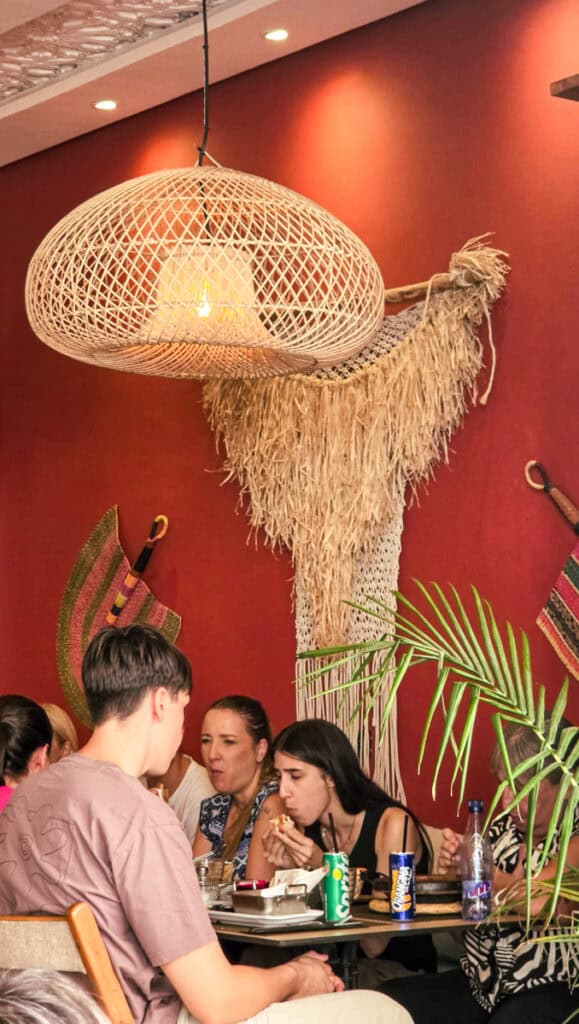
- On my first solo day, I had lunch at Daba Daba, a street food cafe just off the main square. It was beautifully designed and fairly priced compared with the rooftop restaurants. My lunch special was 80 MAD for kebabs or a tagine with a water or soft drink.
Things to do in Marrakech beyond the medina
20. Visit Jardin Majorelle and the Yves Saint Laurent Museum

The French painter Jacques Majorelle started this garden in 1923 and opened it to the public in 1947, painting the walls in the cobalt shade he patented, now known as Majorelle Blue. Yves Saint Laurent and Pierre Bergé bought and restored it in the 1980s, Majorelle’s old studio now holds the Pierre Bergé Museum of Berber Arts, and the Musée Yves Saint Laurent opened next door in 2017.
Tickets for Jardin Majorelle are sold online only, and we couldn’t fit a timed slot into our group’s day, so I missed it. Book before you arrive. As of November 2026, the garden is open daily from 8am to 5:30pm (last entry 5pm). Learn more about Yves Saint Laurent on a YSL tour.
21. Explore Gueliz and the Kasbah neighborhoods
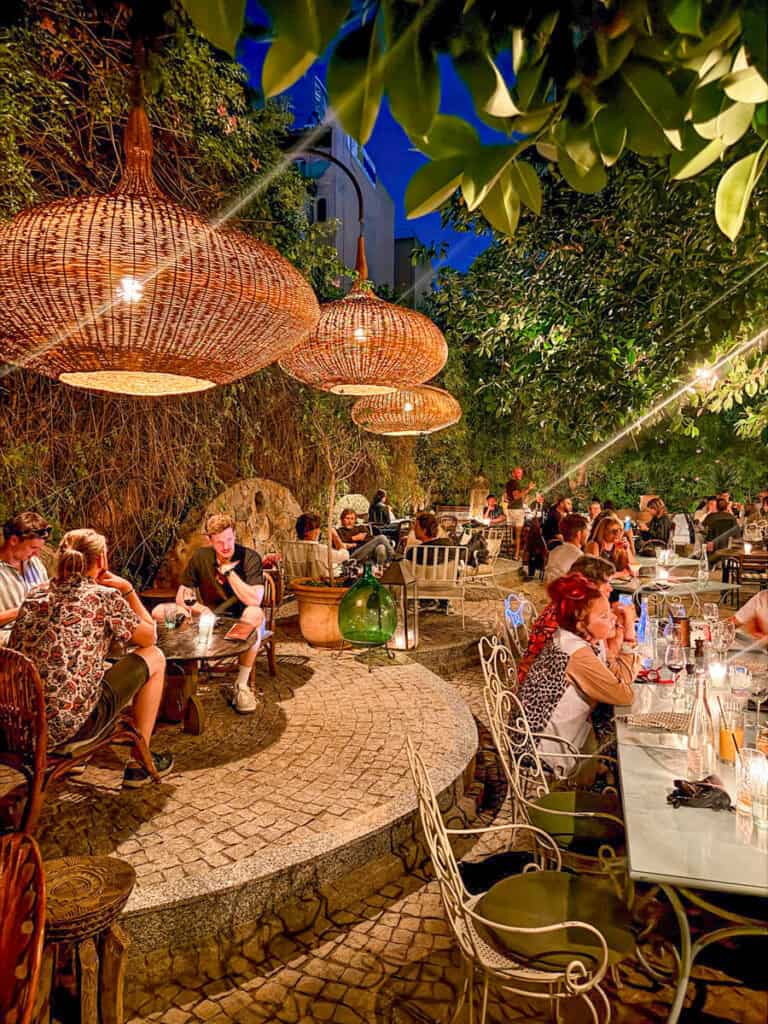
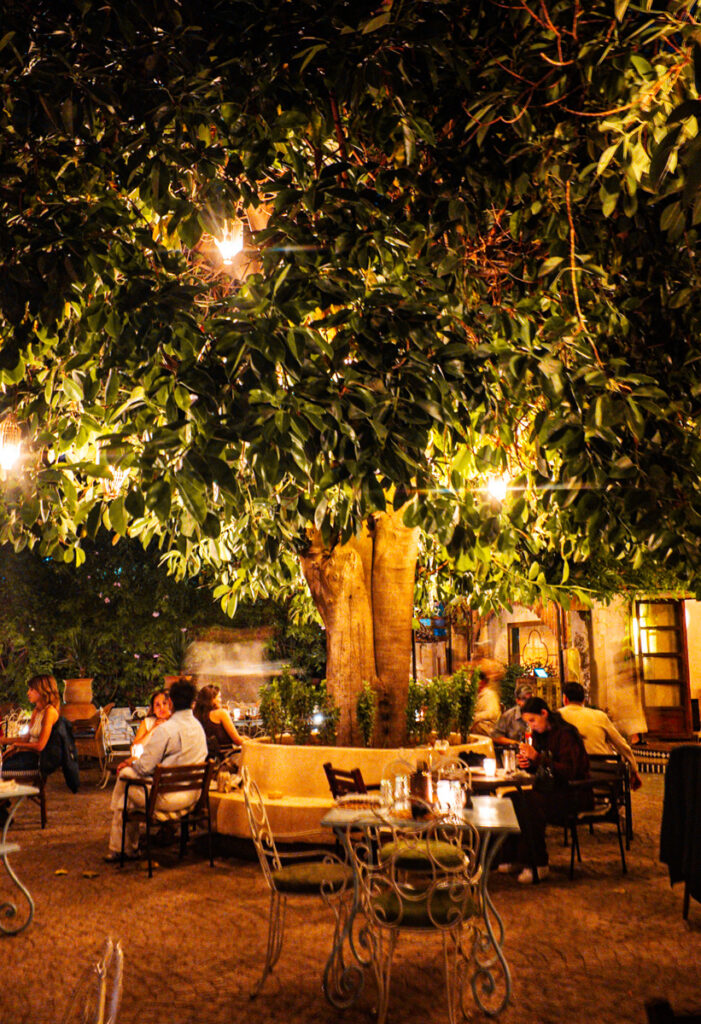
Amanda’s tip: “I often feel the best way to get to know a place is to wander around the neighborhoods and take it all in. The Kasbah is the old residential center of the city and, for the most part, still inhabited by families who have lived here for decades. There are side shops down the main thoroughfare and small markets off to some of the sides. You’ll find some great food stalls set up here as well.”
“Gueliz/Hivernage is the ‘new city’ and is a boutique shopping epicenter. Gueliz has fashionable shops and restaurants as well as art galleries.”
We only reached Gueliz on our last night, for dinner at the Petanque Social Club (PSC) on Boulevard El Mansour Eddahbi. The tables sit in a courtyard under big old trees strung with fairy lights, and all 12 of us gasped walking in. I had a mixed grill with lamb chops (I’ll order lamb anywhere it’s on the menu, it’s the Australian in me). Watching the busy cafes go by through the bus window, I knew Gueliz is where I’d spend more time on a return trip.
22. Take the kids to Oasiria Waterpark
If you’re looking for things to do in Marrakech with kids, Amanda’s pick is Oasiria, a water park just outside the city. Amanda’s tip: “Oasiria is a fun family activity where you can cool off from the blazing heat of the Moroccan sun. Make sure to bring your own towel and plenty of water.”
As of November 2026, Oasiria is open from 10am to 6pm (rides stop at 5:30pm), with 15 attractions, a wave pool, a calm adults’ pool and 10 hectares of gardens. Tickets are cheapest online.
23. Time your trip for a Marrakech festival
Amanda’s two picks are the city’s biggest events. The Marrakech International Film Festival runs its 23rd edition from November 20 to 28, 2026. The National Festival of Popular Arts brings music and dance troupes from across Morocco each July, and its 55th edition ran from July 2 to 6, 2026, with performances at El Badi Palace and Ben Youssef Madrasa. Amanda’s tip: “There are many smaller festivals through the year, but the film festival and popular arts festival are the biggest and most bustling events.”
Day trips from Marrakech
24. Float over the Atlas Mountains in a hot air balloon
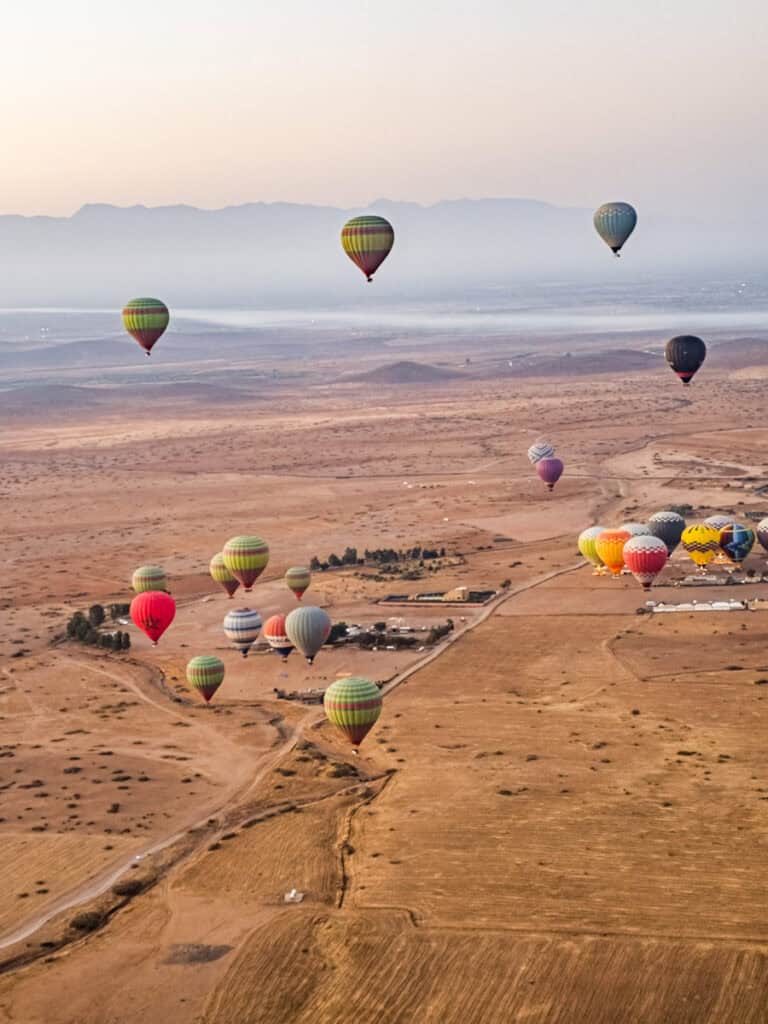
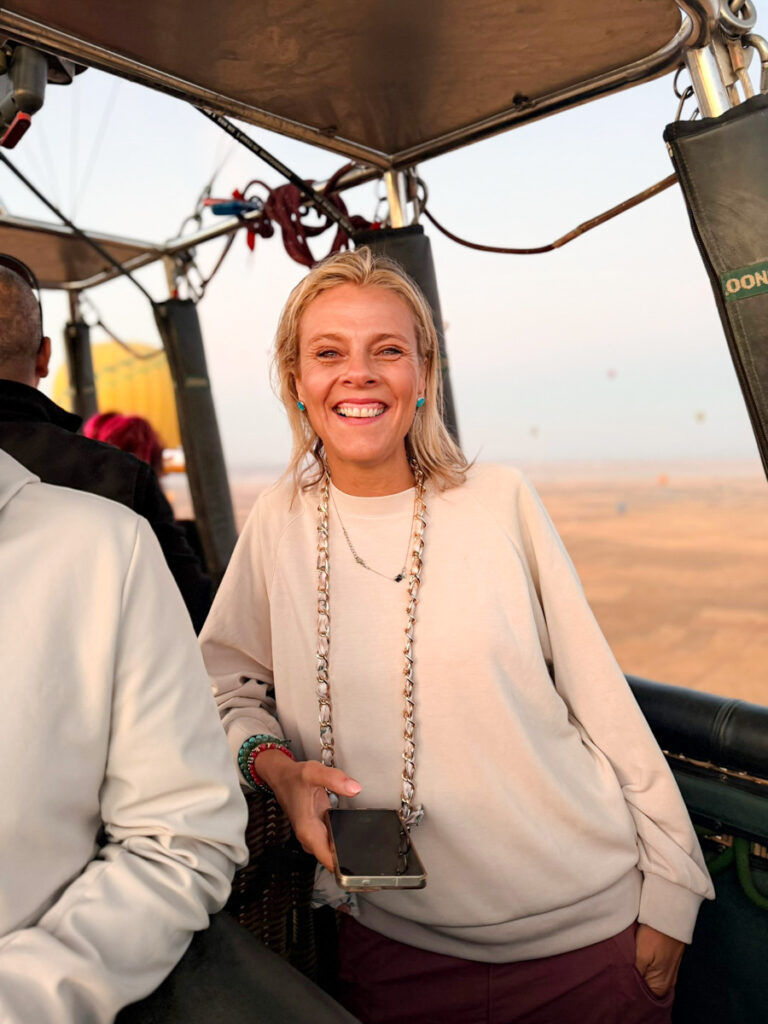
Some mornings are worth a 4am alarm. The launch site is about an hour outside Marrakech, and we were in the air as the sky turned pink over the Atlas. I’ve done a few balloon rides, and I get a little nervous in them, so I’d quietly decided I was done with them, and I’m so glad this one was on our itinerary.
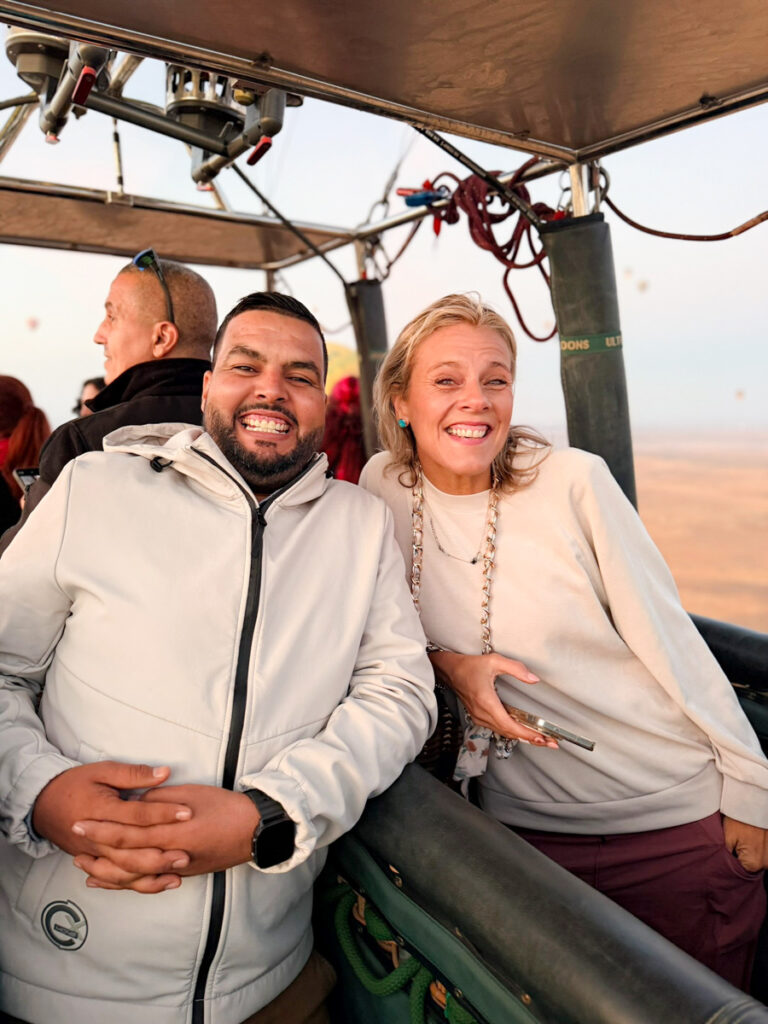
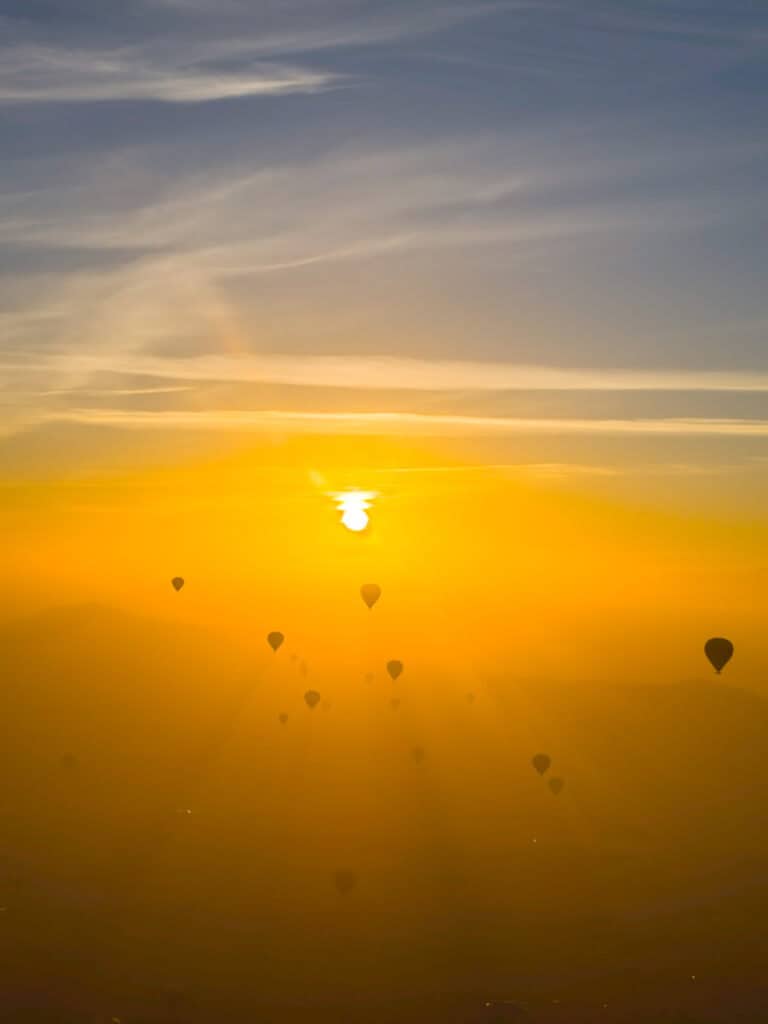
Our pilot called ballooning one of the most Zen experiences you can have, which is the word I’ve used for it since my first flight. If you can stop squealing and chatting for a moment, the stillness up there is something else. We all went quiet as the sun came over the mountains, and a few of the women cried. Afterwards the balloon company served breakfast outside with mountain and desert views, including a gluten-free spread for two of us, with fig jam, honey, dates and Berber omelets. . Book your hot air balloon and Berber breakfast here.
25. Hike to Ouzoud Waterfalls
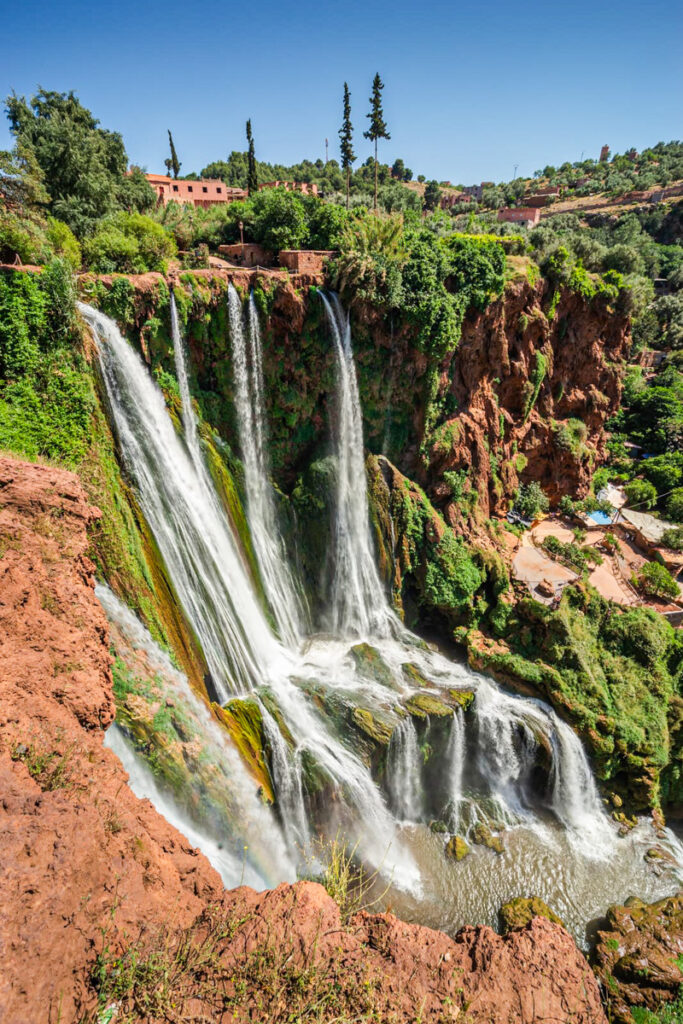
Ouzoud Waterfalls, about 150 km (93 miles) northeast of Marrakech in Azilal Province, drop 110 meters (360 feet) in tiers into a green gorge, a nice surprise if you think of Morocco as all desert. Amanda suggests hiking down the trails through olive groves to the base and taking a boat ride close to the falls. It’s a long day, so go with a tour. Check out this day tour to the Ouzoud Waterfalls here.
26. Head over the High Atlas to the Sahara
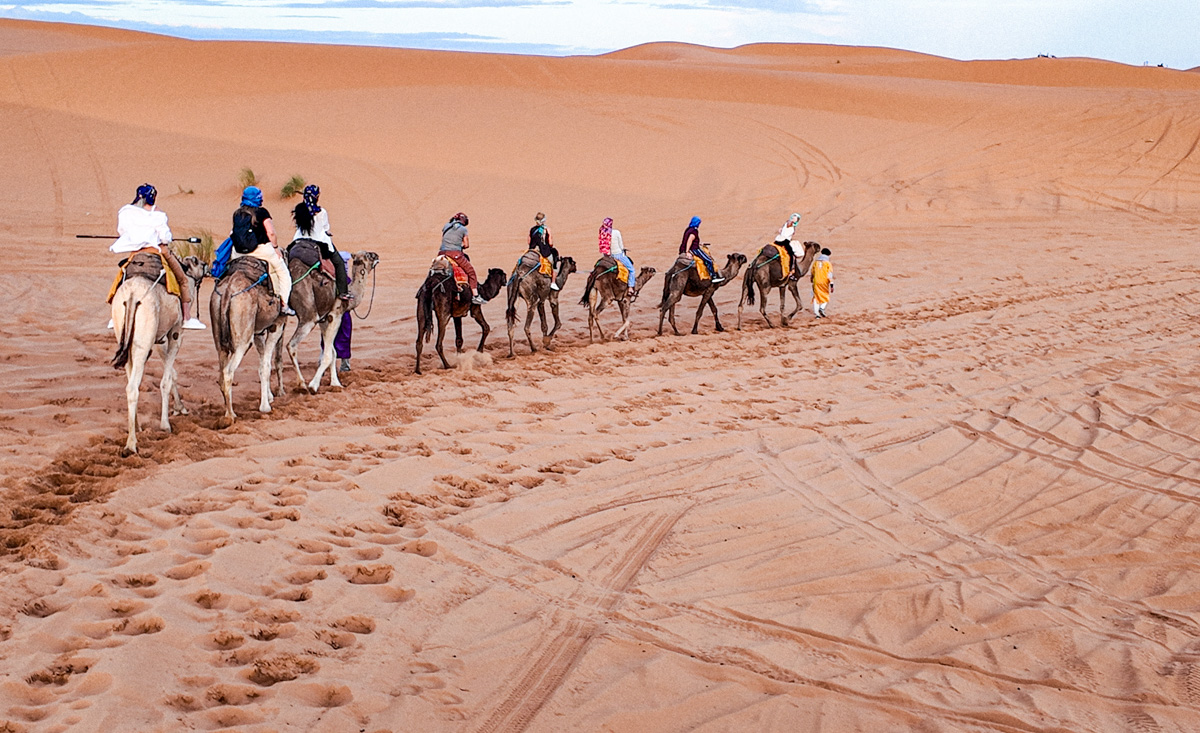
The Sahara is too far for a day trip, but you can’t leave it off a Morocco plan. Marrakech to Merzouga, the town at the edge of the Erg Chebbi dunes, is about 560 km and 8 to 9 hours of driving over the Tizi n’Tichka pass, so most trips take three days or more and stop at Ait Benhaddou and the Dades Valley on the way. We spent two nights at a desert camp, riding camels in at sunset, and it was the highlight of the trip for everyone.
Our route is in my 10-day Morocco itinerary. If you’re short on time, this 3-day desert trip from Marrakech to Fes covers the same ground.
How many days do you need in Marrakech?
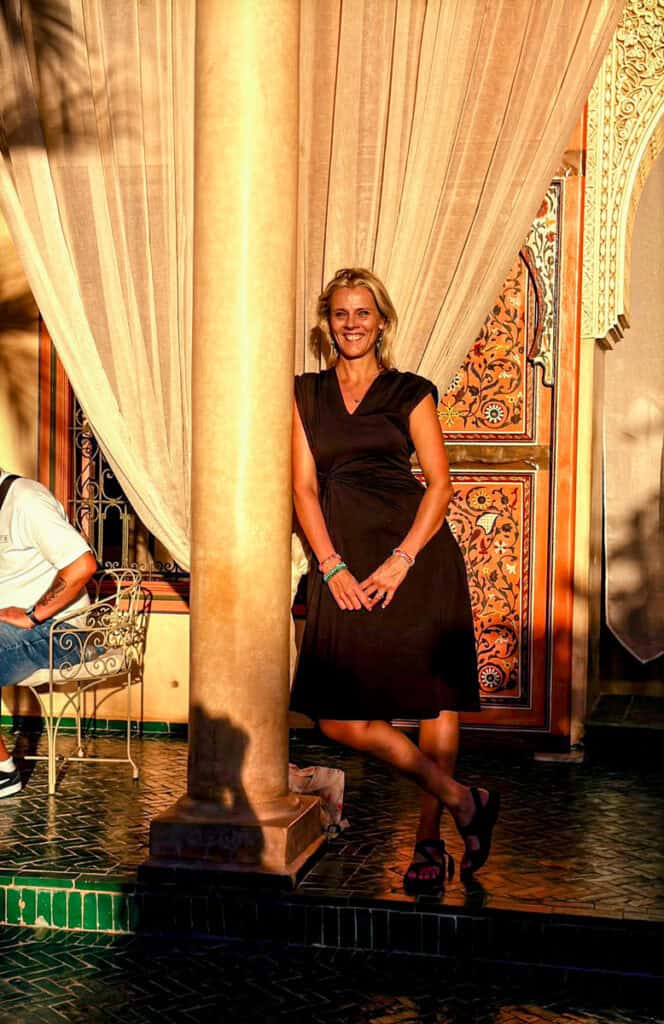
Three full days is enough to see the highlights of Marrakech, and four lets you add the southern palaces and Jardin Majorelle without rushing. This is roughly how mine fell:
- Day one: arrive, settle into your riad, and do a night food tour or eat at the Jemaa el-Fnaa stalls.
- Day two: the souks at opening time, Koutoubia, Bahia Palace, a herbal pharmacy, sand-brewed coffee, Le Jardin Secret, and dinner on a rooftop.
- Day three: a sunrise balloon ride, Ben Youssef Madrasa and the Marrakech Museum, a hammam, and dinner in Gueliz.
- Day four: El Badi Palace and the Saadian Tombs in the morning, Jardin Majorelle in the afternoon.
I also arrived two days before my group, which gave me a buffer for flight delays and jet lag before the long drives, and I’d do that again
Where to stay in Marrakech
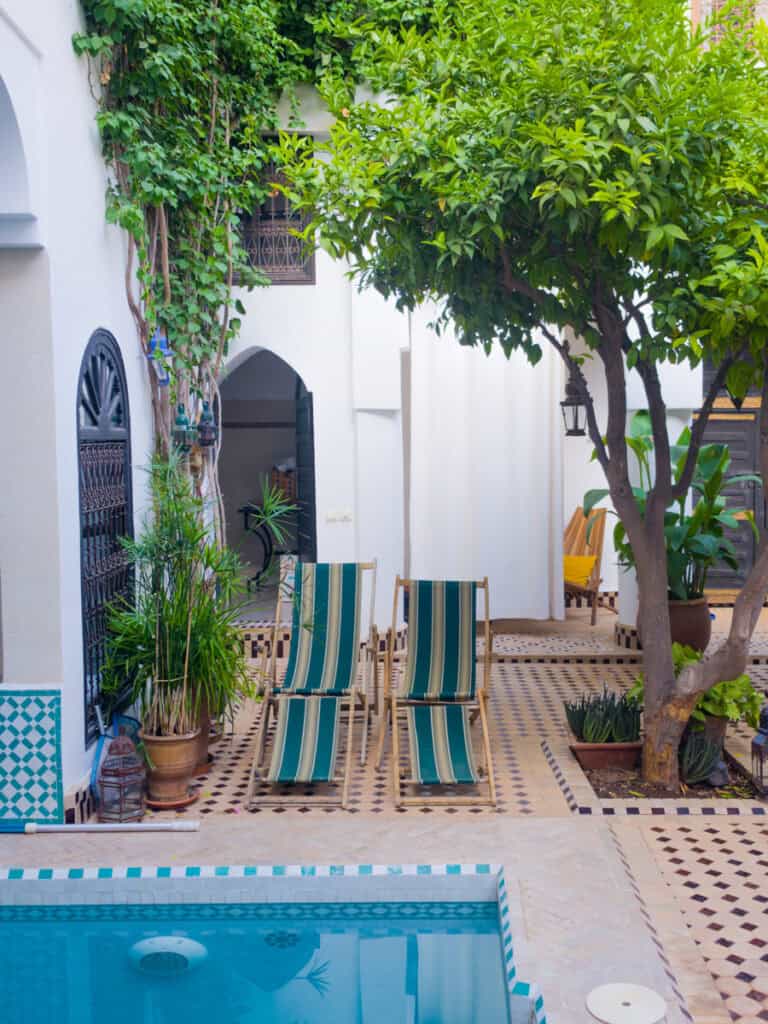
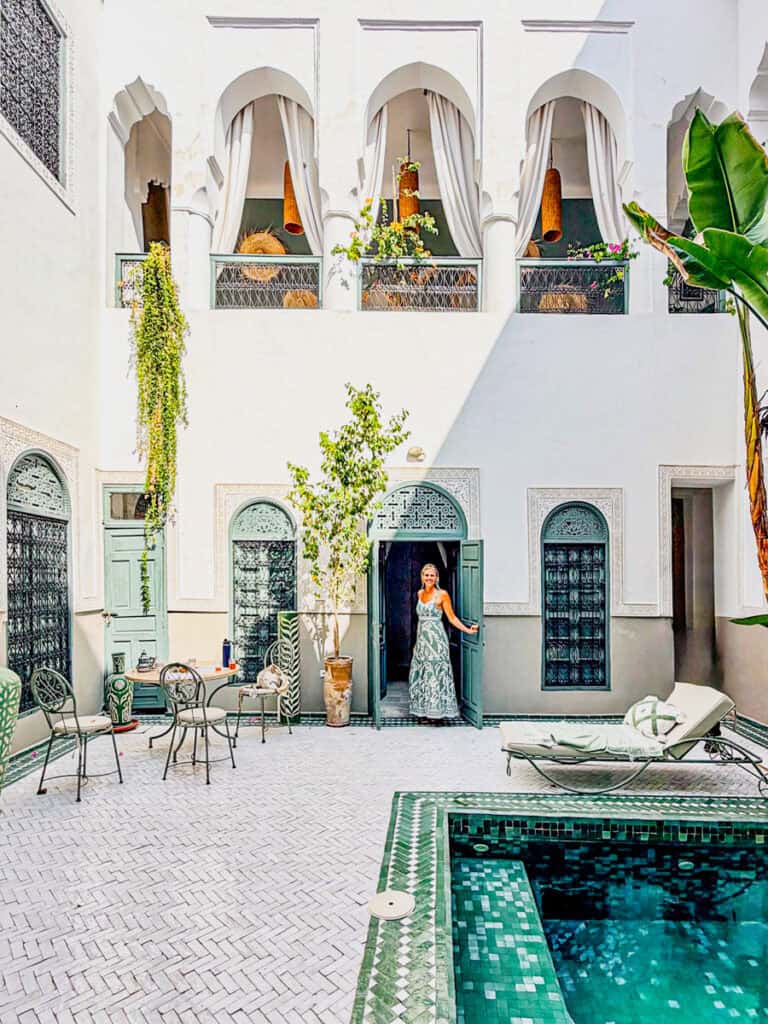
For a first visit, stay in a riad inside the medina. Riads are traditional houses built around a central courtyard, often with a plunge pool and a rooftop terrace, and staying in one puts you within walking distance of everything above. The catch is sound, because every room opens onto the courtyard, so pack earplugs and keep your voice down early and late.
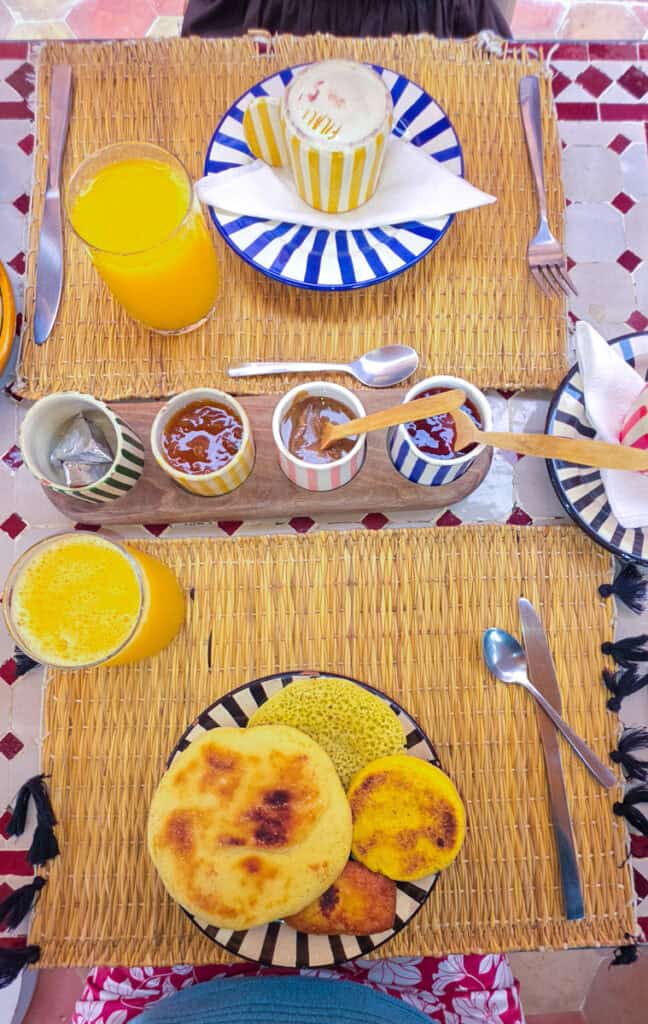
I stayed at Riad Al Wifak on my own, about a 20-minute walk from Jemaa el-Fnaa down an alleyway I decided at noon looked like somewhere Jack the Ripper would enjoy (by the end of the week it was just the lane with all the cats). Then I moved almost next door to Riad Sierra for three nights with the 11 other women on our trip. Both had a delicious rooftop breakfast and warm, generous hospitality.
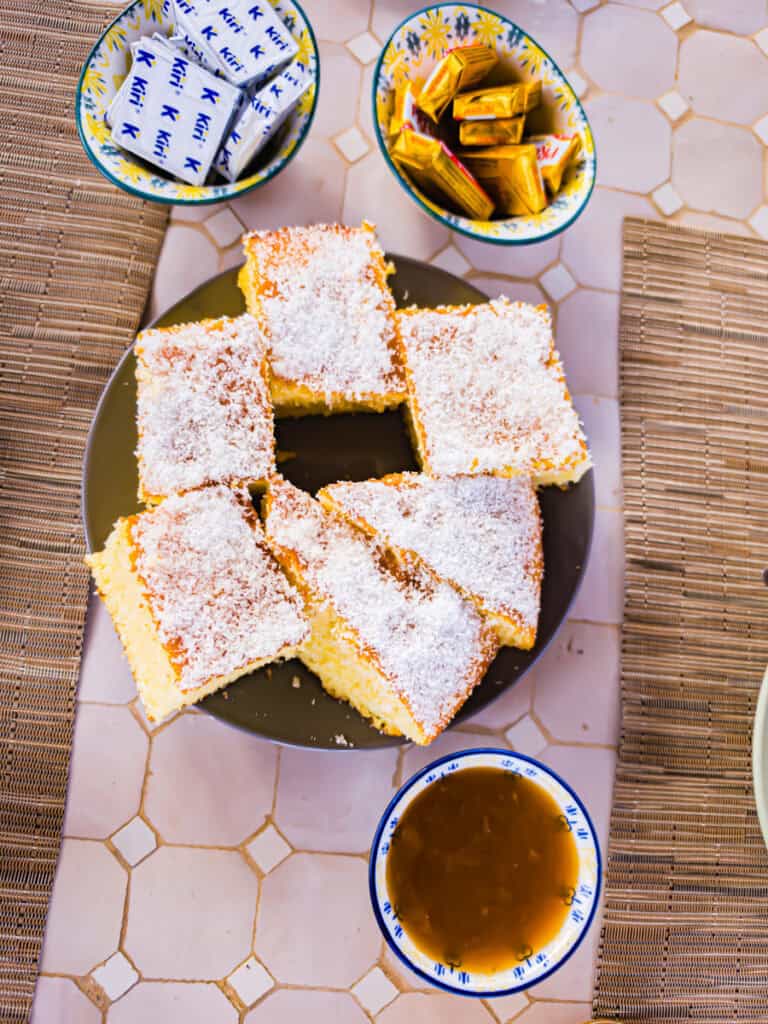
Amanda’s picks: “Prices, no matter where you stay in Marrakech, will be much higher in the summer months. If you travel during the off seasons, you will find accommodations at a fraction of the summer rates.”
- Hotel La Mamounia (Avenue Bab Jdid): “The Mamounia is a landmark in Marrakech. The price is on the higher end, but if you visit in the off-season, it’s really worth it to spend at least one night here.”
- Peacock Pavilions (Kilometer 13, Route de Ouarzazate): “If you want to have a relaxing vacation in Marrakech outside the hustle and bustle of the city center, you must stay here.”
- Riad Layla Rouge (Rue el Ksour, Derb Rokni 23): “a riad/hostel located just off djem l’fna. If you’re hunting for a bargain, this might be your stop!”
- Dar Najat: “The one comment I have heard over and over about this riad is that the service provided to guests is exceptional.”
If you’d rather have wider streets and newer hotels, look in Gueliz or Hivernage and take a short taxi into the medina for the evenings. For longer stays, Amanda likes apartment rentals in Marrakech, especially for families.
For more places to stay in Marrakech, scroll through the list below, choose from the largest range of hotels, apartments, and guesthouses
Best time to visit Marrakech
Amanda’s tip: “Fall (mid-September until early December) and Spring (March to May). Summer in Marrakech is very, very hot, and chances are you won’t want to be outside very much. Winter tends to be rainy and cool. Ramadan is another month out of the year that you might not want to visit. During the Muslim holy month, shop and restaurant hours are often changed, and there is less activity as most of the country is fasting from dawn to dusk.”
We were there in late October and had dry, warm days the whole time, never too hot or too cold, which was ideal for walking the souks.
Getting to and around Marrakech
Amanda’s tip: “Many major and discount airlines fly into Marrakech, and Morocco’s train system runs a few times daily to the city. I have found that it’s often easier to get much cheaper flights to Casablanca and then take the train to Marrakech. If you’re looking to visit other parts of Morocco, the train runs to major cities but no further south than Marrakech. Supratours and CTM have the best reputation for bus companies.”
“When getting around Marrakech, the best way is by taxi. There are two types of taxis, the grand taxi and the petit taxi. Grand taxis tend to go from point to point and cram as many people in as possible. The petit taxi is the best way to get around Marrakech. Marrakech does have a bus system, but the times are not very reliable, and they are overcrowded. Let’s just say in 13 years of living there, I’ve never taken a bus ride.”
Inside the medina you’ll walk everywhere, and I loved that. Before you get into any taxi, ask for the meter or agree on the fare first.
Marrakech travel tips
- Carry cash. Card machines failed on us at two restaurants in Morocco. Dirhams can’t be taken out of the country, so keep your exchange receipts if you want to change leftovers back.
- Shop in the morning. You’ll get quieter lanes and better prices.
- Say no thanks to unofficial guides. Men offering to show you the way usually expect payment. In Fes, a man took money from some of our group to guide them to a coffee shop that didn’t exist. We were repeatedly warned that men will say you are going the wrong way and lead you the “right” way only to charge you. This happened to me several times, and I just said, “Don’t worry mate, I’ve got this. I know where I’m going!”
- Dress modestly. Here’s our guide to dressing modestly in conservative countries. Having said that Marrakech is quite used to foreigners and most dress is acceptable.
- Gluten-free is easier than you’d think. Every server I met understood it. Ask for rice in place of bread and message tour hosts ahead so they can order gluten free bread in advance.
- Expect cats. Marrakech is a cat city. Locals feed them, and they keep the rats away. A couple jumped into my lap uninvited, and I didn’t say no, but they are strays, so that’s your call.
- Leave room in your suitcase. Argan oil, lanterns, ceramics and rugs add up fast.
Final thoughts
Amanda’s tip: “In Morocco, people aren’t ever in a hurry, so don’t try to keep a strict schedule; just let what happens happen! There’s a Moroccan saying when someone asks you when something will be done. The answer is ‘tomorrow after tomorrow,’ or it will happen when it happens!”
She’s right, and Marrakech rewarded me every time I let go of the plan, whether it was a wrong turn into the dyers’ souk or a kitten deciding my lap was hers. If you’re planning a trip and have a question, or you’ve been and want to add to this list, tell me in the comments. And if you’d like the rest of my Morocco stories as I write them, join me in The Golden Thread, my weekly travel newsletter.
About Amanda: Amanda is the owner of MarocMama, a food and travel website focusing on Moroccan food, culture, and traditions as well as living in a bicultural family. In 2004, she met and fell in love with her Moroccan husband on the streets of Marrakech, and their journey hasn’t slowed down since. You can see her latest posts on MarocMama and Facebook.
More Morocco and North Africa travel guides
Are you planning on doing any of these things to do in Marrakech? Let us know in the comments.
Original Article on yTravel Blog