



This post may contain affiliate links. We may receive a small commission, if you make a purchase. Read Disclosure.
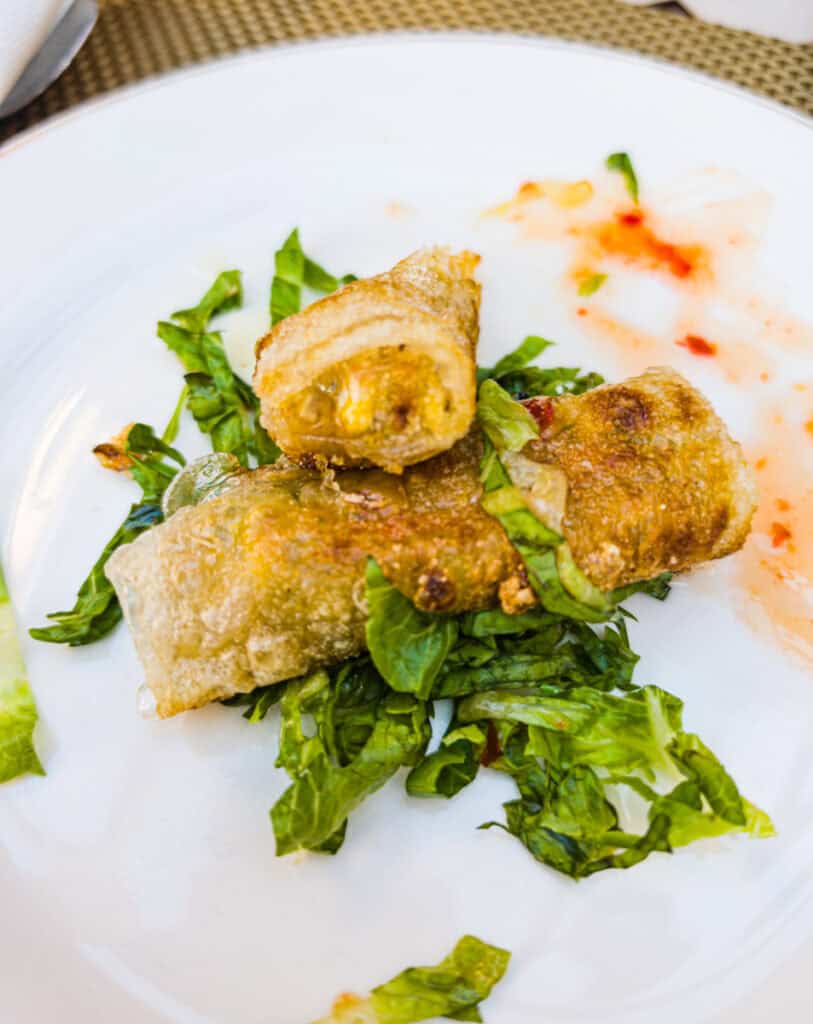
The cook at a small village hotel in the Dades Valley wouldn’t give me her recipe. I asked, she smiled, went back into the kitchen and came out holding up the bag of flour she’d used, which was about as much of the secret as I was getting. That loaf of gluten-free bread was one of the best things I ate in a country where bread comes with every meal. Equally great with that meal were the gluten free spring rolls she made and a chicken dish that had a gravy poured on top! I felt so cared for!
I went to Morocco in October 2026 leading a women’s group trip on our 10-day Morocco itinerary, and I’ll admit I was a little anxious about the food. Gluten free Morocco turned out to be far easier than I expected, from riad breakfasts in Marrakech to a desert camp in the Sahara, as long as I spoke up early and gave kitchens time to plan.
I have been gluten free since my youngest was born 15 years ago! I am not celiac, although have not been tested, but my body seems to handle a little bit of gluten here and there. I try to limit that as much as possible as it never feels great. Traveling gluten free can be a giant hassle, but with a little preparation, you can be catered to in most places. Obviously, celiacs will have to prepare a lot more, and will find extra challenges.
Is Morocco gluten free friendly? As of November 2026, in my experience, yes. On my 10-day trip through Marrakech, the Dades Valley, the Sahara and Fes in October 2026, every server I dealt with knew what gluten-free meant, and riads and hotels found gluten-free bread when they had a day’s notice. Tagine with rice, Berber omelets, Moroccan salads and grilled meats were my everyday safe dishes, while couscous, harira, bread and pastries all contain wheat.
Gluten free Morocco at a glance
- Tell them early. Give riads, hotels, tour hosts and camps your dietary needs when you book, then remind them a day ahead.
- Ask for rice. Tagine comes with bread for scooping, and every kitchen I asked swapped in rice.
- Expect set menus outside Marrakech. The kitchen adapts your plate when it knows ahead of time.
- Skip couscous, harira, khobz (Moroccan bread) and pastries.
- Learn two phrases: sans gluten in French and bla gluten in Darija (more phrases below).
- Celiacs, plan for cross-contamination. Read my note for celiacs near the end before you go.
How well restaurants in Morocco understood gluten free
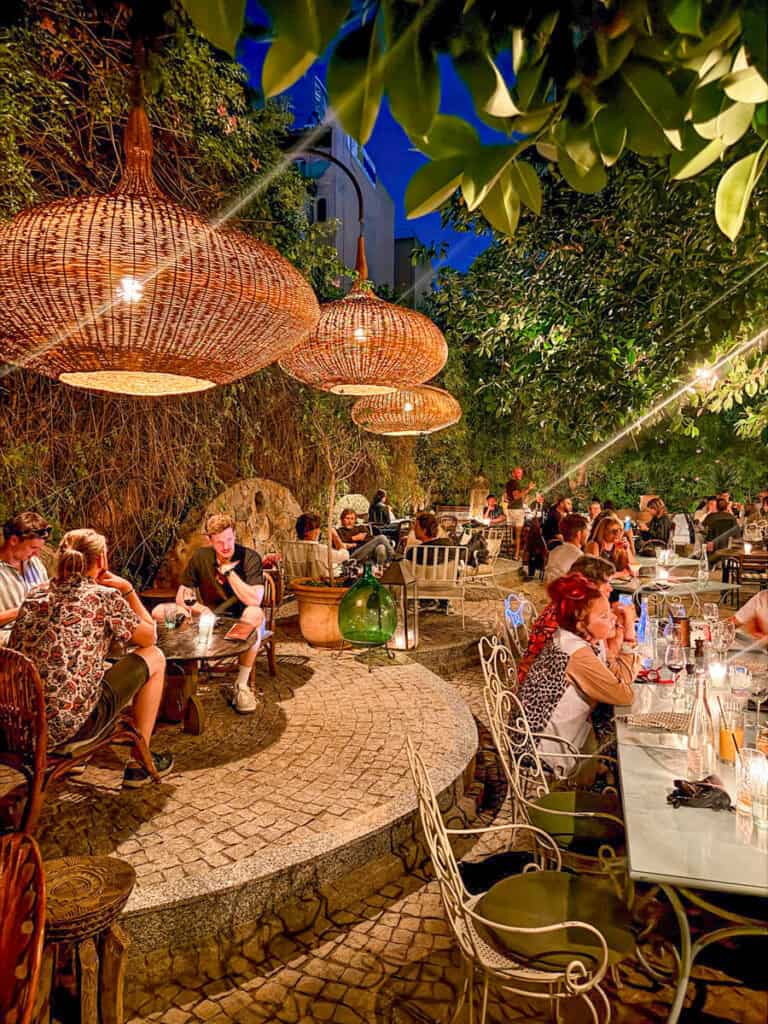
Every place we ate, from rooftop restaurants in Marrakech to a family-run spot in Fes, the person taking our order knew what gluten-free meant. Servers would lean over to point out the dish I needed to leave alone, or check with the kitchen before I’d even asked, with a friendly “make sure you don’t eat this” as plates landed.
That’s a better hit rate than I get at home in the US, where I still meet people who ask whether gluten-free means I can’t eat eggs, rice or dairy (it doesn’t). One of the women in our group was lactose-free, and she was looked after fairly well too.
All the servers we encountered also spoke English, which made everything so much easier of course. I would tell them when we arrived, or if we knew in advance, like our breakfast at our hot air balloon ride, Mo told them in advance.
Ask riads and hotels in Morocco for gluten-free bread a day ahead
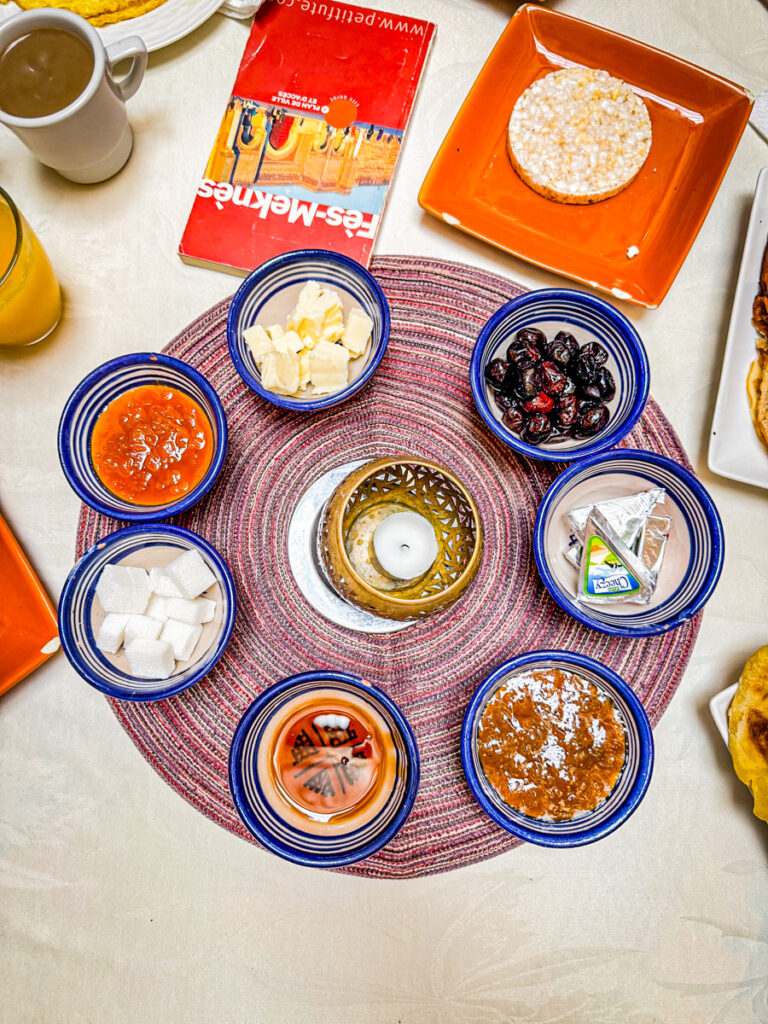
The surprise of the trip was how often gluten-free bread turned up. It only happened when the kitchen knew in advance, so tell your riad or hotel when you book and remind them at least a day before you arrive. I emailed all the riads in advance except for my first riad in Marrakech, Riad Al Wifak. That’s how I knew I had to email all the other riads for the trip as the host at Wifak told me! He could not give me gluten free bread for my first breakfast there but was able to for the following day because he had notice.
- Riad Sierra, Marrakech: gluten-free bread was ready for those of us who needed it when the group checked in, because it was requested ahead.
- Riad Riana, Dades Valley: the first morning’s loaf was packed with carrot, which was fine, though it didn’t go with the jam. The one they brought out that evening and the next morning was much better.
- Dar Victoria, Fes: they gave me rice cakes in place of bread. It felt odd for about one bite, then I was spreading jam on them with everyone else.
- Sahara Majestic Luxury Camp: no gluten-free bread at camp, so our guide, Mo, had his mum bake some for me and Kate, the other gluten-free woman on the trip.
And then there was the lunch stop in the Dades Valley after the Monkey Fingers hike, at Hotel Riad Bahammou where the cook baked me that loaf from scratch. I’m now on the hunt for that flour at home. They also had gluten free spring rolls (I know doesn’t feel Moroccan) and they were delicious!!
Gluten free set menus outside Marrakech
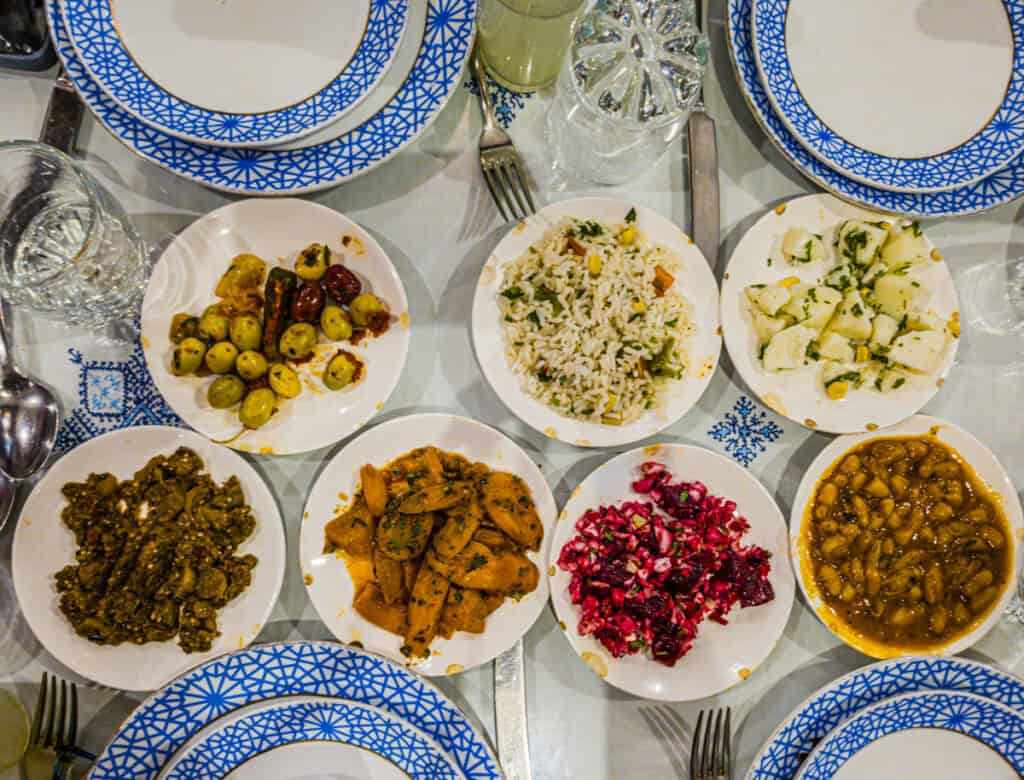
Once we left Marrakech, most of our meals were set menus, which seems to be how many restaurants feed tourists and groups around the rest of the country. A typical one was a table of Moroccan salads to share, a main (usually tagine) and fruit to finish, and the kitchen changed my plate when it knew I was gluten-free.
That worked every time. At Riad Riana in the Dades Valley, the set menu included a beef moussaka with roasted eggplant and melted cheese, a dish I often can’t eat, and this one was safe for me. At Restaurant Njarine in Fes, the shared salads and my tagine were both safe.
The downside is that you can’t scan a menu and choose the dishes that are naturally gluten-free, so you’re relying on the kitchen’s adjustments. By the last few days we were all craving one night of ordering à la carte (and a little less food).
Gluten free Moroccan food: what was safe for me
Moroccan cooking leans on slow-cooked meat, vegetables, eggs and spices, so plenty of it is naturally gluten-free once you take the bread away. These were my staples.
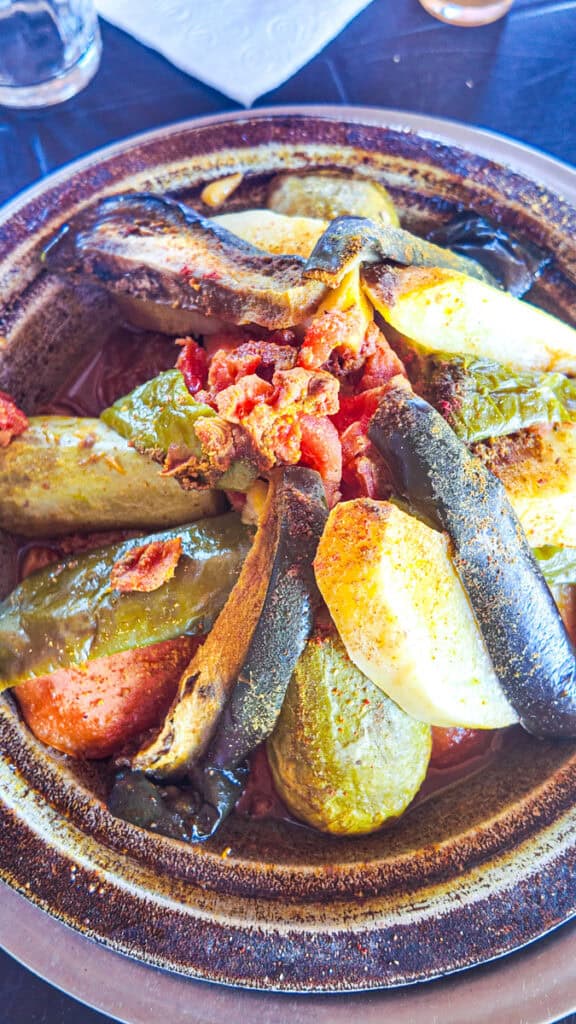
Tagine with rice
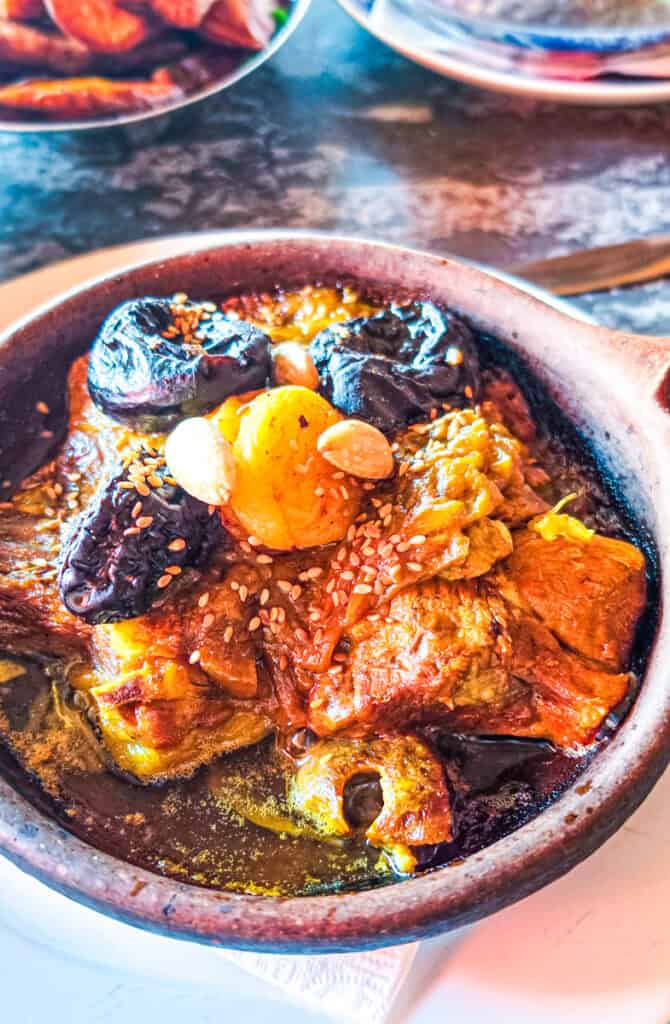
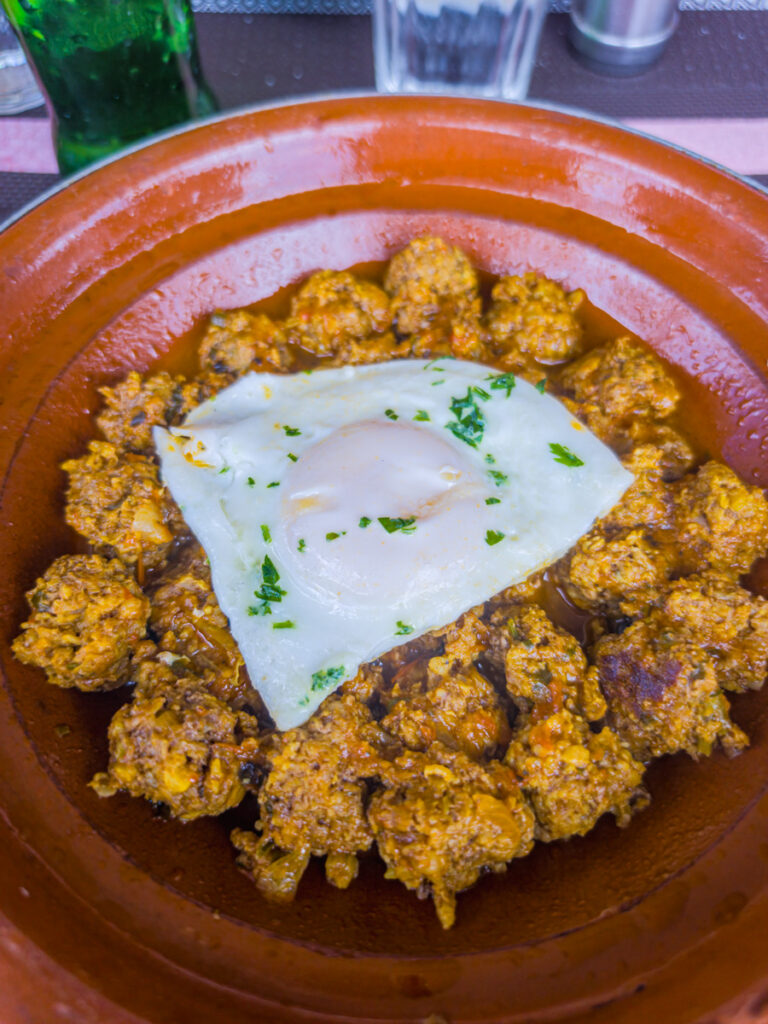
I ate a tagine almost every day. It’s slow-cooked meat and vegetables in a cone-lidded clay pot, and Moroccans scoop it up with bread, so ask for rice instead, or just skip the bread. Tagine is so filling that you really don’t need it. My favorites were the beef tagine with prunes and egg at MK Rooftop in Marrakech, a chicken tagine with preserved lemon and olives, and the lamb tagine at Café Clock in Fes. I also had a meatball tagine with fried egg on top that was yummy and filling! We even made a chicken tagine at our cooking class in Fes.
Berber omelet
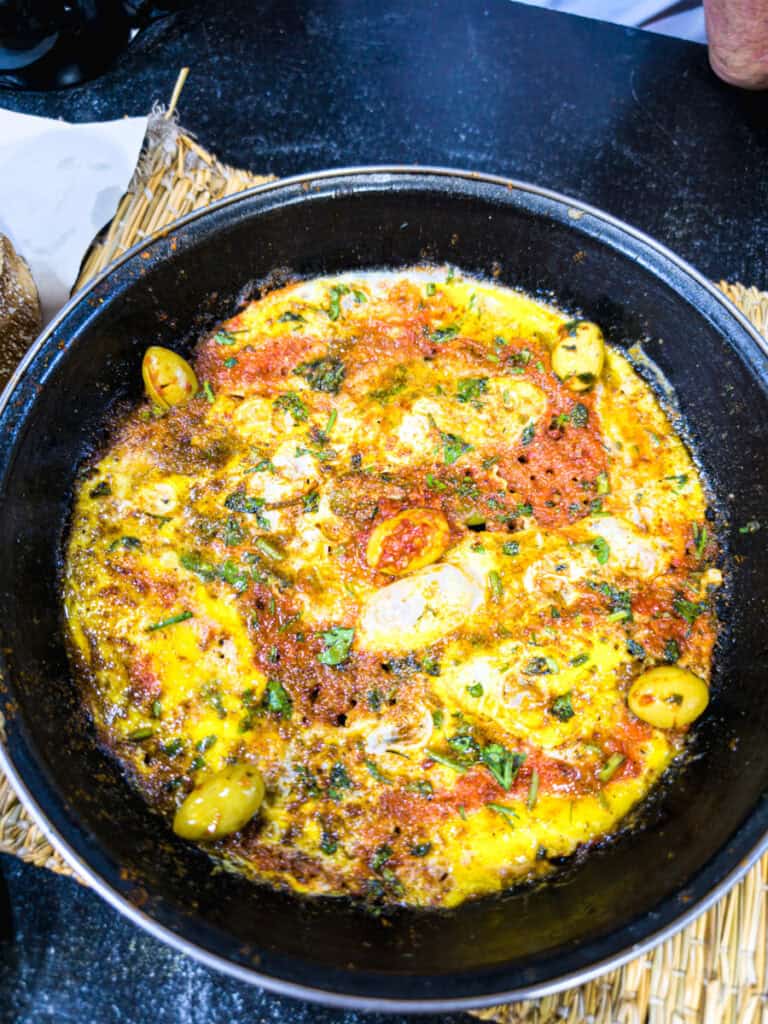
This one was on breakfast tables all over the country. Eggs are cooked through with tomatoes, olives and spices, a little like a shakshuka, and it’s filling without needing bread on the side.
Grilled meats
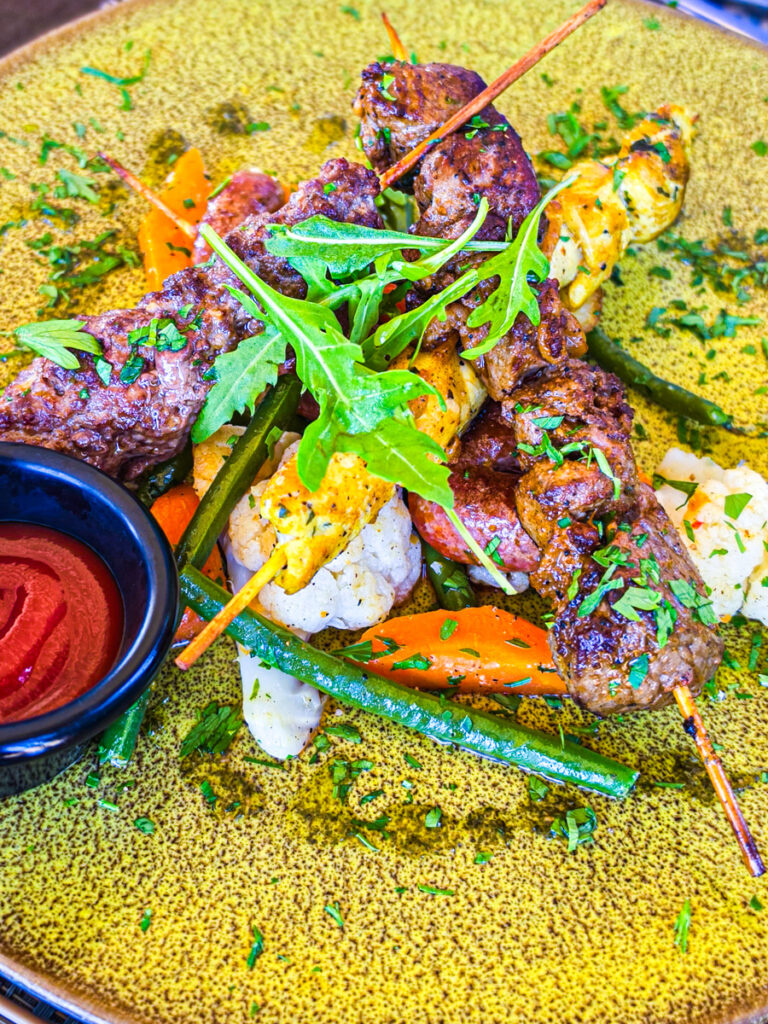
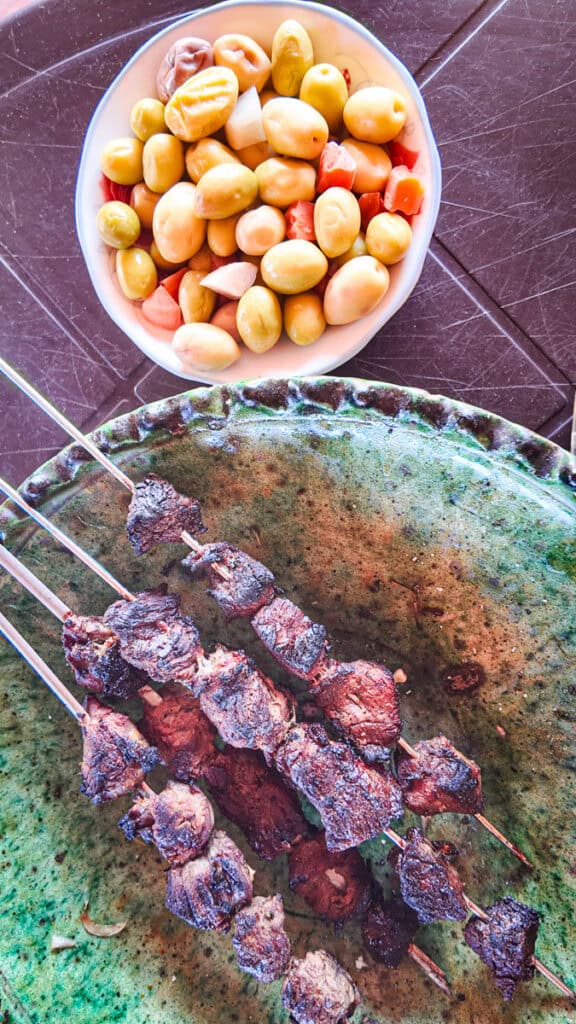
Lamb is all over the menu in Morocco, which made this Australian very happy. I had a mixed grill with lamb chops at PSC Club in Gueliz, Marrakech, and meat skewers at a nomad family’s lunch in the Sahara.
Tangia
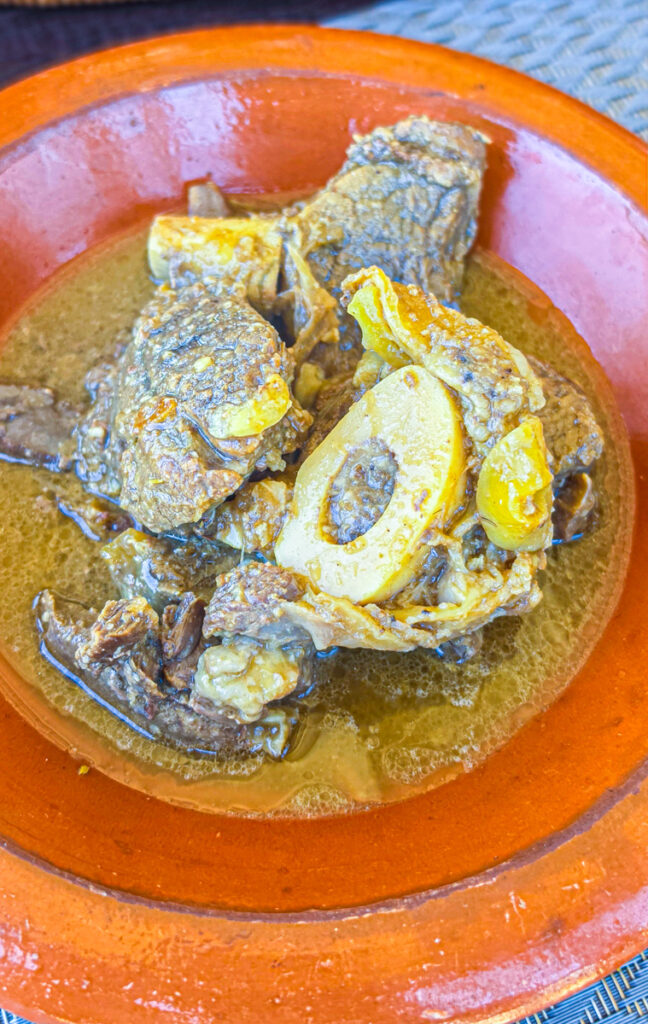
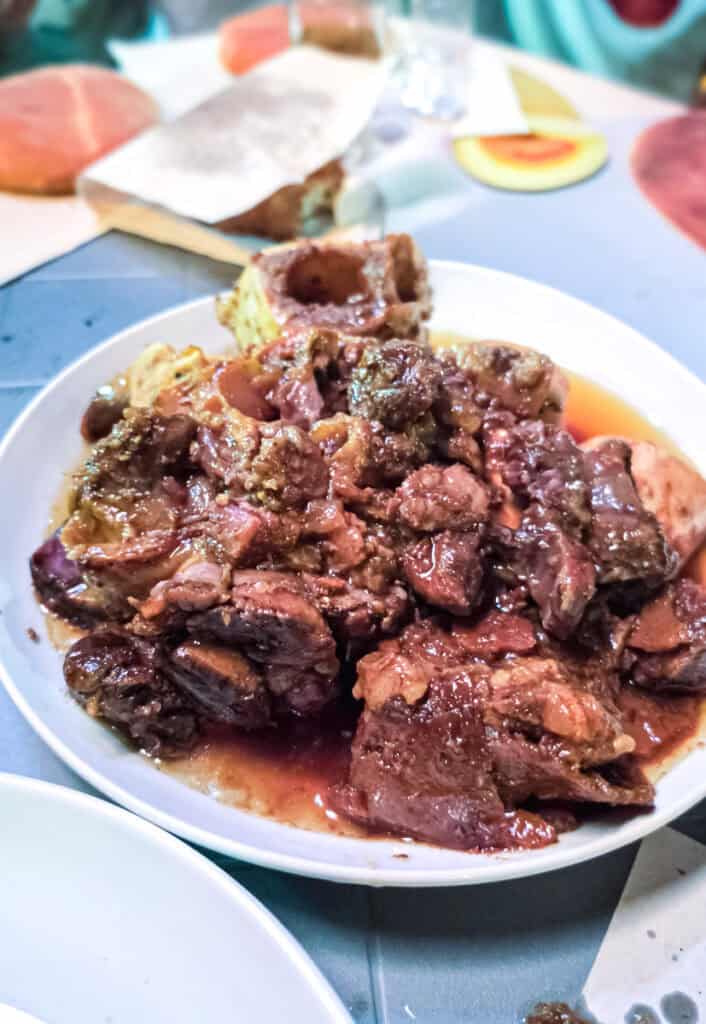
Tangia was my favorite dish in Morocco, and it’s naturally gluten-free. It’s a Marrakech specialty of meat, spices and plenty of rich fat like ghee, packed into a tall clay urn, sealed and slow-cooked for hours, traditionally in the embers of the furnace that heats the neighborhood hammam. The meat falls apart, and it comes out salty, spicy and so rich that a little goes a long way.
My first taste was the beef tangia Chef Mustapha cooked for us on my Marrakech street food tour. It’s usually eaten with bread, so the others scooped theirs up with khobz and I had mine with rice. I loved it so much that when it turned up on the menu at Café Mythe in Marrakech a few days later, I ordered the lamb version. It was delicious, but Mustapha’s beef tangia was still the one to beat.
Moroccan salads and other salads
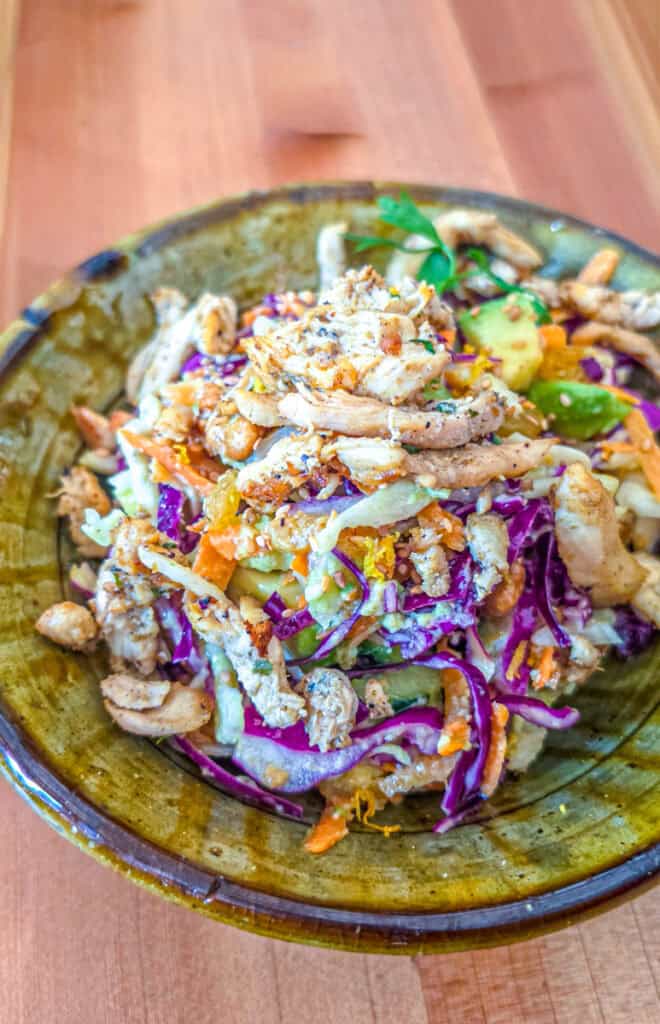
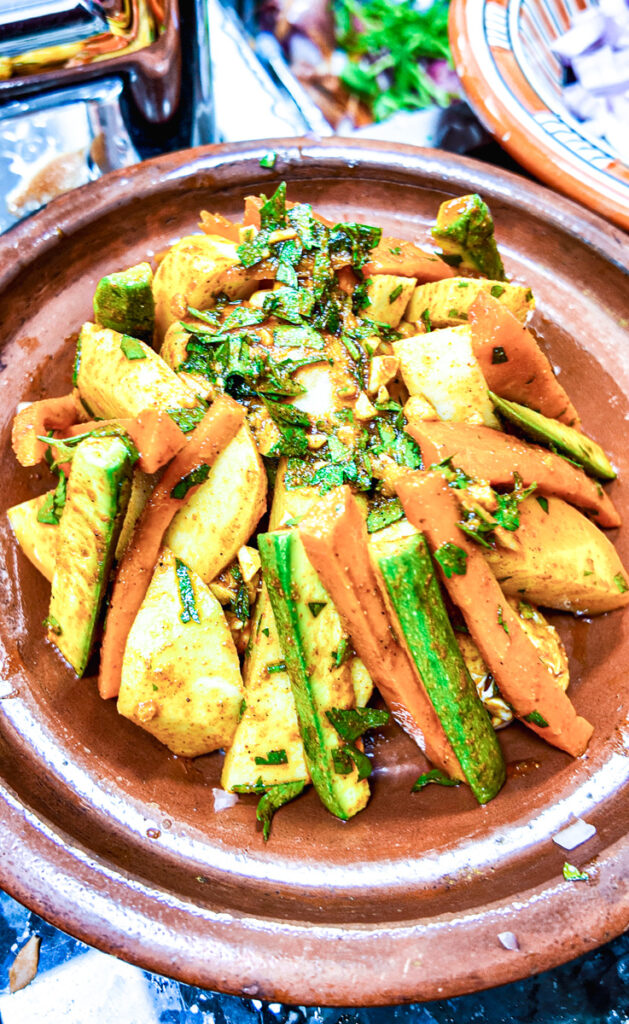
Most restaurants we ate at had a good range of salads on the menu, which made ordering gluten-free easy. A Moroccan salad is a spread of small plates of cooked vegetables shared across the table, things like carrots, potatoes and eggplant dip, and it came out at almost every set meal. At Njarine in Fes we couldn’t stop eating the baba ghanoush and the potatoes.
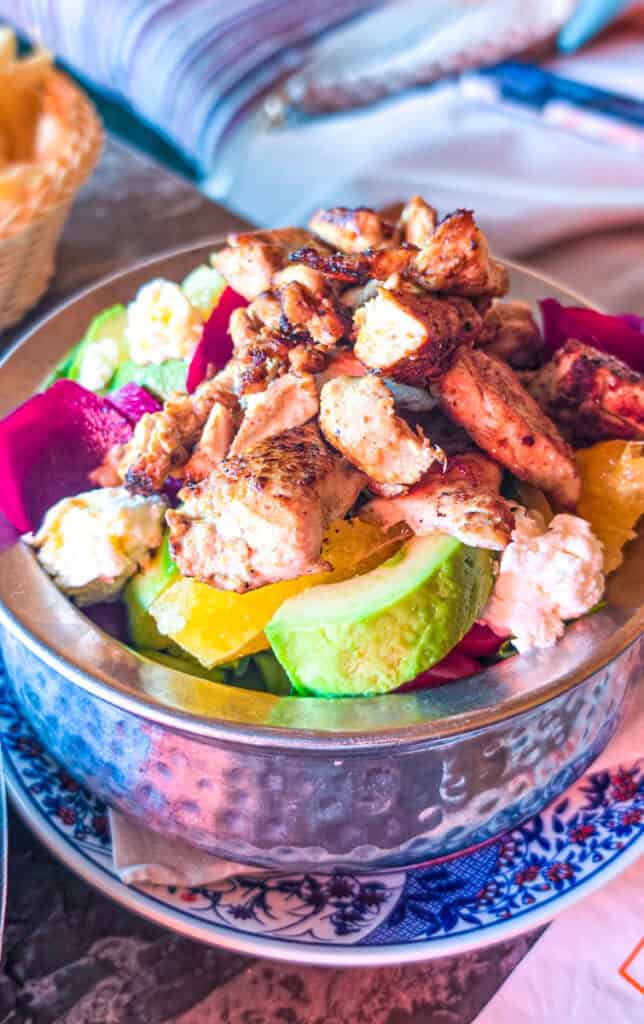
Plenty of places also serve salads closer to what we’d order at home. At Café des Épices in Marrakech I had a Moroccan chicken salad that was light and full of flavor, a nice break from all the tagines. My friend Allie had a delicious looking salad at Cafe Clock in Fes.
Fruit for dessert
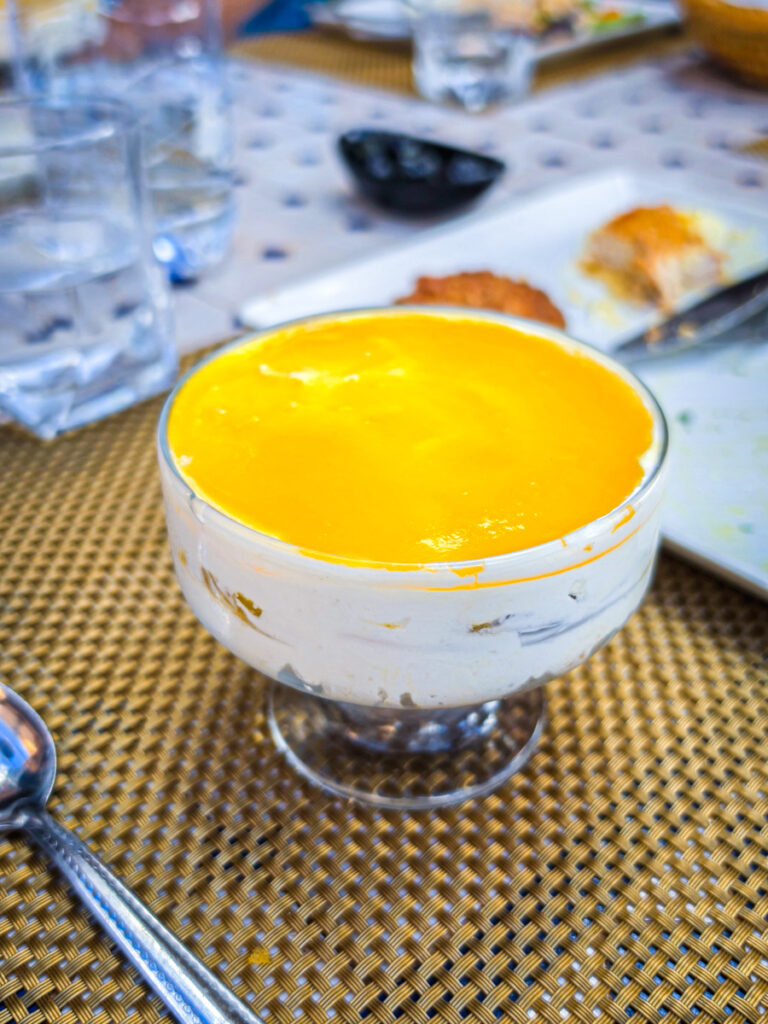
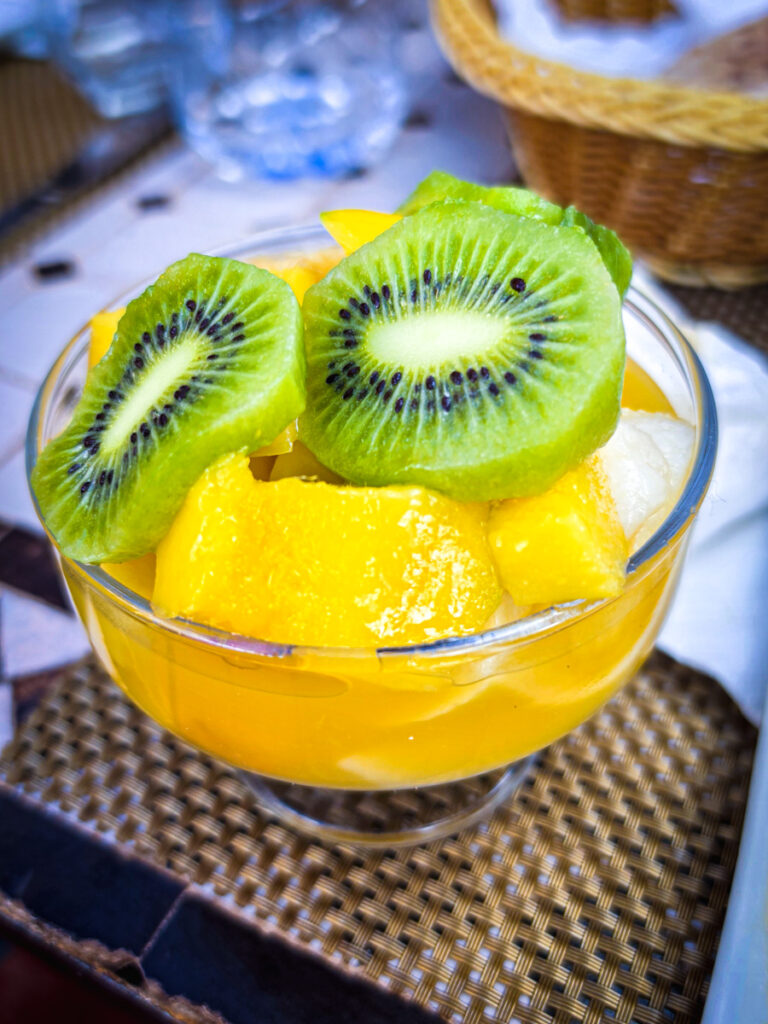
If you’re like me, you inwardly grunt when fruit is served as your alternative to the yummy glutened desserts your fellow diners eat. Like can’t you be a little more creative? Anyway, it is what it is. In Morocco, fruit is the usual dessert, for everyone which I guess is handy. When the others had a trifle-style dessert at the Dades Valley lunch, I had a big bowl of fresh fruit. And it was quite lovely, but I really wanted that trifle.
Moroccan food I skipped as a gluten-free traveler
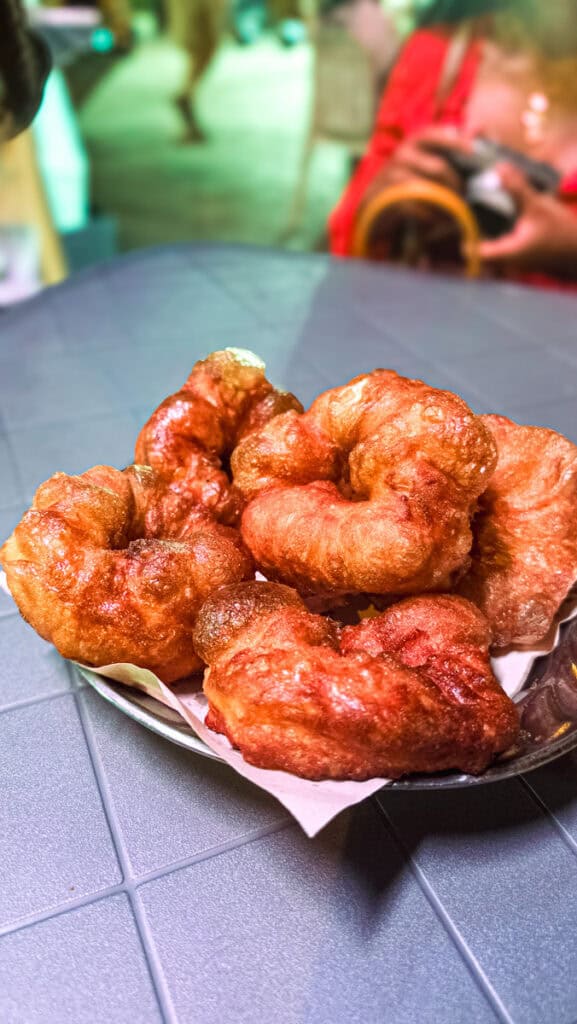
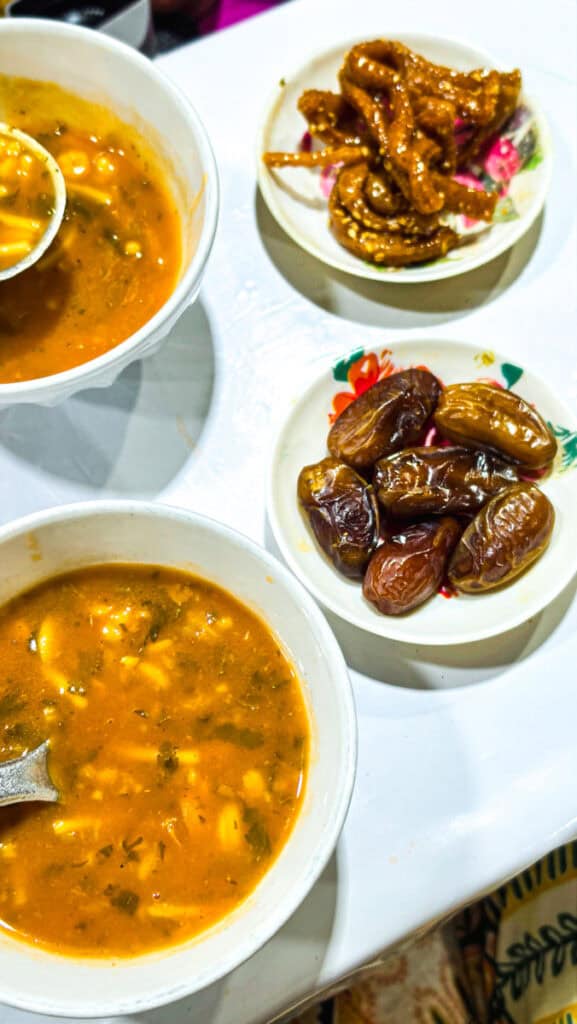
- Couscous. It’s made from wheat semolina, so unless a kitchen tells you it uses something else, assume it’s off the table. Although gluten free couscous did appear on the menu one time (I can’t remember where, but I think Cafe Clock.) but I decided on a tagine as I’m not a huge couscous fan
- Harira. Morocco’s tomato soup, eaten to break the fast during Ramadan, is thickened with flour (and some versions add noodles).
- Bread. Khobz is at every meal, and the Berber pizza at the nomad lunch in the Sahara had the others raving. I took their word for it.
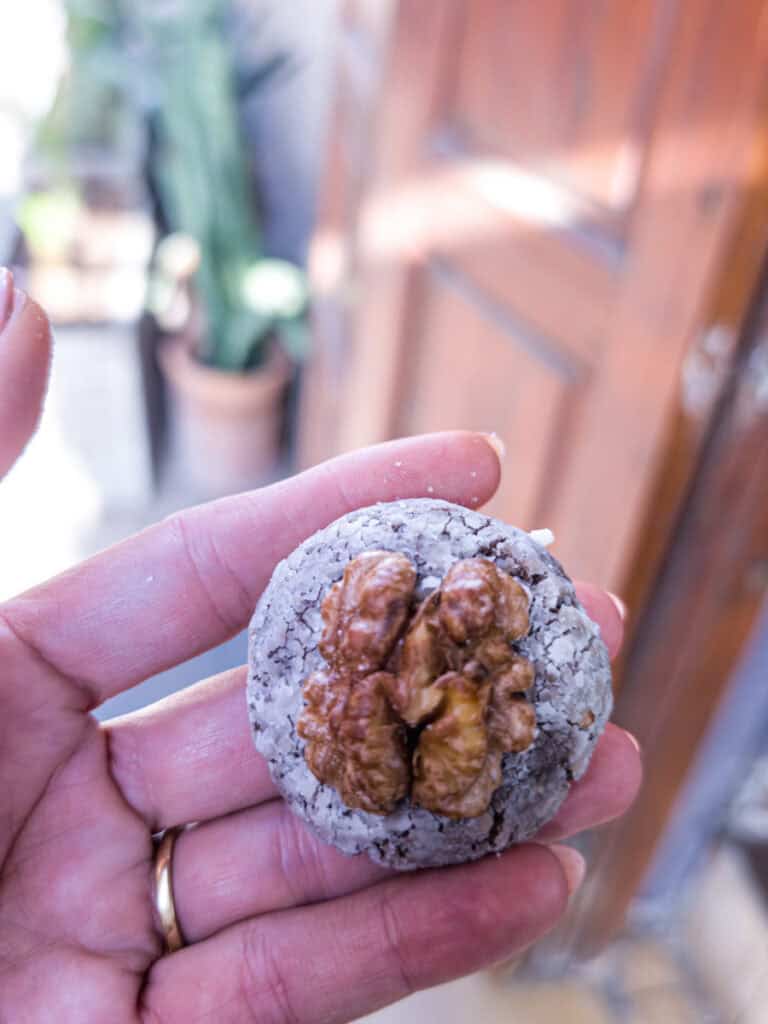
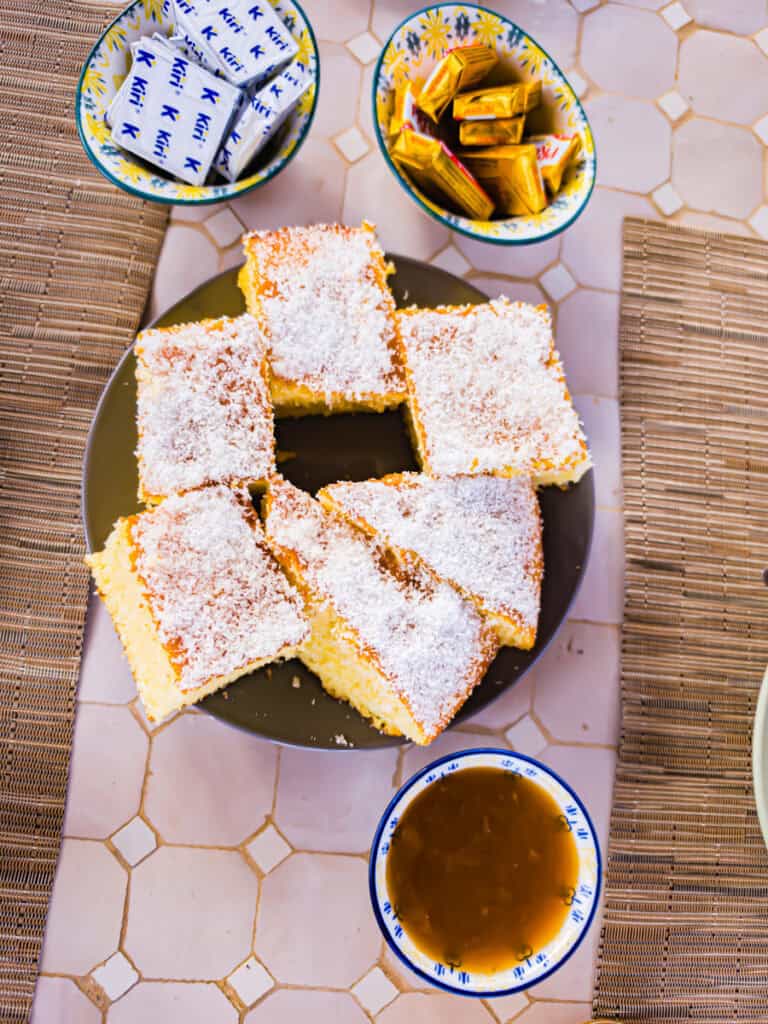
- Pastries and doughnuts. They’re made with wheat flour, and on my food tour I passed on the sfenj, Moroccan fried doughnuts. In Marrakech though I found delightful little pastries, one the Walnut Ghriba, traditional Moroccan cookie made primarily from ground walnuts and dates. So yummy!
- Pastilla: The pastilla, a traditional food of Fes, is a savory-sweet pie made from layers of flaky pastry with pigeon or chicken, almonds, cinnamon, and sugar. i was so jealous I could not eat this one!
Gluten free street food in Marrakech
My first night in Marrakech, I ate my way around the medina on a night street food tour with a local chef, and I’d booked it so late that Mustapha had almost no warning about my diet. He still swapped bread for rice, cooked my sardines without the flour coating, and only two dishes beat him, the harira and the doughnuts. With more notice he could have adapted those too, so message your host as soon as you book.
The only other street food I ate on my time in Morocco was some more Walnut Ghriba! You can find little pastry carts and shop throughout the medina. Just make sure you check the gluten status before you buy! I also saw plenty of grilled meat frying over hot grills in the medina as well.
Gluten free breakfast in Morocco’s riads
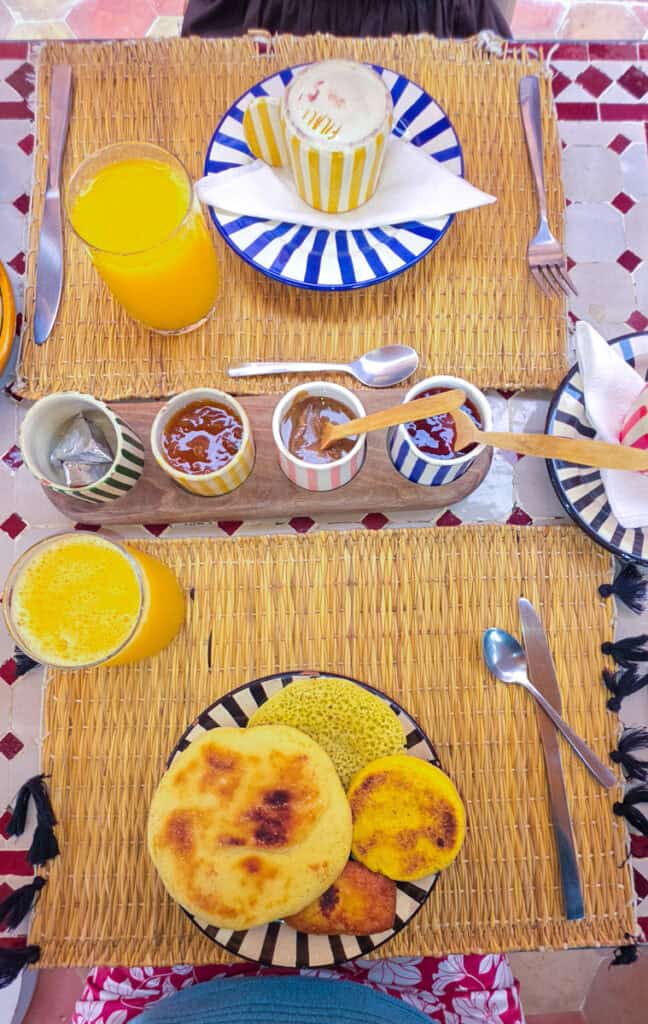
A riad breakfast is a big spread, usually bread, pancakes, pastries, jams, yogurt, eggs, fruit and coffee, so there’s always something even before the gluten-free bread arrives. Riad Riana in the Dades Valley made a cheese omelet so good I couldn’t work out what they’d done to it, and Dar Victoria in Fes made me a Spanish omelet at what all the women agreed was the best breakfast of the trip. Instead of gluten free bread at our riad in Fes, we had rice cakes, which was not very exciting, but they weren’t too bad with jam on them.
The gluten-free balloon breakfast outside Marrakech
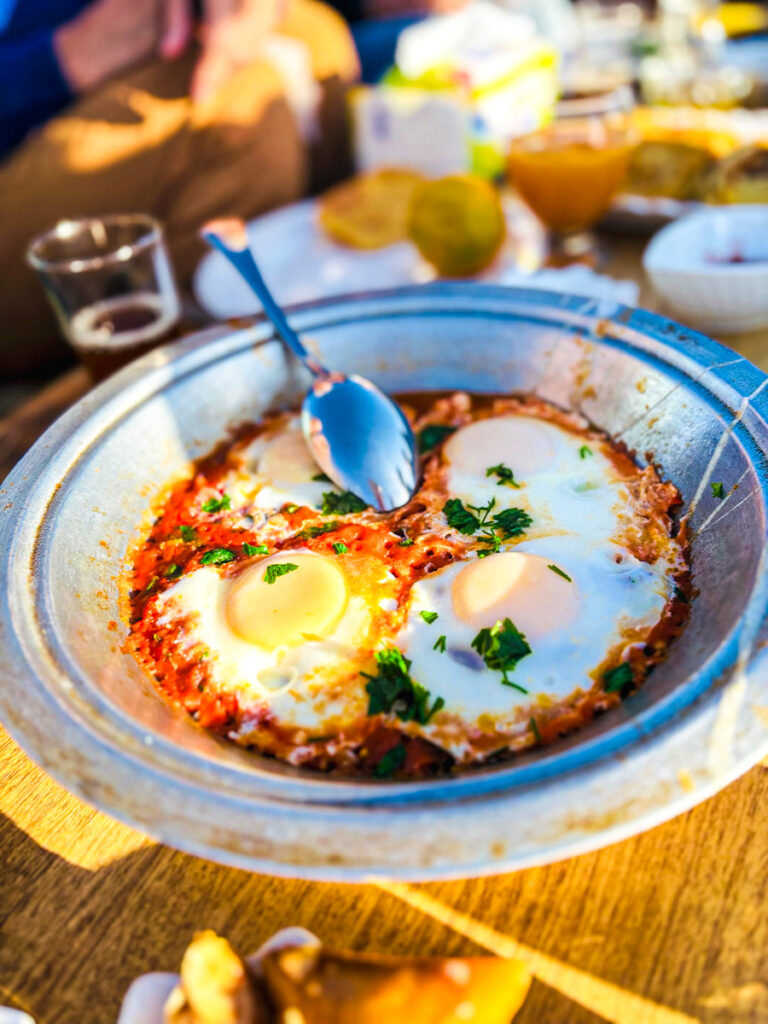
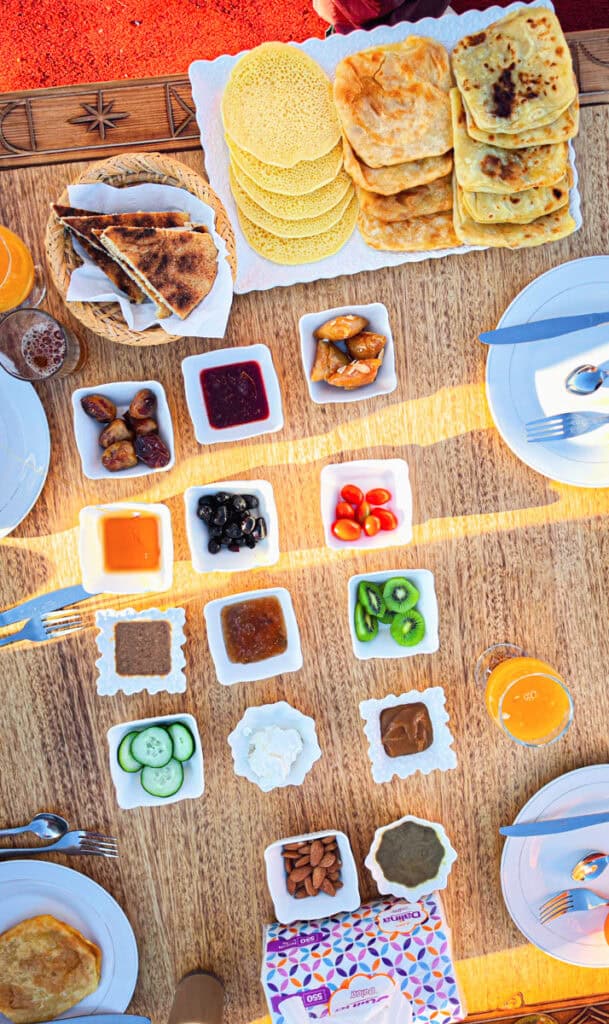
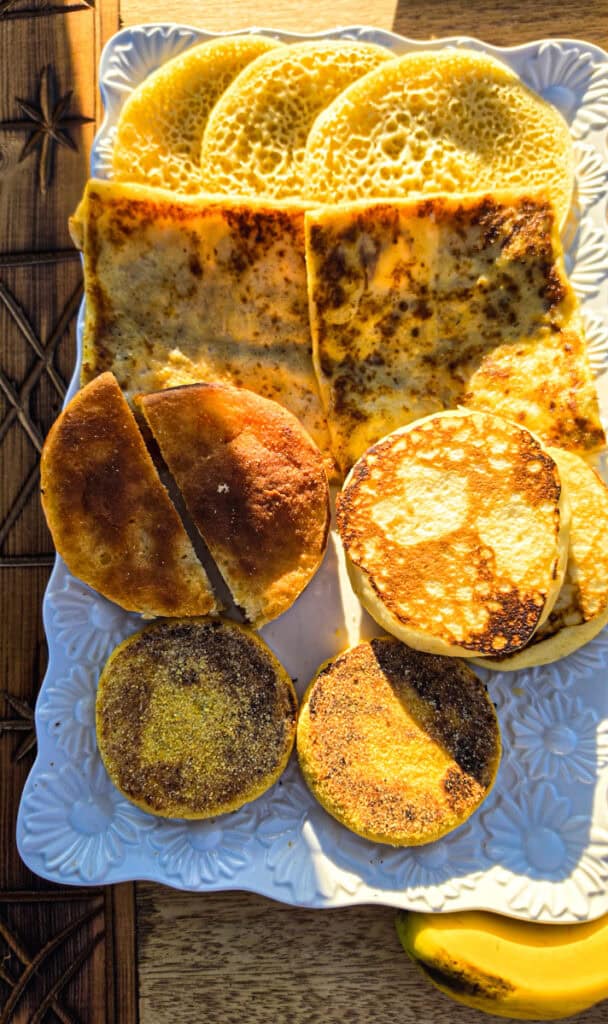
After our sunrise flight over the Atlas Mountains, Ballooning Experience set up breakfast outdoors with desert and mountain views. Our dietary needs had been passed on ahead, and there was a whole gluten-free bakery spread for Kate and me alongside fig jam, honey, dates and Berber omelets. Between us we didn’t miss a thing. If you’re booking, tell the company when you reserve (more in my Marrakech hot air balloon guide).
Eating gluten free at a Sahara desert camp
I was most nervous about the desert, a long way from any shop, and it was one of the easiest stops. At Sahara Majestic Luxury Camp, dinner was three courses in the main tent with gluten-free options for me, and on our second night they brought out a gluten-free pumpkin soup so big I shared it with Keisha.
Breakfast was Berber omelets, jams, yogurt and bread (with Mo’s mum’s loaf for Kate and me). At lunch with a nomad family during our 4×4 tour, we ate olives, skewers and tagine, and the family made sure there was gluten-free food for those of us who needed it. You can read more about the camp in my Sahara desert camp guide.
How to say gluten free in French and Moroccan Arabic
French works in most hotels and restaurants, and Darija (Moroccan Arabic) is what you’ll hear on the street. These are the words I’d carry.
| English | French | Darija (Moroccan Arabic) |
|---|---|---|
| Gluten-free | sans gluten | bla gluten |
| Without bread | sans pain | bla khobz |
| Without flour | sans farine | bla t’hin |
| I don’t eat bread or flour | Je ne mange pas de pain ni de farine | Ma kanakulsh l-khobz wla t’hin |
| I have celiac disease | Je suis cœliaque | Use a translation card |
| Wheat | blé | gemah |
| Semolina (couscous) | semoule | smida |
Bla means “without,” and ma kanakulsh means “I don’t eat.” If you’re celiac, a short phrase won’t cover cross-contamination, so carry a detailed card in Darija, like the Moroccan Arabic gluten-free restaurant card from Legal Nomads, which was written by a celiac and checked by native speakers.
A note for celiacs traveling in Morocco
I’m sharing what I ate and how it went for me, and I’m not a doctor. If you have celiac disease, a gluten-free plate is only part of it. Bread sits in baskets on every table, fryers and pans are often shared, and a kitchen that knows “no bread” may not think about a shared spoon or the flour on a counter. Ask how your food is prepared, use a detailed translation card, and talk to your own doctor or dietitian before you travel.
Common questions about gluten free travel in Morocco
Is Morocco gluten free friendly?
In my experience, yes. Every server I dealt with in October 2026 understood gluten-free, and riads and hotels found gluten-free bread with a day’s notice.
Is couscous gluten free?
No. Couscous is made from wheat semolina, so skip it unless the kitchen tells you it uses another grain.
Is harira gluten free?
No. Harira, Morocco’s tomato soup, is thickened with flour and sometimes has noodles in it.
What can you eat gluten free in Morocco?
Tagine with rice in place of bread, Berber omelets, Moroccan salads of cooked vegetables, grilled meats and fresh fruit were my safe staples.
How do you say gluten free in Moroccan Arabic?
Bla gluten in Darija, or sans gluten in French. Bla means “without,” so bla khobz is “without bread.”
If you’ve eaten gluten-free in Morocco, tell me in the comments what you’d add, and if you know where I can find a flour like the one in that bag in the Dades Valley, I’m all ears. For more of my Morocco stories as I write them, join me in The Golden Thread, my weekly travel newsletter.
More Morocco travel guides
Original Article on yTravel Blog